

OANDP-L
  • Login
No Result
View All Result
The O&P EDGE
  • PECOS
  • Magazine
    • Subscription
    • Current Issue
    • Issue Archive
    • News Archive
    • Product & Service Directory
    • Advertising Information
    • EDGE Flipbooks
  • O&P Jobs
    • Find a Job
    • Post a Job
  • EDGE Advantage
    • EA Homepage
    • EA Data
  • O&P Facilities
  • Resources
    • Product & Service Directory
    • Calendar
    • Contact
    • About Us
    • O&P Library
    • The Guide
    • Custom Publications
    • Advertising Information
    • EDGE Direct
    • Amplitude Media Group
  • PECOS
  • Magazine
    • Subscription
    • Current Issue
    • Issue Archive
    • News Archive
    • Product & Service Directory
    • Advertising Information
    • EDGE Flipbooks
  • O&P Jobs
    • Find a Job
    • Post a Job
  • EDGE Advantage
    • EA Homepage
    • EA Data
  • O&P Facilities
  • Resources
    • Product & Service Directory
    • Calendar
    • Contact
    • About Us
    • O&P Library
    • The Guide
    • Custom Publications
    • Advertising Information
    • EDGE Direct
    • Amplitude Media Group
No Result
View All Result
The O&P EDGE Magazine
No Result
View All Result
Home News

Brace Success Is Related to Curve Type in AIS Patients

by The O&P EDGE
June 16, 2017
in News
0
SHARES
26
VIEWS
Share on FacebookShare on Twitter

Curve magnitude and skeletal maturity are important factors in determining the efficacy of bracing for the treatment of adolescent idiopathic scoliosis (AIS), but curve morphology may also affect brace success, according to a study conducted to determine the influence of curve morphology on the response to bracing with a TLSO. The study concluded that patients with thoracic curves are at greater risk for brace failure than patients with lumbar curves, despite similar initial curve magnitudes and average amount of daily brace wear. A change in curve pattern may imply flexibility and is associated with brace success, according to the authors, and patients with thoracic curves should be counseled accordingly.
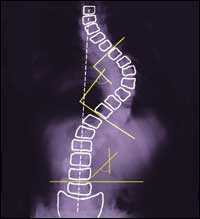
Researchers conducted a retrospective review of patients managed with an orthosis for the treatment of AIS. The patients were prospectively enrolled at the initiation of brace wear and were followed through completion of bracing or until surgery was performed. Inclusion criteria were main curves of 25-45 degrees and a Risser stage of 0, 1, or 2 at the time of brace prescription. Compliance with bracing was measured with Thermochron temperature data loggers. Radiographs made at brace initiation, brace cessation, and final follow-up were used to retrospectively categorize curves with use of the modified Lenke (mLenke) classification system and more broadly to categorize them as main thoracic or main lumbar. The effect of morphology on outcome was evaluated using chi-square and Fisher’s exact tests.

The study cohort included 168 patients. There was no difference in curve magnitude at the time of brace initiation or in average hours of daily brace wear between groups. The rate of surgery or progression of the curve to greater than or equal to 50 degrees was 34.5 percent (29 of 84) in mLenke-I curves, 54.5 percent (6 of 11) in mLenke-II curves, 29.4 percent (10 of 34) in mLenke-III curves, 17.6 percent (3 of 17) in mLenke-V curves, and 13.6 percent (3 of 22) in mLenke-VI curves. There were no mLenke-IV curves at the time of brace initiation. The rate of surgery or progression to greater than or equal to 50 degrees was 34.1 percent (44 of 129) in the combined thoracic group and 15.4 percent (6 of 39) in the combined lumbar group.

In brace-compliant patients (greater than 12.9 hours per day), the rate of surgery or progression to greater than or equal to 50 degrees was 30.3 percent (20 of 66) in main thoracic curves and 5.3 percent (1 of 19) in main lumbar curves. One-tenth of curves changed morphology during bracing. The rate of surgery or progression to greater than or equal to 50 degrees was 35.8 percent (43 of 120) in persistent main thoracic curves, 20 percent (6 of 30) in persistent main lumbar curves, 12.5 percent (1 of 8) in main thoracic curves that became main lumbar curves, and 0 percent (0 of 9) in main lumbar curves that became main thoracic curves.

The study was published June 7 in the Journal of Bone & Joint Surgery.

Related posts:

  1. Five-year Case Study of an Infant With Scoliosis Using Schroth Therapy and Chêneau-type Bracing
  2. Reversing Scoliosis and Brace Treatment of a Proximal Structural Curve
  3. Cobb Angle or Balance? Trends, Debates in Scoliosis Orthotic Management
  4. Techniques for Treating Idiopathic Scoliosis
Previous Post

Ekso Bionics Collaborates on Centers of Robotic Excellence

Next Post

VR Can Ease Phantom Limb Pain

Next Post

VR Can Ease Phantom Limb Pain

 SUBSCRIBE FOR FREE


Get unlimited access!

Join EDGE ADVANTAGE and unlock The O&P EDGE's vast library of archived content.
SUBSCRIBE TODAY

O&P JOBS

Central

Texas Board–Eligible Prosthetist or Licensed Prosthetic Assistant  

Central

Certified Prosthetist/Orthotist

Pacific

Certified Prosthetist

Linkedin X-twitter Facebook
The O&P EDGE Magazine
 
Required 'Candidate' login to applying this job. Click here to logout And try again
 

Login to your account

  • Forgot Password?

Reset Password

  • Already have an account? Login

Enter the username or e-mail you used in your profile. A password reset link will be sent to you by email.

Close
No Result
View All Result
  • PECOS
  • MAGAZINE
    • SUBSCRIBE
    • CURRENT ISSUE
    • ISSUE ARCHIVE
    • NEWS ARCHIVE
    • PRODUCTS & SERVICES DIRECTORY
    • ADVERTISING INFORMATION
  • O&P JOBS
    • FIND A JOB
    • POST A JOB
  • EDGE ADVANTAGE
    • EA Homepage
    • EA Data
  • FACILITIES
  • RESOURCES
    • PRODUCTS & SERVICES DIRECTORY
    • CALENDAR
    • CONTACT
    • ABOUT US
    • O&P LIBRARY
    • THE GUIDE
    • CUSTOM PUBLICATIONS
    • ADVERTISING INFORMATION
    • EDGE DIRECT
    • AMPLITUDE
  • OANDP-L
  • LOGIN

© 2025 The O&P EDGE

Are you sure want to unlock this post?
Unlock left : 0
Are you sure want to cancel subscription?
 

Account Activation

Before you can login, you must activate your account with the code sent to your email address. If you did not receive this email, please check your junk/spam folder. Click here to resend the activation email. If you entered an incorrect email address, you will need to re-register with the correct email address.


© 2024 The O&P EDGE

  • About
  • Advertise
  • Contact
  • EDGE Advantage
  • OANDP-L
  • Subscribe

CONTACT US

866-613-0257

info@opedge.com

201 E. 4th St.
Loveland, CO 80537

The most important industry news and events delivered directly to your inbox every week.

  • About
  • Advertise
  • Contact
  • EDGE Advantage
  • OANDP-L
  • Subscribe

© 2025 The O&P EDGE

Welcome Back!

Login to your account below

Forgotten Password?

Retrieve your password

Please enter your username or email address to reset your password.

Log In
The O&P EDGE Magazine
 
Required 'Candidate' login to applying this job. Click here to logout And try again
 

Login to your account

  • Forgot Password?

Reset Password

  • Already have an account? Login

Enter the username or e-mail you used in your profile. A password reset link will be sent to you by email.

Close
No Result
View All Result
  • PECOS
  • MAGAZINE
    • SUBSCRIBE
    • CURRENT ISSUE
    • ISSUE ARCHIVE
    • NEWS ARCHIVE
    • PRODUCTS & SERVICES DIRECTORY
    • ADVERTISING INFORMATION
  • O&P JOBS
    • FIND A JOB
    • POST A JOB
  • EDGE ADVANTAGE
    • EA Homepage
    • EA Data
  • FACILITIES
  • RESOURCES
    • PRODUCTS & SERVICES DIRECTORY
    • CALENDAR
    • CONTACT
    • ABOUT US
    • O&P LIBRARY
    • THE GUIDE
    • CUSTOM PUBLICATIONS
    • ADVERTISING INFORMATION
    • EDGE DIRECT
    • AMPLITUDE
  • OANDP-L
  • LOGIN

© 2025 The O&P EDGE

Are you sure want to unlock this post?
Unlock left : 0
Are you sure want to cancel subscription?
 

Account Activation

Before you can login, you must activate your account with the code sent to your email address. If you did not receive this email, please check your junk/spam folder. Click here to resend the activation email. If you entered an incorrect email address, you will need to re-register with the correct email address.