O&P’s Role in Fall Prevention
When Séamus Kennedy, BEng (Mech), CPed, FAAOP(A), president and co-owner, Hersco Ortho Labs, New York, speaks about fall risk at conferences, the first thing he does is ask his audience


When Séamus Kennedy, BEng (Mech), CPed, FAAOP(A), president and co-owner, Hersco Ortho Labs, New York, speaks about fall risk at conferences, the first thing he does is ask his audience

In a clinic in New Hampshire, a prosthetist pulls out his smartphone and records a patient walking down the hallway. No reflective markers, no cumbersome lab setup—just a simple video.

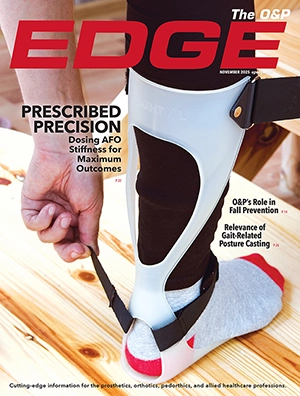
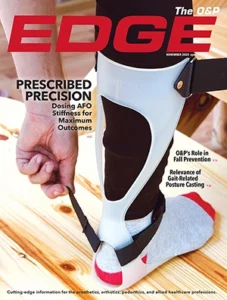
An AFO’s fundamental function is to manipulate the orientation and progression of force about the body to improve alignment and gait. Biomechanics is the core treatment target of orthotic care.

Individual prosthetic component selection can be tricky, especially when faced with reduced fee schedules, lengthy administrative requirements, and patients with widely varying sizes and shapes. In recent years we have
No posts found.

Many of us have had the pleasure of witnessing the rapid evolution of O&P through the years, but despite the technological advances, many aspects of the field are still grounded

Many of the topics I write about come directly from the questions our clients and O&P practice owners bring to us. Over the past six months, one issue has consistently

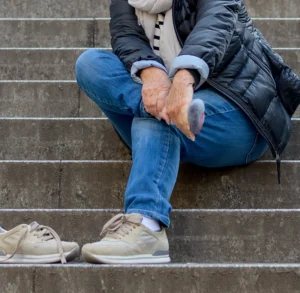
Controlling excessive foot pronation is an important aspect of managing many lower-limb pathologies such as plantar fasciitis, posterior tibial tendon dysfunction, pediatric flexible flatfoot, and medial tibial stress syndrome. Supporting