
Over the last decade or so, microprocessor-controlled knees (MPKs) have been considered the gold standard for people with transfemoral amputations. Studies have shown that their users have reduced fall risk and energy expenditure, and increased balance, stability, and confidence.
However, MPKs are not appropriate for everyone. Lifestyle factors, tech tolerance, and body weight can make mechanical knees a better choice for some patients.
Fortunately, as technology improved for MPKs through the years, it also improved for mechanical knee componentry. Clinicians have more resources than ever to find safe and stable solutions for their patients.
Benefits of MPKs
The experts say they want to be clear: MPKs are a great choice for many patients. “They’re much safer,” says Chris Lemonis, CPO/LP, Orthotics and Prosthetics Center, North Carolina. “They adapt to your movements, so the risk of falling decreases.”
He adds that the learning curve for them usually takes just a few weeks. “Most patients get the hang of it and utilize some of the advanced features,” he says. “Some keep it simple with the basic settings.”
MPKs have been revolutionary for patients in terms of safety and independence, says Ryan Caldwell, CP/L, Hanger Integrated Care Center, Illinois. 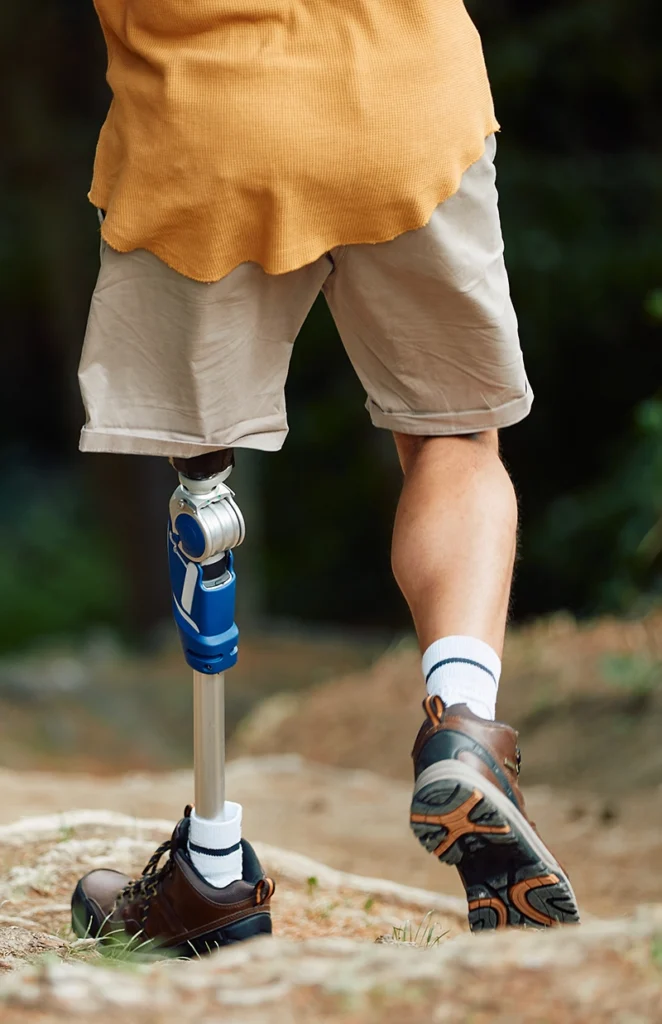
“In my view, microprocessor knees are easily the most significant advancement in prosthetics over the last three decades,” he says. “Their ability to use computer technology to automatically adjust swing and stance stability takes a huge amount of mental effort off the user. Instead of constantly thinking through every step, patients can simply walk and trust the knee to adapt to changes in speed, terrain, and real-world challenges. MPK technology gives people the ability to move across level ground, navigate uneven surfaces, and handle obstacles with far fewer compensations and a much smoother, more natural gait.”
As the technology has improved, so too have many of the previous shortcomings of the devices, Caldwell says. “Many of the earlier concerns people had about microprocessor knees like short battery life, accidental water exposure, inconsistent functionality, or complicated programming have improved dramatically over the years. What may previously have been drawbacks are now far less of an issue, and in many cases, they’re no longer disadvantages at all.”
While MPKs are certainly more expensive than their manual knee counterparts, reimbursement for the technology has also improved through the years. For a long time, reimbursement for the technology was only available to K3 ambulators and above. However, in 2024, Medicare updated its policy and allowed for certain K2 patients to qualify for high-tech devices like hydraulic and pneumatic knees and MPKs.
However, even with these advantages, there are still patients for whom MPKs won’t work. “There’s not one prosthetic system that is going to meet everybody’s needs,” says Todd McAllister, CP/L, director of prosthetics, Comprehensive Prosthetics & Orthotics, Illinois. “Microprocessor knees are not for everybody.”
Candidates for Mechanical Knees
While experts agree that there’s a lot to like about MPKs, they also acknowledge that there will always be some patients who aren’t a good fit.
“What a lot of people don’t understand is that [MPKs] don’t walk themselves,” says McAllister. “The patient needs to be teachable, to be able to understand the technology, and be motivated and want to use it. They also need to understand the consequences of not following through with their rehabilitation process.”
Since the technology is so popular now, many patients ask for MPKs even if they aren’t good candidates, he says. 
“It’s not uncommon for people to come in who have done their internet research and say, ‘This is what I want because it’s the best there is,’” he says. “But even if they have the desire, they don’t all have the ability to make it work.”
The experts say there are several factors that can impact a patient’s ability to use an MPK, including:
- Technological tolerance. In general, if a candidate can’t use a cell phone, then he or she is not a good candidate for an MPK.
- Age. Children don’t meet the height and weight requirements for MPKs, and they grow so much that swapping out the devices would be cost-prohibitive.
- Low weight. Patients who are less than 100 pounds can’t reliably engage MPKs.
- High weight. Patients above 330 pounds weigh more than what current devices can safely support.
- High activity levels. Athletes can wear out MPKs and often need a lighter knee.
McAllister says patients don’t have to be technological geniuses to use the knees. In fact, most patients don’t use all the modes or features afforded to them through their knees, but they have to be able to figure out the basics. If funding weren’t an issue, he estimates that about 75 percent of the transfemoral amputation patient population would benefit from the use of MPKs.
Fortunately, there are solutions for patients who are not MPK candidates, says Jeffrey Ropp, CP, president and owner, Ropp Orthopedic Clinic, Michigan. Mechanical knee technology has advanced through the years and they are safer and more stable than ever. “We have a lot of different options,” he says.
Stability and Safety
One of the most-cited advancements of MPKs is their stumble recovery feature. The devices use sensors to detect trips or stumbles and instantly stiffen the joint, which allows users to regain their balance. Studies show the feature works. For example, 16.3 percent of non-MPK users with a diabetic or dysvascular amputation experienced an injurious fall compared to 7.3 percent of MPK users.1
The safety features benefit all patients, but most especially those who are more likely to fall in the first place and have a harder time recovering after a fall, Caldwell says.
“There simply aren’t many mechanical knees that offer both the stability and safety they need and allow room for functional improvement,” he says.
However, the safety features in mechanical knees have progressed, Ropp says, with features that can give patients added stability and security, including different types of locking systems, hydraulics, or multiple pivot points.
The two main locking systems of non-MPK knees are the manual locking knee and the weight-activated breaking mechanism. Locking knees are manually locked during movement, and the locking system has to be released by the patient to sit down. The weight-activated knee can detect when weight is placed on the device and won’t bend until the weight has been displaced.
While the weight-activated knee is more intuitive, the manual knees give patients more control, which can be good if they are nervous or don’t trust their devices.
There are also some knees that have a combination of the two locking systems, Ropp says, which is good for patients who, at first, feel more comfortable setting the lock on the knee themselves. As the patient progresses, clinicians can remove the self-locking mechanism and the locking system then becomes weight activated.
Hydraulic and pneumatic knees are another option to give added stability to a mechanical knee system. Hydraulic knees use fluid to give smooth and variable resistance to users. They are more robust and better for active users. Pneumatic knees use air, and thus are lighter, and are a good choice for users who walk at moderate speeds or those who are very light or don’t have the strength for a hydraulic knee.
If set up properly, these knees can also provide some stumble recovery.
“If the flexion resistance is set up according to a person’s weight and activities, if they take a bad step, they will hopefully be able to catch themselves,” McAllister says. “The advantage of the hydraulic knees is especially when they are doing ramps and stairs, and they can actually ride the hydraulics to control the knee from collapsing on them.”
Knees with multiple pivot points are another way mechanical knees can provide added stability. Traditional single-axis knees have a fixed hinge, are lightweight, and can help with consistent walking. However, polycentric (multiaxial) knees with additional pivot points provide even more stability by mimicking the knee’s natural motion. These knees have a moving center of rotation and inherent geometric stability during the stance phase. During the swing phase, the mechanical design gives additional toe clearance, which reduces the risk of the user stumbling. The knees can be used in addition with geometric locks that use the multi-axis to make it difficult for the knee to bend when the user’s leg is in a straight or slightly hyperextended position.
“If someone is afraid of falling, with geometric locked knees, if they keep their heel on the ground without loading the toe, it will stay in a locked position,” McAllister says.
Unfortunately, Caldwell says, none of the options in mechanical knees are as intuitive as MPKs and all will require their users to be more careful. “Locked, geometrically locked, and polycentric designs can certainly keep someone upright, but they also demand a lot more attention from the user. They have to think about where their foot is landing, whether the knee is fully extended or locked, and take carefully planned steps with both the prosthesis and their sound limb.”
Multiple Solutions
Working in Alaska, Wil Sundberg, CPO, CPed, owner and president, Alchemy Orthotics & Prosthetics, has seen the benefits of both MPKs and mechanical knees.
His patients with MPKs love them. “They are easier to use and reduce the fear factor of getting up and running,” he says. “They are intuitive and the patients are in control.”
However, even though they are a great solution, they certainly aren’t the only solution, especially for his patients living in rural areas who travel several hours via various modes of transportation to get to one of Sundberg’s two facilities. If an MPK needed repair, there’s no way for patients to make a quick trip back to get it fixed. His patients are also more likely to go hunting without electricity or be out on a boat at sea. Saltwater isn’t gentle on any prosthesis, but it’s easier to clean off of mechanical knees than MPKs.
So even when his patients are MPK users, he makes sure they all have an alternative for backup, just in case.
“They can have a microprocessor knee, but they need a mechanical knee too. There’s always the what-if,” he says.
The bottom line for his patients, or any patient he says, is to use their devices to be able to live their lives.
“What can you put on so you can still walk?” he asks. “A mechanical knee might not be as good, but at least you are mobile and independent.”
Maria St. Louis-Sanchez can be contacted at msantray@yahoo.com.
Reference
- Wurdeman, S. R, Miller, T. A, Stevens, P. M., and Campbell, J. H. 2023. Stability and Falls Evaluations in AMPutees (SAFE-AMP 1): Microprocessor knee technology reduces odds of incurring an injurious fall for individuals with diabetic/dysvascular amputation. Assistive Technology 35(3):205-210.
Mechanical Knee Solutions by Patient Population
The experts gave their advice about mechanical knee solutions when microprocessor knees (MPKs) aren’t the best choice.
Frail or Technology-Averse Patients
There will always be a contingency of patients who don’t like or cannot understand the technology of MPKs. Some older adults or individuals with cognitive impairment may not be well suited to a device that requires regular charging. Patients who are weak also might not be a good fit because of strength needed to lift and put on the MPK. 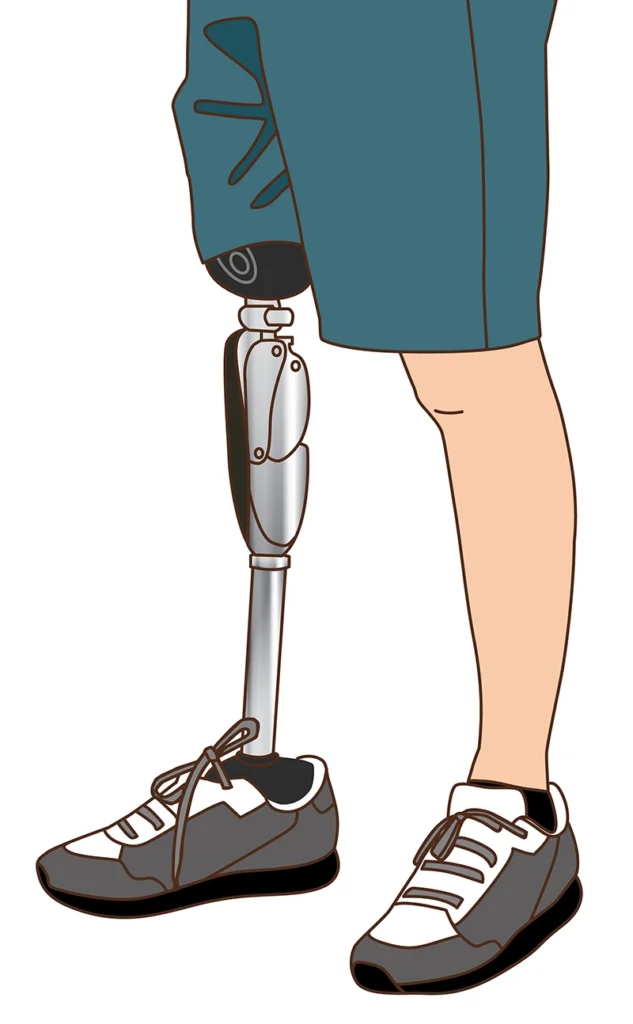
Jeffrey Ropp, CP, president and owner, Ropp Orthopedic Clinic, Michigan, says there are questions clinicians can ask to gauge how technological savvy patients are.
“Can they operate a cell phone? Will they be good at plugging it in and charging it? Will they look at it as a computer system that can connect with their phone or perform certain actions?”
For these patients, it depends on their functional level to decide what solution will work best for them, says Todd McAllister, CP/L, director of prosthetics, Comprehensive Prosthetics & Orthotics, Illinois.
“If they are only going to be walking at a nice, even, self-selected speed, they would benefit from a friction knee that may have a geometric lock that would provide the stability they need to take their step and be stable,” McAllister says.
For those who need more stability, McAllister recommends a polycentric knee with a manual lock. “Then if they progress from being able to walk from being stiff-legged to swinging, they can make that progression.”
While many of these types of patients tend to be elderly, McAllister says that age should not be a consideration. He’s seen 80-year-old patients with the functionality of 40-year-olds and vice versa. “It all comes down to doing a thorough patient evaluation,” he says.
Extreme Athletes
Patients who push the boundaries of what the human body is capable of also have a tendency to push the boundaries of what MPKs are capable of.
“If you have someone who is very athletic, generally the microprocessors cannot keep up with them,” Ropp says. In general, these athletes will use a rotary, hydraulic knee if they use a knee at all.
“Some athletes will do circumduction in their racing just so they don’t have to use that weight,” he says.
The solutions for these patients will depend on their activity levels and their sport, says Ryan Caldwell, CP/L, Hanger Integrated Care Center, Illinois.
“For highly active individuals, especially athletes using an above-knee prosthesis, our goal is always to maximize the knee’s performance characteristics to match their objectives,” Caldwell says.
For a runner, Caldwell says he would consider a mechanical knee that swings freely and snaps into full extension smoothly or a knee with a locking option for long-distance efforts where consistency is key. For a cyclist, he would look for lightweight knees that let the rider drive powerfully into the pedal during the downstroke while offering minimal resistance on the upstroke.
“Ultimately, the ‘right’ knee depends on the patient, their goals, and their willingness to explore different options,” Caldwell says. “Sometimes that means trying a couple of setups to find the one that truly feels like an extension of their body. And when that match is right, the difference in performance and confidence is clear.”
Patients on Either End of the Scale
Patients who are on the far ends of the weight scale are often unable to use MPKs, the experts say.
“I would say under 100 pounds or over 330 pounds would be reasons to put someone in a mechanical knee,” Ropp says.
Patients who are too light might not generate enough weight to reliably engage MPKs, Caldwell says.
“My focus for them shifts to keeping the prothesis as light as possible while still delivering solid function,” he says. “In these cases, I often lean toward pneumatic knees that still offer variable resistance but without the added weight.”
Patients on the opposite end of the spectrum exceed the weight limit that MPKs can safely handle. These patients have more limited options, Caldwell says.
“I tend to rely on modular mechanical system setups where the individual components can be swapped out as needed,” he says. “They hold up well, they’re straightforward to maintain, and they give us a little more flexibility when conditions or activity levels shift.”
Children
Pediatric patients, especially small, younger children, aren’t great candidates for MPKs for several reasons: They don’t meet the minimum height and weight requirements, often aren’t capable of understanding how to use the devices, and don’t have the maturity to protect such an expensive device. Plus, they grow so much so quickly that replacement costs become prohibitive.
“If they’re active, they’re going to be in the sand; they’re going to be in the dirt; they’re going to be in the water,” McAllister says. “Microprocessors are not the best option for those environments.”
For these patients, the solutions will vary as they age and mature. McAllister says clinicians should plan ahead for change with these patients and have a flexible solution. “We’re trying to keep them in something that we can allow them to grow with,” he says. The best pediatric knees tend to be polycentric, which gives added stability, and those that utilize hydraulics to control the swing.”
When the children grow and become larger, more mature teenagers, making the switch to MPKs can be considered, Ropp says.
“As the child gets older, stronger, and more mentally able, then they are able to slowly progress and get more complicated devices as they grow,” Ropp says.