
After years of developing sophisticated prosthetic technology to help people regain function after limb loss, the most important lesson I learned came not from the laboratory, but from a person with limb loss. TJ was a volunteer who had come to help me test algorithms for the control of an advanced bionic arm, not to seek a new prosthesis for himself. Well into retirement, he was not after a more sophisticated prosthesis. What he kept coming back to, almost in passing, was the invisible pain he constantly experienced every day.
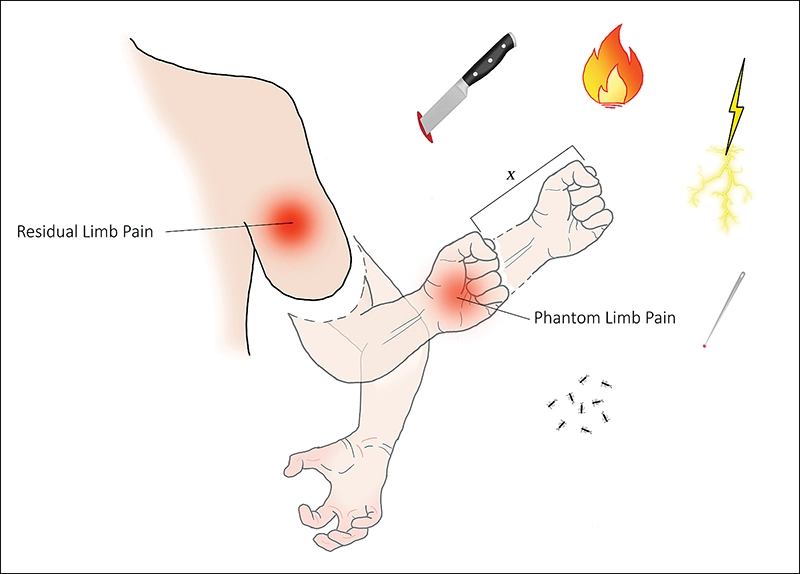
For nearly five decades, TJ had lived with phantom limb pain (PLP), a persistent and debilitating sensation of pain in his hand that was no longer there. He had tried various remedies including mirror therapy, medications, acupuncture, and hypnosis. None had offered lasting relief. Without bitterness, he had quietly stopped expecting it to be solved. The pain had simply become part of his life.
That stayed with me. Here was someone who had come to help advance prosthetic technology, yet his most pressing unresolved problem was not an aspect of the prosthesis at all, it was pain. His experience opened a new branch in my research because, for me, the problems worth working on are the ones people are actually living with. That work has since taken me across multiple countries and ultimately to Ukraine, where it led me to found #FightPLP.
A Common Condition, Uncommonly Treated
Images/photographs courtesy of #FightPLP.
TJ’s story is far from exceptional. PLP affects the majority of people with amputations around the world, yet it remains one of the most undertreated conditions in rehabilitation. It is not imaginary, nor is it exclusively a psycho-logical response to limb loss. It is a genuine neurological condition that, in many cases, can be more disabling than the limb loss itself.
Recent research is beginning to explain why it happens. When the neural circuits that used to control the missing limb are no longer engaged, they become unstable and can develop pathological connections with pain circuits, generating pain without any peripheral cause. This is the basis of a hypothesis I have proposed for the pathogenesis of PLP, known as the stochastic entanglement hypothesis, which points to something important: PLP is not an inevitable consequence of amputation. In most cases, it can be prevented and treated.
Effective treatments exist. The problem is not that science has failed to make progress. The problem is that this progress has not reached the people who need it. Awareness is low, clinical training is often outdated, and access to appropriate care remains inconsistent. For too many people, the experience is the same as TJ’s, years of inadequate treatment followed by quiet resignation.
People with limb loss often spend more time with their prosthetists than with any other healthcare professional. This places prosthetists in a unique position to identify PLP early, address misconceptions through science-based education, and help patients access appropriate care throughout their rehabilitation journeys. In many cases, this relationship can make the difference between years of unnecessary suffering and timely access to effective care.
The Same Story Everywhere
Over the past decade, working with patients and clinicians across multiple countries, the same pattern has emerged repeatedly: high prevalence, low aware-ness, and inadequate treatment. PLP is not a problem confined to any particular healthcare system or region. It is a global failure to address a condition that affects the majority of people with amputations.
Armed conflicts intensify the severity of this problem. The Russian full-scale invasion of Ukraine has resulted in over 100,000 people with amputations, most of whom are suffering from PLP. The psychological stress associated with war appears to amplify both the prevalence and severity of the condition, compounding an already acute crisis. The scale is not a collection of isolated cases. It is a systemic problem demanding a systemic response.
That response cannot rely on technology alone. Even the most effective treatment cannot scale fast enough to reach everyone who needs it. What can scale is education. Reaching patients who do not know their pain is treatable, clinicians who have not been trained in current best practice, and families who do not know how to respond does not require expensive infrastructure or specialist facilities. It requires knowledge, and the will to share it.
Volunteering in Ukraine brought this lesson into even sharper focus. Working alongside clinicians caring for an overwhelming number of people with limb loss, I realized that where I could have the greatest impact lay not in developing additional treatments that ultimately reach relatively few people, but in ensuring that the effective treatments we already have reach everyone who could benefit from them. Every prosthetist and rehabilitation professional who understands PLP has the potential to improve the lives of hundreds of people with limb loss over the course of their career. The greatest impact therefore comes from equipping these clinicians with the knowledge and confidence to deliver the effective treatments already available.
Education Matters
After a decade of research and clinical translation across several countries, one lesson stands out: Education can reduce the global burden of PLP more than any single treatment or technology.
Stigma is the first barrier. Pain in a limb that no longer exists can appear unreal, even to those experiencing it. This leads many patients to underreport or conceal their symptoms, and it can lead clinicians to dismiss the condition entirely. The result is that people who could be helped are not even entering the conversation. Education changes this by establishing what science already confirms: PLP is real, it is common, and it is treatable. When rehabilitation professionals openly discuss PLP and routinely ask patients about it, they help normalize the condition and create opportunities for earlier intervention.
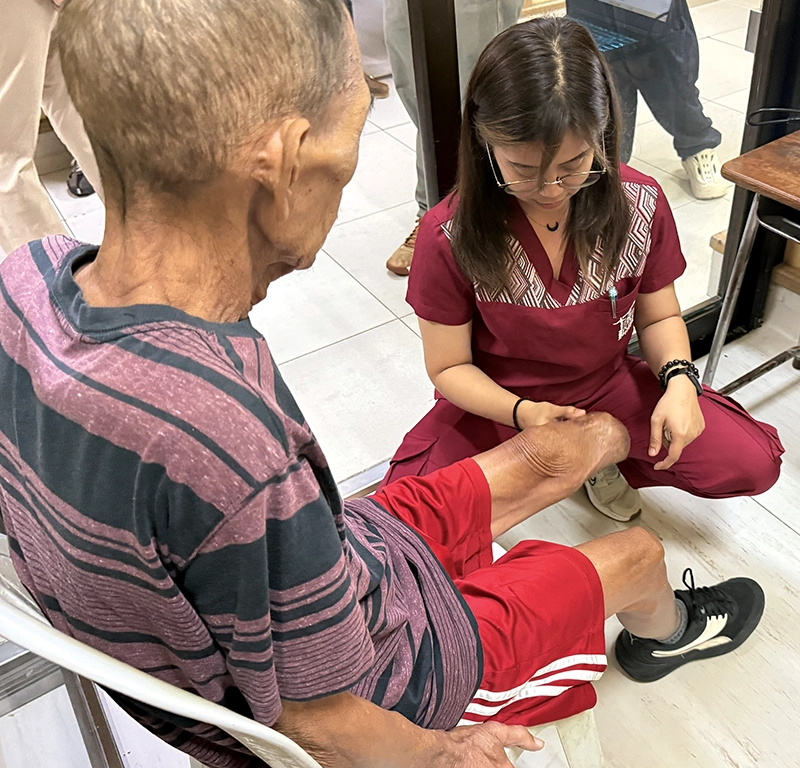
The second barrier is clinical training. Most medical programs teach outdated or insufficient content on PLP, if they address it at all. This is not a failure of intent but of timing. Substantial progress in understanding and treating PLP has only been made recently, and it has not yet reached most curricula or clinical practice. Clinicians who are unaware of current best practice cannot offer it. Education changes this too.
The third barrier is empathy. When people cannot understand a condition, their capacity to support those living with it diminishes. For PLP sufferers, this can mean feeling unheard by clinicians, dismissed by employers, and misunderstood by family. Education changes this as well, by giving clinicians, families, employers, and communities the understanding they need to respond appropriately and support recovery.
Taken together, these three barriers explain why so many people share TJ’s experience. Unlike a new surgical technique or a specialist technology, education can reach across languages, healthcare systems, and borders. Every clinician who gains a better understanding of PLP becomes another point of access to effective care for future patients.
Importantly, PLP management is moving away from relying on a single intervention. Evidence increasingly supports combining appropriate surgical, pharmacological, rehabilitation, and prosthetic strategies throughout the patient’s journey. In my scientific work, I have suggested that a clinically feasible strategy to prevent PLP could begin with careful handling of transected nerves during amputation and the provision of physiological reinnervation targets, followed by early motor training to maintain phantom limb mobility, and ultimately, reinforcement through functional prosthetic use. Clinicians do not need to provide every intervention themselves, but they should understand the options available and how multidisciplinary care can improve outcomes.
#FightPLP: Turning a Mission Into Action
The existence of effective treatments carries an important implication: Eradicating PLP is not an idealistic goal, but a realistic one. That conviction, built over a decade of research and clinical investigations, has made this my personal life’s mission, and #FightPLP is one of the practical vehicles to pursue it.
#FightPLP is a nonprofit initiative that aims to eradicate PLP through education, effective treatment, and prevention. It operates on three fronts: raising aware-ness and reducing stigma among the public, training clinicians in evidence-based treatments, and supporting the delivery of those treatments where they are needed most.
It began in response to the immediate and visible need in Ukraine, where the scale of war-related amputation has created an acute PLP crisis. The campaign originally launched in Ukrainian and English. However, when I shared the idea with colleagues, the response was rapid. Volunteers who recognized the importance of the mission joined independently, and #FightPLP now runs social media accounts in eight languages, all maintained by scientists, clinicians, and other volunteers who believe this work matters.
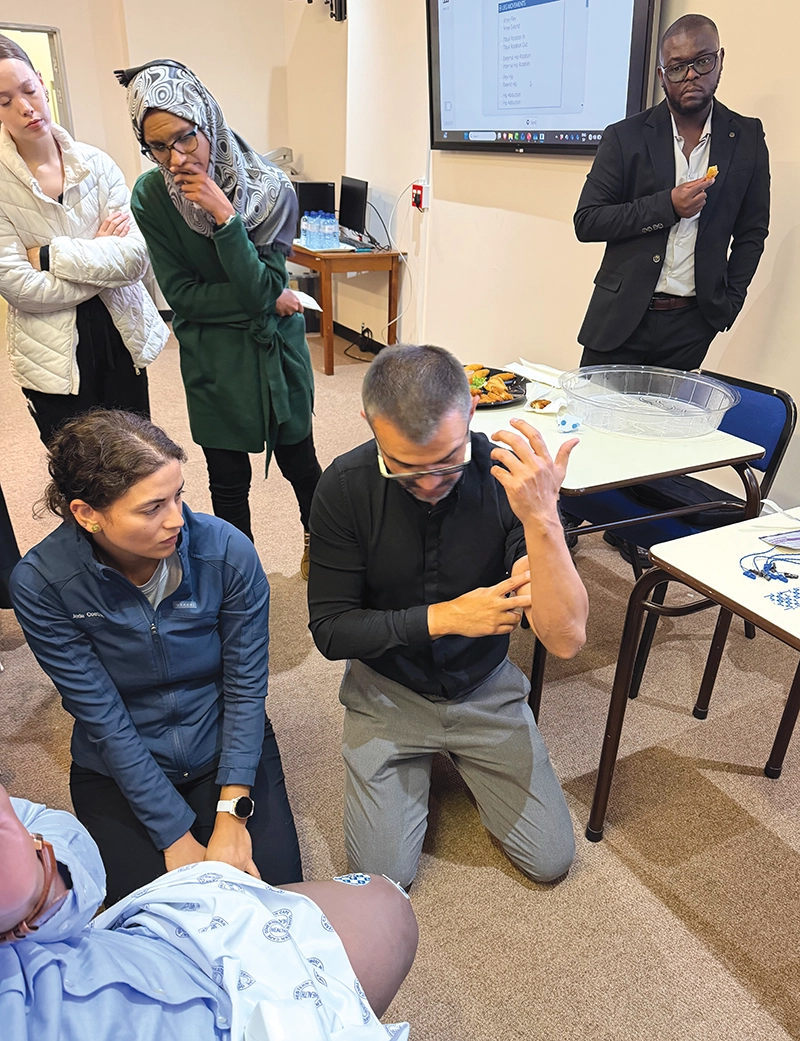
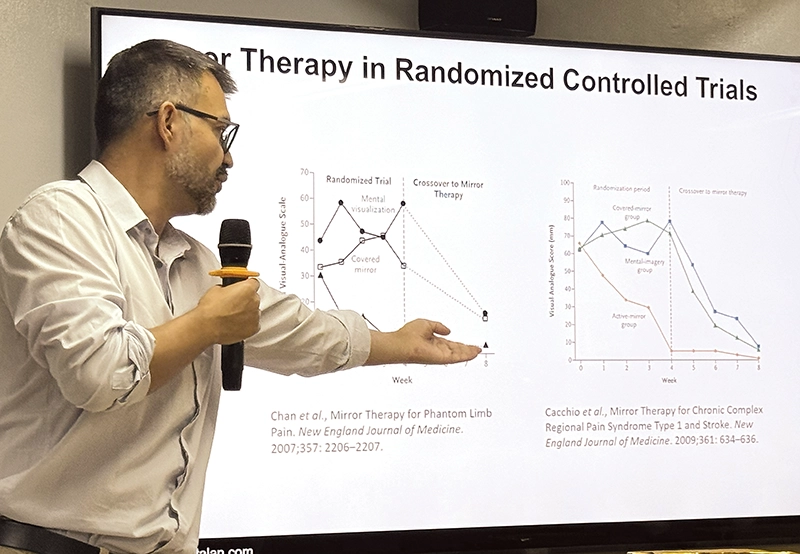
Beyond digital outreach, #FightPLP organizes scientific meetings and hands-on courses on treatments to alleviate and prevent PLP. Educational activities have already been delivered across Southeast Asia, Africa, and Europe. Building on the experience gained in Ukraine, #FightPLP is evolving from a humanitarian response into a long-term model for education and capacity building that can be replicated in other countries using solutions that are evidence-based, cost-effective, and owned and delivered by local clinicians.
What You Can Do
PLP is real and effective treatments exist. If you are living with it, do not stop asking for help. Visit fightplp.info for science-based information on the condition and its treatment.
If you are a clinician, updated resources and training opportunities are available through #FightPLP. You can also get directly involved in delivering evidence-based treatments and organizing events in your region.
For families and caregivers, understanding what PLP is and why it happens is itself a meaningful form of support. A patient who feels heard and believed is already in a better position than one who does not.
And for everyone in this community: sharing awareness matters. Someone reading this may know a person who has quietly stopped expecting relief, as TJ once did. Find all platforms at fightplp.info/socials.
Whether you want to volunteer, sponsor, or simply learn more, there is a place for you in this fight. Contact the team through the website to get involved.
TJ eventually found relief, not because his pain was exceptional, but because someone took it seriously and knew what to do. He should not have had to wait nearly five decades for that moment.
Neither should anyone else. Every clinician who recognizes PLP, challenges misconceptions, and helps patients access effective treatment becomes part of the solution. Together, that is how we fight PLP.
Max Ortiz Catalán, PhD, is a scientist, humanitarian, and social entrepreneur working to restore function and alleviate pain after limb loss. He is the first or senior author of more than 150 peer-reviewed scientific publications on bionics, neurorehabilitation, and postamputation pain. He is currently engaged in voluntary humanitarian and development work in Ukraine, from where he is expanding access to the prevention and treatment of phantom limb pain in underserved and conflict-affected regions worldwide through initiatives such as #FightPLP.
Opener: Peter Steele/stock.adobe.com