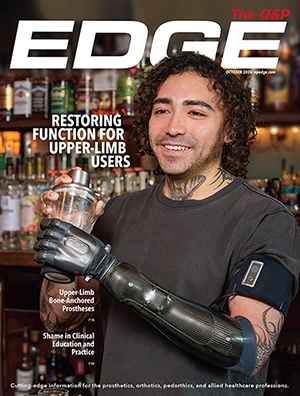

Although progress in prosthetic technology continues to evolve, there is no single upper-limb prosthesis that perfectly meets the multiple needs of its wearer. A myoelectric prosthesis with an articulating hand may be well suited for day-to-day tasks, but a more rugged body-powered prosthesis might be a better choice for gardening, home maintenance, farm work, or construction or auto-motive occupations. We asked experts in clinical care about their challenges in helping patients find the right number and combination of devices, and in addressing reimbursement to cover them.
Let Me Count the Ways
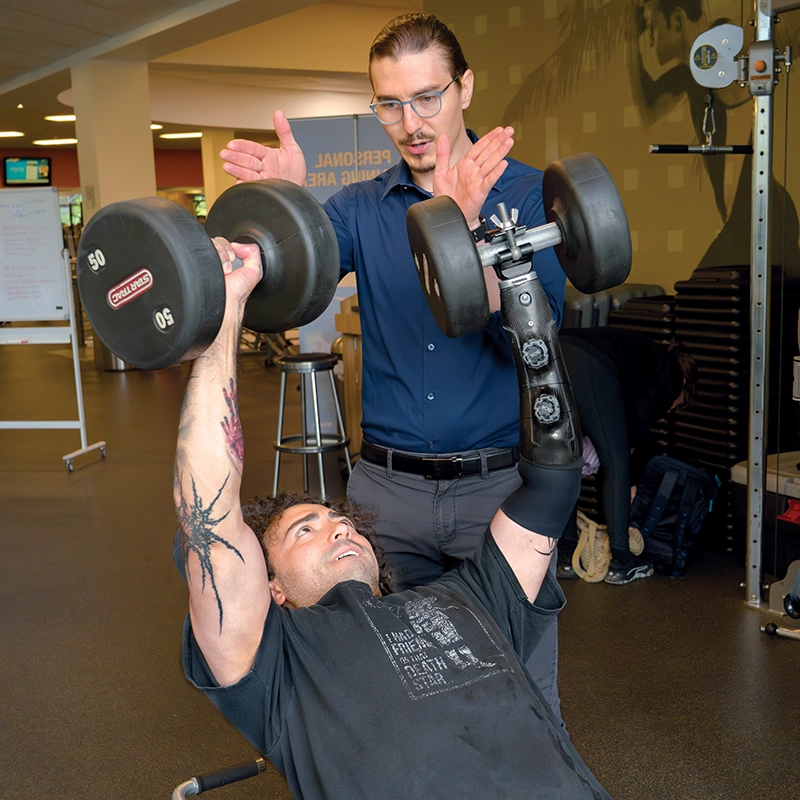
How many prosthetic devices would it take to replace the innumerable capabilities of the anatomical hand?
“I don’t know that you’re ever going to be able to do all the things with an upper-limb prosthesis that you did with your anatomic hand,” says Shane Grubbs, CPO/L, FAAOP, director, ProCare, Ottobock.care.
“Choosing the best combination of terminal devices and tools to adapt easily to needed tasks can be a challenge. A carpenter has more in his toolbox than a hammer; we have more than one tool in our box. We match devices to different tasks, and patients are very good at adapting to the different challenges that they run into with some of these tools, but they must also consider their own individual priorities.
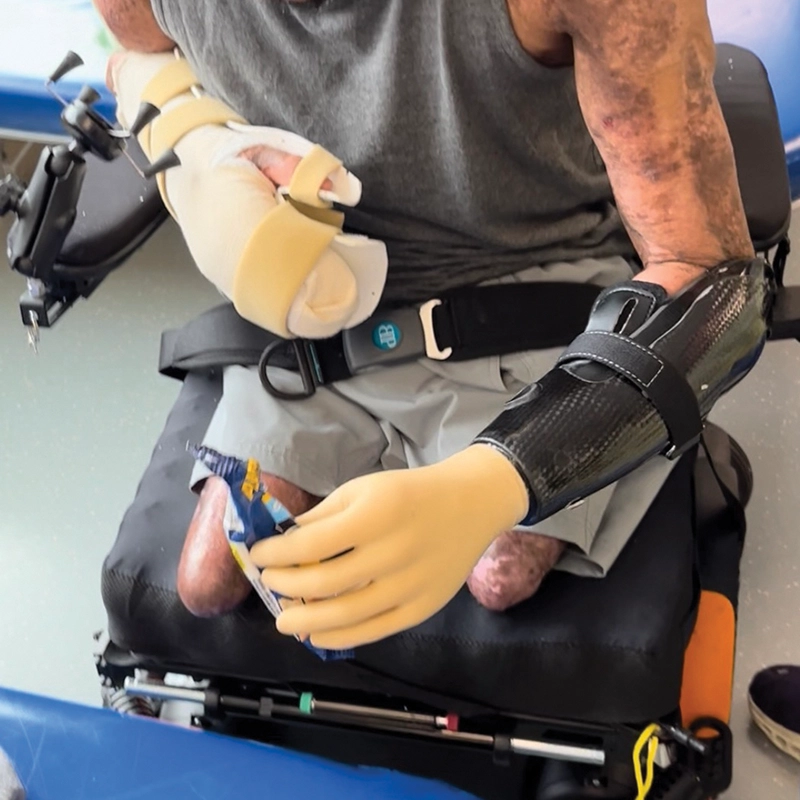
“Much of the innovation in adapting or creating new tools is driven by patients,” he observes. “We were making a simple myoelectric device for a patient with multiple limb loss who still had his dominant hand, but it was compromised, with some ongoing surgical intervention. The myo device could enable him to feed himself, and grab and hold things, but therapy wanted to get him stronger, more independent, and able to push a wheelchair with the limb still healing. So we made a wheelchair propulsion device with protection for his arm and a grip that allows him to push forward, reverse, reduce speed, and apply brakes. He still uses it—in addition to the myo device that’s very functional but can’t really push the manual chair.”
Although the practitioners at Grubbs’ Georgia office primarily fit people with lower-limb amputations, they do see six to 12 upper-limb patients per year, and they find that most new patients don’t understand the possibilities or limitations of multiple prosthetic options well enough to help make choices yet, and they need education and guidance.
Although recreational prosthetic options have been provided for motorcyclists as well as for drummers, guitarists, and other musicians, Brooke O’Steen, OTR, ForMotion, Indiana, points out that upper-limb loss patients are more likely to initially be looking to replace function. “The amputational loss has taken away something great from their life. Once they’re functional, the recreational piece becomes a secondary thought as they explore the possibility of adding other things they want to do, with additional devices.”
Josh Kinsey, CPO, ForMotion, Indiana, describes myoelectric wrist inserts that accept a variety of interchangeable terminal devices. The quick-disconnect devices are attached and removed with a 360-degree turn. The body-powered prostheses use a standardized insert that similarly accepts a variety of terminal attachments. “How many are available to the patient is usually determined by the insurance payer, or by the adjuster of their workers’ comp case if we can justify them as medical necessity. If there are multiple devices that will eventually get approved, in some cases they’ll dictate the timeline on which device we start with.”
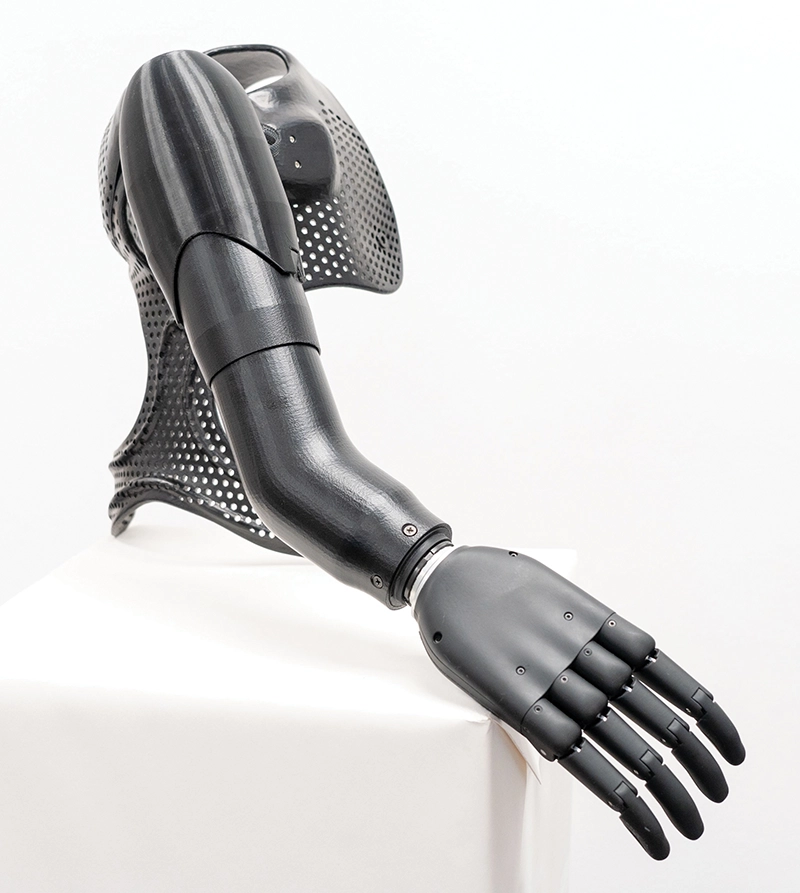
“There are 35 people missing a leg for every one person missing an arm,” O’Steen says. “And our coding is so much different, I don’t think payers understand in any way, shape, or form, the difference and the necessity for multiple terminal devices for somebody to get through life. Fortunately, the medical industry as a whole is beginning to realize that with either style of upper-limb prosthesis, patients need multiple attachments or terminal devices.”
The ForMotion clinic serves a large population of workers’ compensation patients, fitting 120 devices per year for upper-limb patients, and Kinsey estimates that between 80 and 90 percent of their clientele could benefit from multiple devices. “And the other 10 percent don’t know what they could benefit from,” he says. “The occasional patient that’s been in a body-powered for 40 years doesn’t want or need a myoelectric device because they’ve gotten along for so long without one.”
While most patients’ priority is getting back to work with a basic functional device, some such devices are uniquely specialized, says Tim Bump, MSPO, CPO, clinic manager, Handspring, Utah. “I remember a patient who was required to break down rocks or minerals using a sledgehammer at work. He needed something that was more activity-specific for that but was able to use a myoelectric for the rest of his work.”
While no single device for the upper limb can replace everything that our hands do, the demand for one is high. Bump notes that 20 to 40 percent of his patients receive multiple devices designed to help them regain their maximum function, and those patients are funded by workers’ compensation. “Anyone who has Medicare or Medicaid is typically not able to get multiple devices.”
He estimates that 20 percent of the secondary upper-limb devices he fits are recreational, and notes that insurance coverage for such devices, which are not medically necessary by current standards, is even more difficult to achieve.
“Financial support may be available through the Challenged Athletes Foundation, with patients paying out of pocket for just the terminal device, at a cost of anywhere from $500 to thousands, depending on the core device. When you think about the several thousand dollars people spend on their mountain bikes and equipment—yes, it tends to be expensive, but if it helps them, it’s a worthwhile investment.”
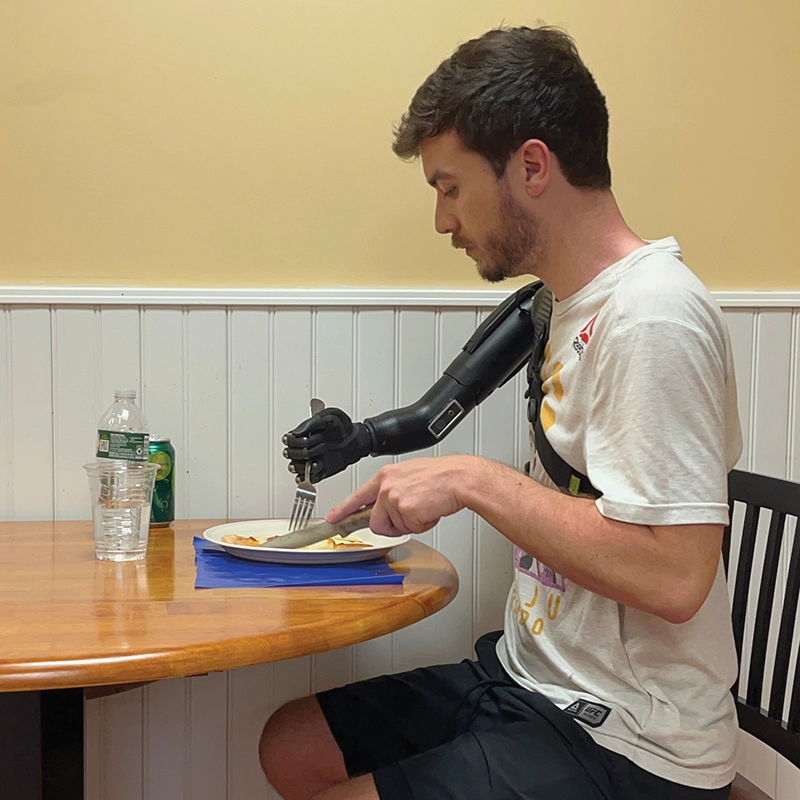
When reimbursement is available, the possibilities for multiple devices and specialized terminal attachments are virtually limitless. Bump cites a case that was funded by a lawsuit payout where he provided a patient with terminal devices for archery, paddleboarding, backpacking, hiking, and golf, plus various tools like wrenches and clamps used primarily for deer skinning.
He notes that while TRS, Texas Assistive Devices, or Open Bionics offer terminal devices that are activity specific, with increasing frequency he is called upon to create a custom solution for unusual requests. “We get cases where a patient has tried something from another manufacturer that just doesn’t work well for them. One patient’s prosthetic guitar pick stuck out too far from his grasp, so we customized something that was very specific.”
John M. Miguelez, CP, FAAOP(D), president, senior clinical director, Arm Dynamics, California, strongly believes that patients’ hobbies and life passions are what motivate them and ensure long-term wear. “If we can invest in the activity-specific prostheses and multiple attachments that allow them to go to the gym, play volleyball, and go fishing, they will want to wear the prosthesis, and they’ll embrace it as part of their life. We have patients that have a myoelectric prosthesis, a body-powered prosthesis, and activity-specific prosthesis, but it’s all predicated on our goal to get them back to where they were prior to their injury.
“As long as we can justify it, and there’s a need, the number of devices depends on their willingness to commit to the training required to be proficient.”
He points to a current patient with a transhumeral amputation who is determined to become a professional tennis player. “While we spent a lot of time with his primary prosthesis, now we’re trying to get him into a prosthesis that lets him play tennis, because that’s one of the joys of his life.”
Building the Patient Partnership
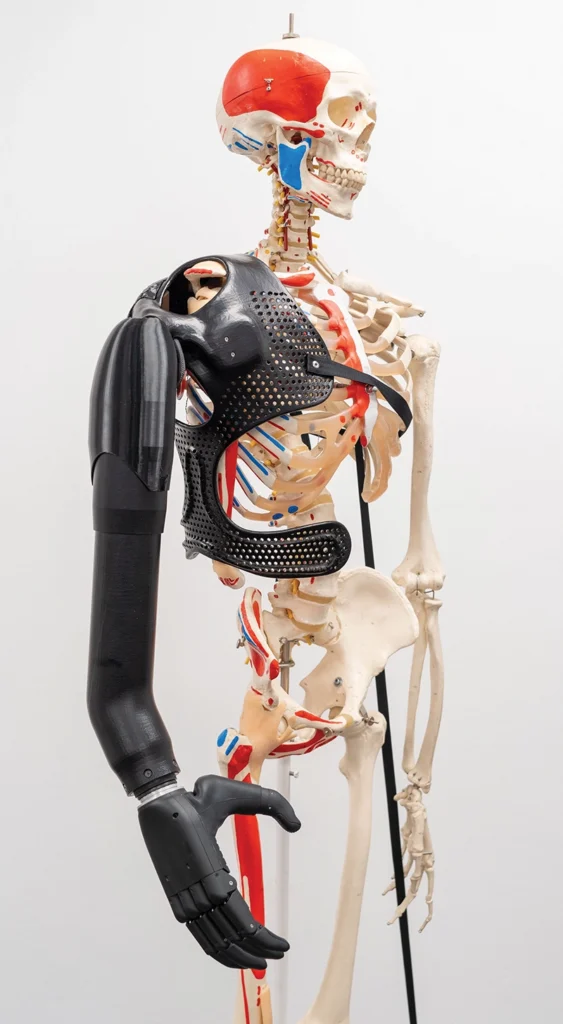
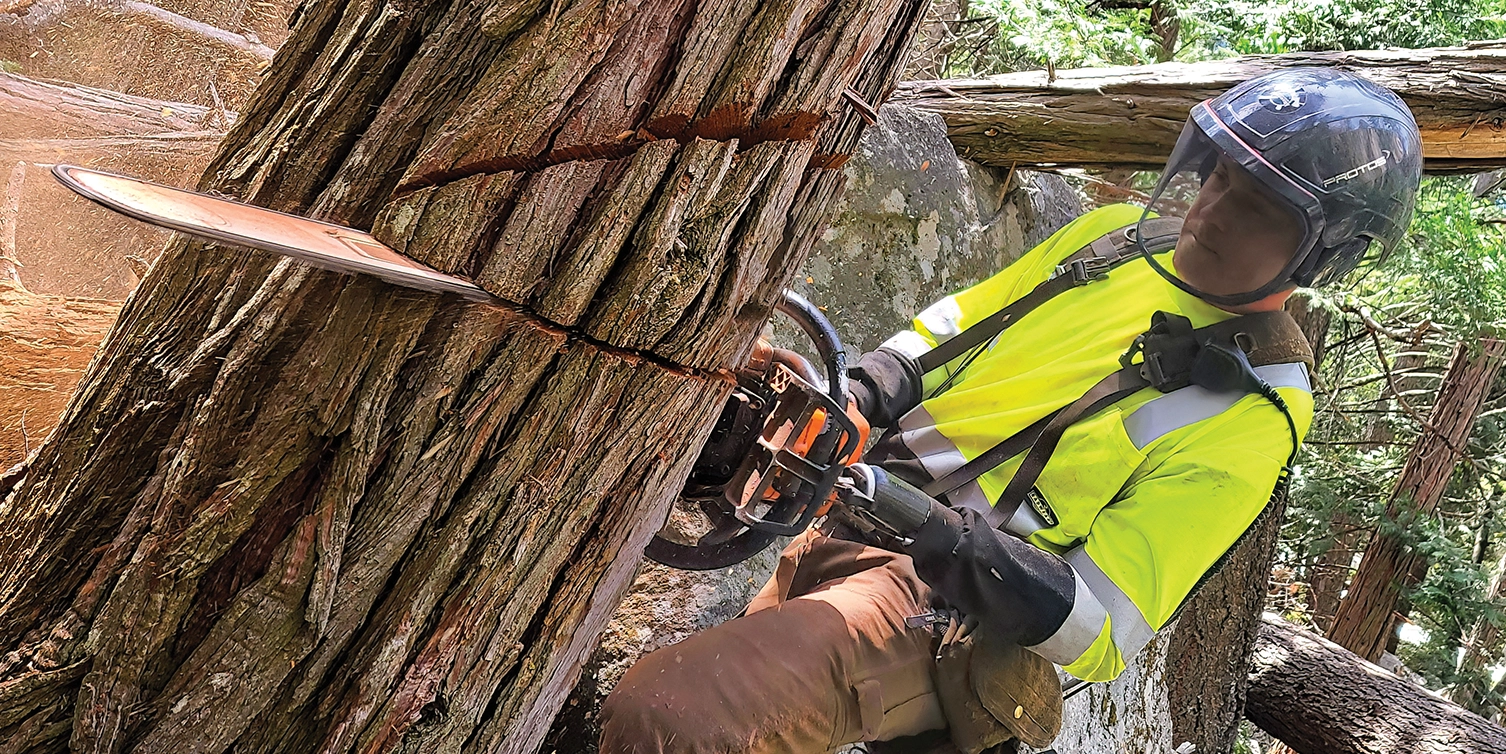
Miguelez also recalls a Yosemite tree feller who wanted to return to work. Other prosthetic providers had failed to create a solution, but the Arm Dynamics team was ultimately able to design a prosthesis that could hold a chainsaw in a safe way. “It takes a great deal of creativity to help people return to the activities they enjoy, and those are exactly the kinds of challenges we find most rewarding,” he says.
Since many upper-limb prosthetic devices are custom made, and each patient is different, most efforts to create additional specialized devices or attachments begin with a focus on getting to know the patient.
The Arm Dynamics clinical teams start with a two- or three-hour evaluation, covering patients’ injury histories, lifestyles, and work, as well as their interests and ambitions. “Predicated on that, we start with a primary prosthesis, which could be either passive, body-powered, electric, or hybrid,” Miguelez says. “For someone using an electric prosthesis, a multiarticulating or single-motor hand may work well for everyday tasks, but other activities often require a different prehension pattern or greater durability. In those cases, we may provide an electric hook or ETD [electronic terminal device] that is waterproof, rugged, and better suited for more demanding activities, with the primary limitation being the amount of torque the components can safely withstand.”
A patient working in an office environment may want a primary myoelectric hand to help with paperwork as well as going out to dinner, he explains, while also needing a secondary option for farm or garden work, which would often be a body-powered prosthesis, potentially with more than one terminal device for additional activities.
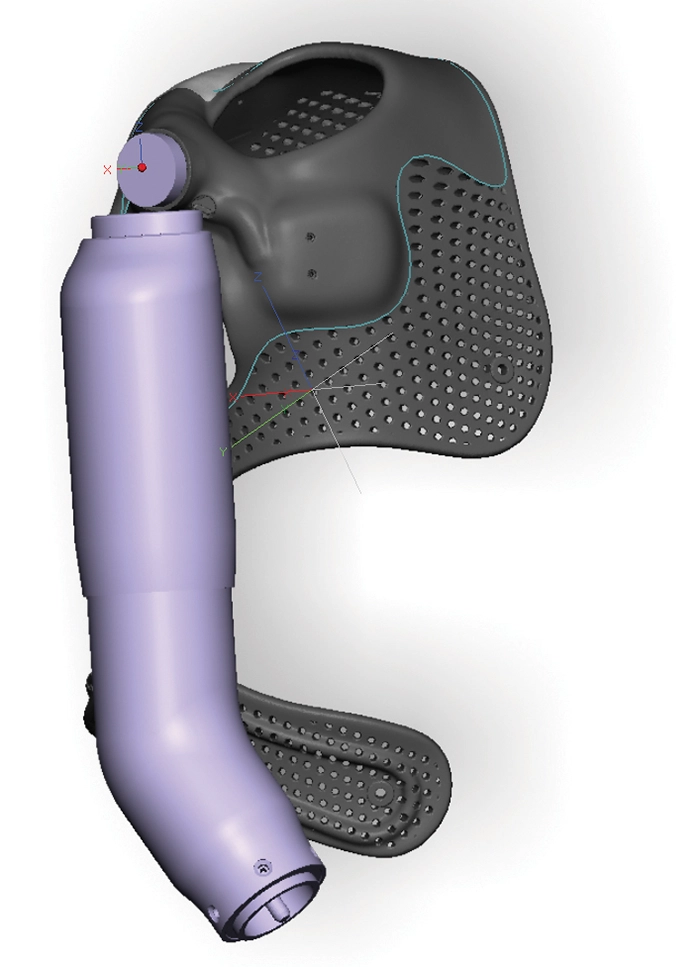
O’Steen agrees that the initial patient evaluation is essential. “How does their residual limb present? What are their daily functional requirements? What are their goals? What do they want this thing to do? We ask them to list three to five goals and rank those goals; then we discuss the options that would be available, based on their payer, their goals, and the type of device needed to meet those criteria.”
With regard to how realistic patients are in listing their goals, Kinsey notes that some, influenced by what they’ve seen online, come in with lofty expectations and dynamic goals. “After they get their prosthesis, they recenter those goals over time: ‘I want to be able to do this, this, and this—but I can’t because of a product limitation or what insurance will allow me.’”
He notes that ForMotion’s interdisciplinary team—a prosthetist, occupational therapist (OT), and often a technician—participates in the initial patient evaluation.
Since many of ForMotion’s upper-limb patients come from a job injury, “Sometimes I think we forget,” O’Steen says, “that the mechanism of injury is trauma, and our patients have experienced one of the worst things in their entire life. And since then, they’ve been guided and directed by other people telling them what they should do, and what they have to do. They’ve had no control over their situation. Sometimes they try to assert themselves just to regain a little bit of that control as a coping mechanism, not knowing that they don’t know what they don’t know.”
“Brooke and I also are big proponents of having mutual patient buy-in,” Kinsey adds. “So if we present them with options, we’ll guide them, but we want them also to want the device they’re getting, as well—or they just won’t wear it.”
While patient input is encouraged, the prosthesis design is not necessarily based on what the patient wants, he notes. “We want to save them from themselves, right? They may have a certain idea of what they want for a socket, and their anatomy might not be conducive to the socket they want. Whether their limb is short, or at a disarticulation level—there are so many variables that go into designing a prosthesis, that we have to guide and also educate them throughout, regarding why we’re making those decisions.”
Proactive patient recommendations based on YouTube and Google can be a challenge, and diplomacy is sometimes required, O’Steen agrees. “Sometimes we do have to talk them into the path that we would like them to take.”
The patient partnership is equally important to Grubbs, who notes that most new patients are unaware of what to expect, and need guidance regarding the multiple prosthetic options available to them.
“The hand adapts so well to thousands of task requirements with varying force, precision, and speed, while adapting to myriad environments and providing a wealth of sensory feedback. Although technology meets some of those needs, there’s really nothing that can successfully optimize all of those demands—and we don’t want new patients to have the expectation that there is,” he explains. “It’s important to educate and explain how the terminal devices work, and the pros and cons of the socket designs, and also to show them different device and grip patterns while explaining what kind of function we’re trying to restore.”
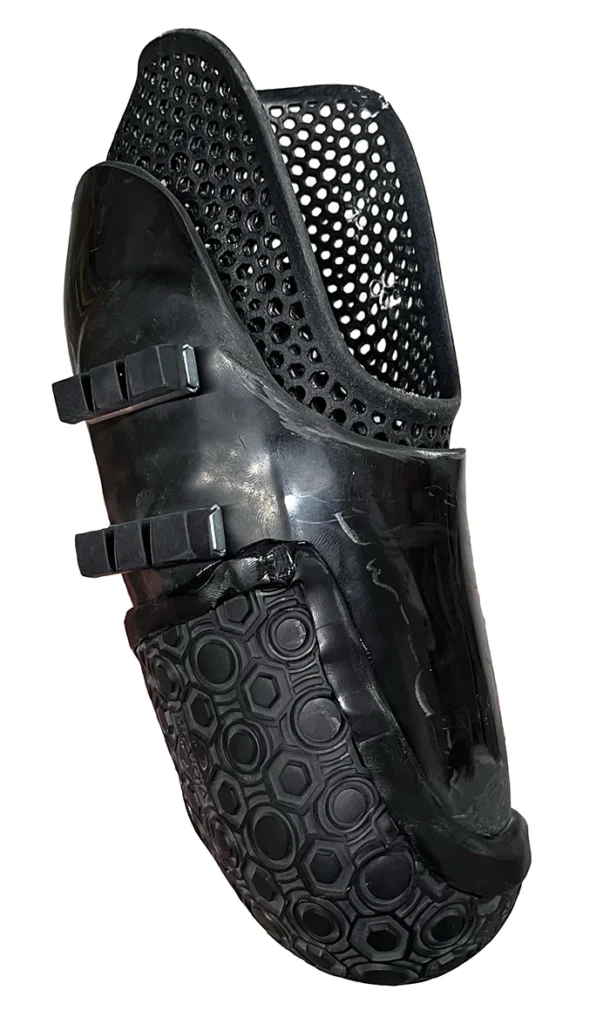
“When a patient wants a specialized device, we have to research their policy and see what we can fight for, what’s restricted from their coverage, and learn what they hope to accomplish with it. For new patients sometimes we try to start with a simple socket with a rudimentary formed plastic attachment, so they can get used to wearing something and using that side with a device. Sometimes if you don’t do so early on, their utilization is going to go down,” Grubbs says.
“Some of [our patients] were out of state when they were injured, and they come back with different educational experiences. Some have met with really great OTs already, and they have a stronger understanding of the limitations they’re likely to run into with the technology and tools available. Early education will help get the patients thinking about what they encounter every day, what’s going to help them to do those things, and what they really want to do on a day-to-day basis.
“That early awareness helps us focus on the most important and impactful thing they want us to begin with. If you start with everything all at once, it can be overwhelming regarding what to use, and how and when. But if we can start with one pathway, doing specific activities and mastering those, we can step it up by degrees. Occupational therapy and outcome measures in the clinic are helpful, but when they get home, they may find some activity they want to do and realize that what they’re wearing is not going to help them do that,” he says.
“The patient needs to consider their own priorities that can be very different from patient to patient and even change over a lifetime. They start to formulate an approach to doing those things, and that helps us find a path forward for them and more tools to help them.”
Barriers to Accessibility: Insurance
The concern our respondents expressed over payer approval and reimbursement for their patients’ multiple upper-limb devices was unanimous.
“There was a time when I could call an insurance company and say, ‘I believe this patient needs XYZ, and here’s why.’ Those days are largely gone,” Miguelez reflects. “Today, clinical judgment alone isn’t enough. We have to support our recommendations with objective, analytical data.
“From an insurance standpoint, one of the challenges is that private health insurance generally is not obligated to restore an individual to their pre-injury level of function. Work-related injuries are different, because there is typically a greater obligation to address the functional losses resulting from the injury.”
He addresses anticipated challenges through a phased approach, notifying the insurance company not only of the initial prosthesis being recommended, but also of additional prostheses that are expected to be needed over time. This gives the insurer advance notice of the broader treatment plan and an opportunity to anticipate future costs.
“It’s a much more challenging authorization process when multiple prostheses are involved, but we’ve been very successful using objective outcome measures, including the CAPPFUL [Capacity Assessment of Prosthetic Performance for the Upper Limb], our validated performance measure. CAPPFUL assesses how functionally a patient uses their prosthesis compared with a sound arm, using a scale from zero to 100, with 100 representing the function of a healthy, unimpaired arm,” Miguelez says.
“Our goal is to help patients achieve the highest level of function possible, and that depends on the correct fit, appropriate training, and the prosthetic option best suited to their needs. We benchmark each patient’s CAPPFUL score against the expected range for someone with a similar level of limb loss and prosthetic system. If, for example, a transradial myoelectric patient scores below that expected range, we know we need to reassess the fit, the componentry, the training, or some combination of those factors.”
When a patient achieves a score within the expected benchmark and that data is presented to the insurance company, the next question is often whether the patient will actually wear and use the additional prosthesis, particularly given the historically high abandonment rate associated with auxiliary prosthetic devices.
“Providing outcomes data to support our recommendations allows us to partner more effectively with the insurance company while advocating for the patient,” Miguelez says. It gives the insurer measurable evidence that the patient is performing within the expected functional benchmark and helps make the authorization decision more straightforward. Our goal is always to help the patient achieve the highest level of function possible.”
Although he acknowledges that there can be resistance from insurance companies, Miguelez says each step in the process helps build trust by providing clear, demonstrable evidence of the patient’s progress. “We provide outcome measures along with videos so the insurance company can see that this isn’t just a name on a piece of paper. It’s a real person behind the request, and they can see that individual using the prosthesis to perform meaningful activities. It gives everyone involved a much clearer understanding of the patient’s progress and what we’re trying to accomplish.”
Bump sometimes succeeds with insurance payers through justification and using crossover terminal devices. “We’ll talk about all the patient’s needs, their interests, the things they do on a daily basis, and consider how one prosthesis might serve for two activities, like grocery shopping and biking. A hook might not be ideal for helping control a shopping cart, but having a type of prosthetic terminal device that would help with either riding a bike or using a shopping cart could be a beneficial thing.”
Grubbs believes in letting new patients experience the feel and weight of a simpler device before attempting to gain authorization for the final device. “We try to let them trial it for a few days or a week while in rehab, doing some tasks with it to see what’s going to work for the patient. If they’re going to get something like it and potentially adopt it into their everyday life, being able to try it first before ordering and adding tech is helpful in predicting success. I think there’s opportunity with that approach to hopefully help more patients find their success and function with these devices long term. The patient should examine the ‘costs’ of weight and learning the control versus the functional advantages. Many patients emphasize the use of gestures, which involve outward social expression of the device, but the prosthetist and OT are looking at the functionality and use as well.
“They might see super users online, and natural-looking myoelectric hands, and they want one that will bring them back. Explaining the limitations of those hands, and how impactful the loss of positional awareness and touch is, which we can’t replace right now—those are tough conversations.
“Within the field, I think we should keep working toward finding ways to explore what we are doing with real-world use in advance due to the complexities involved with upper-limb loss and difference.”
Judith Philipps Otto is a freelance writer who has assisted with marketing and public relations for various clients in the O&P profession. She has been a newspaper writer and editor and has won national and international awards as a broadcast writer-producer.