
OANDP-L
  • Login
No Result
View All Result
The O&P EDGE Magazine
  • PECOS
  • Magazine
    • Subscription
    • Current Issue
    • Issue Archive
    • News Archive
    • Product & Service Directory
    • Advertising Information
  • O&P Jobs
    • Find a Job
    • Post a Job
  • EDGE Advantage
    • EA Homepage
    • EA Data
  • O&P Facilities
  • Resources
    • Product & Service Directory
    • Calendar
    • Contact
    • About Us
    • O&P Library
    • Lower Limb Directory
    • The Guide
    • Custom Publications
    • Advertising Information
    • EDGE Direct
    • Amplitude Media Group
No Result
View All Result
The O&P EDGE Magazine
No Result
View All Result
Home News

Scoliosis Linked to Disruptions in Spinal Fluid Flow

by The O&P EDGE
January 3, 2022
in News
0
SHARES
16
VIEWS
Share on Facebook
Share on Twitter

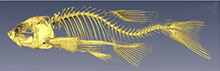
Photograph courtesy of Science.

A study of zebrafish conducted by researchers from Princeton University and the University of Toronto, Canada, suggests that irregular fluid flow through the spinal column brought on by gene mutations is linked to adolescent idiopathic scoliosis (AIS) in humans. Found in zebrafish and humans, the mutated genes damage the motile cilia, tiny hair-like projections that line the spinal canal and help move the fluid, and lead to a curvature of the spine. By repairing the mutated cilia genes, the research team found that cerebrospinal fluid flow was restored and could prevent spinal curves from developing. If translatable to humans, the study could lead to a nonsurgical approach for treating AIS.

In the zebrafish’s brain regions known as ventricles, which sit at the top of the spinal cord, damaged motile cilia were sparse and malformed and the fish developed hydrocephalus, which is associated with loss of cilia function. Using fluorescent dyes to track the flow of cerebrospinal fluid through the ventricles, the researchers saw that the flow was irregular and slower than normal. The team found that the damage to motile cilia function occurs and leads to the onset of scoliosis during adolescence for zebrafish, a period of rapid growth. They also tested other motile cilia gene mutations to see whether they disrupt cerebrospinal fluid flow and cause spine curvature.

“This is the first hint of a biological mechanism for idiopathic scoliosis,” said Rebecca Burdine, PhD, associate professor of molecular biology at Princeton, and a senior author of the study. “We hope this research will open up new areas of inquiry as to how the disruptions to normal cerebrospinal fluid flow can lead to spinal curvature.”

“Traditionally, theories regarding the biology behind idiopathic scoliosis have revolved around defects in the bone, cartilage, or neuromuscular activity,” said senior author Brian Ciruna, PhD, an associate professor of molecular genetics at the University of Toronto and a senior scientist at the Hospital for Sick Children, Toronto. “The finding that defects in cerebrospinal fluid flow may be contributing to scoliosis came as a surprise. It is not a theory that had been put out there previously.”

The next step will be to understand the mechanisms by which disrupted cerebrospinal fluid flow causes the spine to curve, Burdine said. “Now that we can study idiopathic scoliosis in zebrafish, we can begin to identify molecular pathways that are involved in spine curvature, and hopefully, find therapeutic targets to address this condition,” she said.

The study was published June 10 in Science.

Editor’s note: This story was adapted from materials provided by Princeton University.
Related posts:

  1. Academy Society Spotlight: A Discussion on the Case for Rigid Bracing in Children with Neuropathic Onset Scoliosis
  2. Five-year Case Study of an Infant With Scoliosis Using Schroth Therapy and Chêneau-type Bracing
  3. Adolescent Idiopathic Scoliosis: Cobb Angle Relative to Overall Balance
  4. Cobb Angle or Balance? Trends, Debates in Scoliosis Orthotic Management
Previous Post

GAO Says Appeals Process Needs Further Improvement

Next Post

Deadline Extended: Researcher Seeking Upper-limb Prosthesis Users for Study

Next Post

Deadline Extended: Researcher Seeking Upper-limb Prosthesis Users for Study

The O&P EDGE October 2026 issue

Read the Current Issue

SUBSCRIBE FOR FREE


O&P JOBS

Pacific

Orthotics and Prosthetics Assistant

Central

Certified Orthotist — Full-Time or Part-Time, Pediatric Practice

Multiple Locations

Certified Prosthetist / Orthotist (CPO/CP/CO)

Linkedin X-twitter Facebook

Get unlimited access!

Join EDGE ADVANTAGE and unlock The O&P EDGE's vast library of archived content.
SUBSCRIBE TODAY


© 2026 The O&P EDGE

  • About
  • Advertise
  • Contact
  • EDGE Advantage
  • OANDP-L
  • Subscribe

CONTACT US

866-613-0257

info@opedge.com

201 E. 4th St.
Loveland, CO 80537

EDGE DIRECT

The most important industry news and events delivered directly to your inbox every week.

  • About
  • Advertise
  • Contact
  • EDGE Advantage
  • OANDP-L
  • Subscribe

© 2026 The O&P EDGE

Welcome Back!

Login to your account below

Forgotten Password?

Retrieve your password

Please enter your username or email address to reset your password.

Log In
Close
No Result
View All Result
  • PECOS
  • MAGAZINE
    • SUBSCRIBE
    • CURRENT ISSUE
    • ISSUE ARCHIVE
    • NEWS ARCHIVE
    • PRODUCTS & SERVICES DIRECTORY
    • ADVERTISING INFORMATION
  • O&P JOBS
    • FIND A JOB
    • POST A JOB
  • EDGE ADVANTAGE
    • EA Homepage
    • EA Data
  • FACILITIES
  • RESOURCES
    • PRODUCTS & SERVICES DIRECTORY
    • CALENDAR
    • CONTACT
    • ABOUT US
    • O&P LIBRARY
    • LOWER LIMB DIRECTORY
    • THE GUIDE
    • CUSTOM PUBLICATIONS
    • ADVERTISING INFORMATION
    • EDGE DIRECT
    • AMPLITUDE
  • OANDP-L
  • LOGIN

© 2026 The O&P EDGE