
Shabri, a research, development, and manufacturing company focused on advancing technology for prosthetic, orthotic, and other medical applications, has been awarded a $306,864 grant from the National Institutes of Health (NIH) to advance the development of an antimicrobial prosthetic liner designed to help reduce the risk of infection for people with lower-limb amputations. 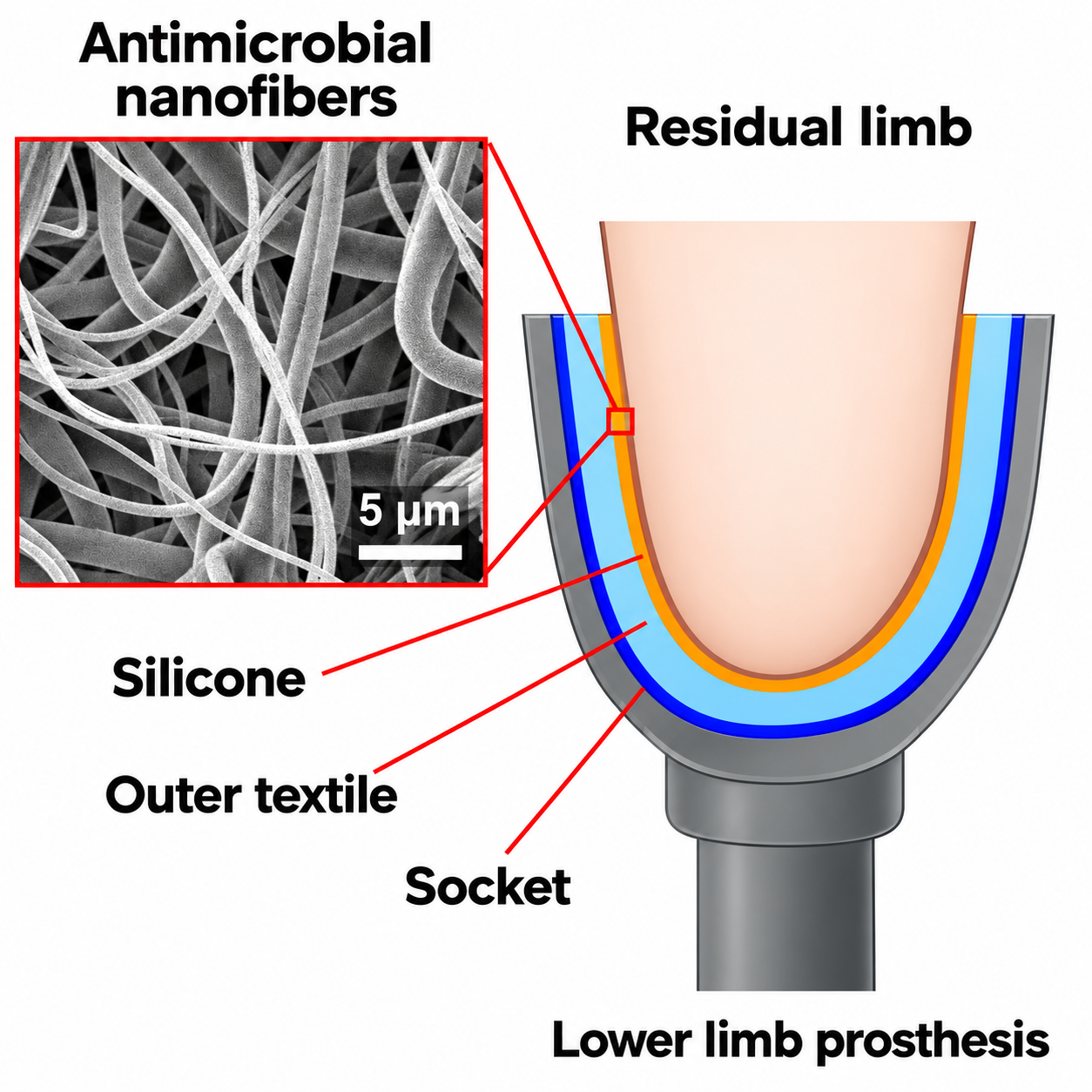
The project, “Antimicrobial Prosthetic Liner for Preventing Residual Limb Infection,” will use an antimicrobial liner fabric made with chitosan nanofibers combined with medical-grade polyurethane nanofibers. Chitosan is a naturally derived material known for its antibacterial properties and biocompatibility. The technology is designed to provide antimicrobial protection without relying on antibiotics.
“As both a prosthetist and an amputee, I understand how important skin health and comfort are to a person’s ability to use a prosthesis every day,” said Rakesh Srivastava, CPO, founder and CEO of Shabri and Innovative Prosthetics & Orthotics, Nebraska. “We are always looking for ways to solve real problems that affect people with limb loss. This NIH grant allows our team to rigorously evaluate a technology that we believe has the potential to make prosthetic liners safer and better for the people who depend on them.”
During Phase I of the project, researchers will work to optimize the antimicrobial fabric, evaluate its ability to resist bacteria and biofilm formation, test its mechanical performance and biocompatibility, and determine how well it withstands perspiration, repeated wear, and routine cleaning. The goal is to develop a proof-of-concept prosthetic liner combining the antimicrobial fabric with an optimized silicone support structure. Successful completion of the project could lead to additional development and preparation for safety and efficacy clinical trials for a Phase II research effort.

“Our approach to antimicrobial protection is fundamentally different from conventional strategies,” said Yury Salkovskiy, PhD, assistant professor, Department of Biomechanics, University of Nebraska at Omaha (UNO), and co-principal investigator. “Instead of relying on antibiotics, which can cause unwanted side effects, our liner uses engineered polymers that actively kill harmful bacteria while also promoting the healing of skin injuries that can develop on the residual limb during everyday prosthesis use. We believe this technology could transform prosthetic liners by making them safer, more protective, and better suited to the needs of people living with major limb loss.”
The project brings together a multidisciplinary team from Shabri, UNO, and the University of Nebraska Medical Center, combining expertise in O&P, biomedical engineering, materials science, polymer chemistry, microbiology, cell biology, biomechanics, and additive manufacturing. The collaboration is designed to move the technology from laboratory research toward practical manufacturing while keeping the needs of prosthetic users central to the development process.
“This award represents the first [Small Business Technology Transfer] grant secured in the UNO Department of Biomechanics and is an exciting milestone for our research and innovation efforts,” said Jorge Zuniga, PhD, research collaborator and assistant chair of the department. “Dr. Yury Salkovskiy is an outstanding scientist, and SHABRI has been an exceptional collaborator in translating our research into technologies that can directly benefit people with limb loss.”