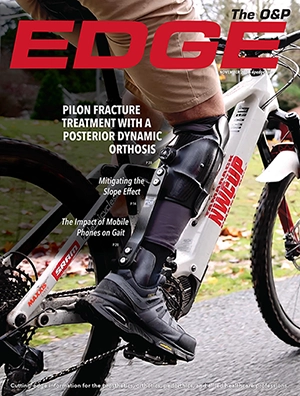
An article in the November issue of The O&P EDGE highlights the use of cell phones as it relates to clinical care. Mobile phones and smartphones have become essential tools in modern healthcare, transforming how clinicians communicate, access patient data, and deliver care. Of those who responded to our question about the benefits of smartphones in their practice, 80 percent said it allows for rapid communication, and the rest said smartphones help provide point-of-care communication. We also offered options of a streamlined workflow or remote monitoring, but no one thought those were the greatest benefits.
Last week we turned our attention to artificial intelligence (AI). With another big news story circulating on AI, it could leave one to wonder if AI will eventually take over every profession in some fashion. Yet, there will be some jobs AI will be unable to do.
Our question: Which professions will be relatively safe from AI intervention? Of those who responded, 58 percent said skilled trades job, like mechanics or welders, would likely see the least impact from AI; 35 percent said healthcare and clinical roles wouldn’t be as impacted by AI; and 8 percent said human-centered professions, careers that rely on empathy, emotional intelligence, ethical judgment, and personal context rather than routine or automated tasks, would be least affected. No one thought that high-accountability jobs were the necessarily safe.
One follower also commented, “China already has robots doing trades—especially high risk jobs.” Another said orthotic metal bending was sure to be safe, and he included a grinning emoji. He concluded, “No AI or 3D,” along with a thumbs-up emoji.
Our latest question: What will you be watching on Thanksgiving Day? Football? Macy’s Thanksgiving Day Parade? Something else?
Let us know. We’d love to hear from you.