

A feasibility study conducted at the University of Rhode Island (URI) used an augmented reality game to keep upper-limb prosthesis users engaged and motivated during training or rehabilitation.
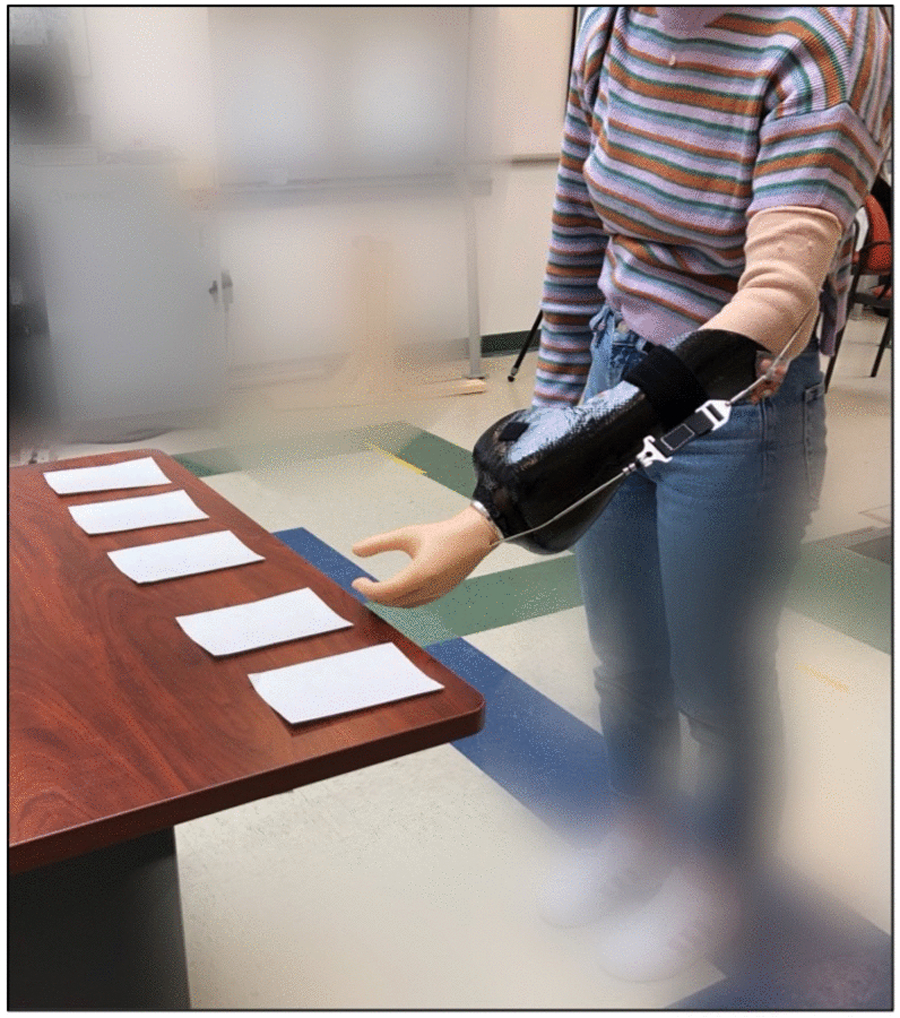
The researchers, led by Susan D’Andrea, PhD, associate professor of kinesiology in the College of Health Sciences, recruited 32 healthy, able-bodied adult participants for the study. Wearing a bypass body-powered prosthetic device, participants performed functional task assessments in D’Andrea’s MotionVR Biomechanics Lab.
“The quality and quantity of prosthetic training have a significant influence on prosthetic acceptance,” D’Andrea said. “However, there’s no consensus on the most effective delivery for this training. We focused on the upper extremities because individuals with upper-extremity amputations will often reject their prosthetic. Many times, it feels easier for them to use their uninjured arm because they don’t get enough training on using the prosthetic.”
Half of the participants were randomly assigned to an augmented reality intervention group and the other half to a control group. Participants in the augmented reality group used the ARm-Strong training game, which was developed at URI by kinesiology and biomedical engineering students. The game challenges participants to stack holographic cups while wearing a Microsoft HoloLens2 headset. The participants were tested during three visits, with four to six days between each visit.
Participants in the control group received no training between pre- and post-measurements of hand function and were instructed not to use a prosthesis between visits to the lab. During their two visits, which were eight to 12 days apart, the control group participants were instructed to complete a seven-task functional assessment using the prosthesis only. One task was to turn over five index cards on a table while being timed.
“On average, individuals in the augmented reality group were significantly more efficient at using the bypass prosthesis to complete functional tasks compared to the control group,” said D’Andrea. “Individuals who engaged in the augmented reality training had positive feelings of engagement, engrossment, and immersion towards the application.”
D’Andrea is hopeful that augmented reality will become widely adopted in healthcare as a training or rehabilitation tool.
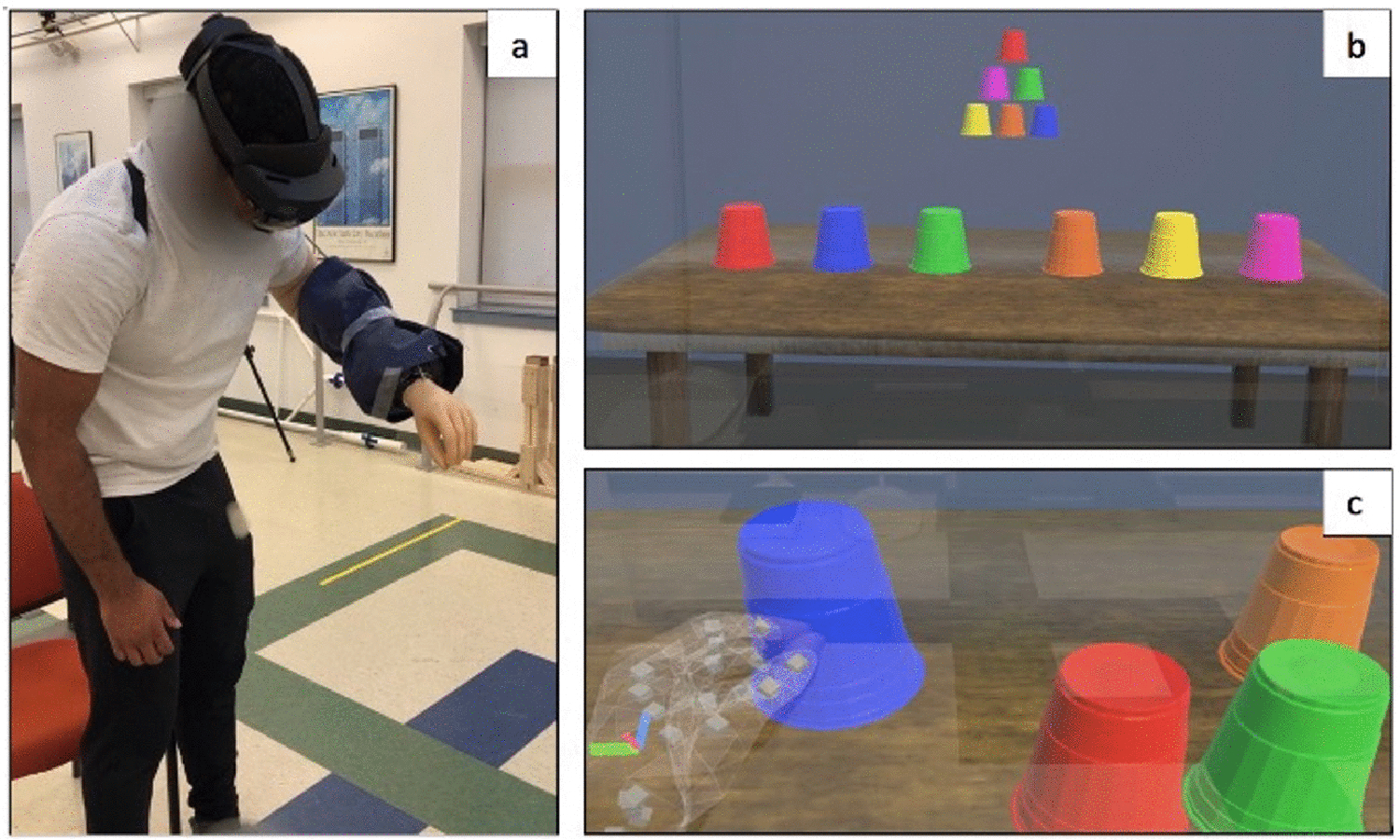
“The amount of time needed to progress through prosthetic training protocol varies from person to person depending on their needs and function. That’s why the augmented reality game is appealing—it can be tailored to the needs and abilities of the user,” she said. “It’s also a great solution because you can play the game anywhere.”
She also noted that there are very few safety issues because users can see their environment through the lenses, as opposed to virtual reality headsets, where users can only see the game.
While widespread implementation of the technology has been cost-prohibitive, D’Andrea expressed optimism that the technology may soon be available more widely.
“I think the price point of the augmented reality headsets are finally starting to come down, which might speed up the adoption of the technology for rehabilitation,” she said.
Editor’s note: This story was adapted from materials provided by URI.
The open-access study, “Augmented reality for advanced prosthetic training in non-amputees,” was published PLOS One.