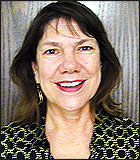
<img style="float: right;" src="https://opedge.com/Content/OldArticles/images/2009-01_07/7-1.jpg" hspace="4" vspace="4" /> <b>Jane Wolking, CP, </b>is the facility director at Actra Orthotics and Prosthetics, Madison, Wisconsin, a family-founded business with ten offices in Wisconsin and Minnesota. Though highly skilled with high-tech limbs and orthotics, Wolking puts equal emphasis on the human elements of O&P. With patients ranging in age from a couple of months old to nearly 100, Wolking emphasizes the importance of patient education, evaluation, training, and follow-up care to encourage long-term health. She told <i>The O&P EDGE, </i>"I believe that in the future, healthcare financing reforms will require us to build on our strengths, which are patient successes, and innovatively seek the best practices to increase that success." The avid family-woman and outdoor enthusiast loves hiking, canoeing, and camping, as well as her ten-year-old grandson, who recently assured her that he "knows just about everything about prosthetics"-a good sign that her vocation continues to run in families. <h2><span style="color: #ce1429; font-size: 14pt;">1. </span><span style="font-size: 14pt;">How did you become involved in O&P?</span></h2> I had always been involved in making things, from clothes and coats to art projects. When I was working in rehabilitation at the Sister Kenny Institute, Minneapolis, Minnesota, I happened to read an article in the paper about prosthetics practice and how it was a field where women were needed. I visited the program at Century College, White Bear Lake, Minnesota, when it was still the 916 Technical Training Program, and signed up. <h2><span style="color: #ce1429; font-size: 14pt;">2. </span><span style="font-size: 14pt;">How has your career progressed?</span></h2> I have always felt that patient success is the highlight of this career, and practitioners and technicians in the field have been very generous in sharing their knowledge and skills with me while working diligently for the success of patients. I attended the technical program at 916, interned at the Minneapolis Veterans Affairs (VA) Medical Center, and then worked as a technician at Otto Bock in Minneapolis. I later returned to the practitioners' certificate program, completed my bachelor of science degree, and worked with Northwestern Artificial Limbs and Braces, Minneapolis-St. Paul, Minnesota. I worked for a decade with Nascott Rehabilitation Services, Washington DC, and now I am the director of an Actra facility in my home state. I provide everything from exoskeletal joints and lacer styles to C-Legs and myoelectric prostheses, from hard sockets to gel inserts and vacuum-assisted suspensions, from partial feet to hip disarticulation prostheses and upper extremities. Our facility also provides services to patients in facilities such as skilled nursing and rehab centers, and we offer continuing education to physical therapists throughout the state of Wisconsin. <h2><span style="color: #ce1429; font-size: 14pt;">3. </span><span style="font-size: 14pt;">What are your professional goals?</span></h2> One of the true gifts of this profession is the feedback. In some jobs, it's hard to tell if you're really making something happen. In prosthetics, this information is readily available. When it all works, you know it; when it could be improved, you know that too, and it makes putting forth your best effort every time very rewarding. My professional goals are to continue to improve and to be generous with the skills that I have. <h2><span style="color: #ce1429; font-size: 14pt;">4. </span><span style="font-size: 14pt;">What advice would you give to someone just entering the O&P profession?</span></h2> Get ready for a lot of very hard, demanding work. Through a combination of daily patient fittings and education; lab work, designs, recommendations and documentation; and communication with patients, families, physical therapists, doctors, payers, providers, and technicians, you can develop and fabricate prosthetics that will be really useful and improve life for patients that you will come to know, respect, and care for very much. And remember that many patients "drop out of sight" in the post-op period, when little care and direction is provided, and many people fall and reinjure their limbs. <h2><span style="color: #ce1429; font-size: 14pt;">5. </span><span style="font-size: 14pt;">Please describe your approach to patient care.</span></h2> Prosthetics is essentially an optimistic practice and is oftentimes a lot of fun. Listen to and respect your patients. I've felt honored over the years to know the people who have come to me as patients-they really become lifelong partners in the practice.
<img style="float: right;" src="https://opedge.com/Content/OldArticles/images/2009-01_07/7-1.jpg" hspace="4" vspace="4" /> <b>Jane Wolking, CP, </b>is the facility director at Actra Orthotics and Prosthetics, Madison, Wisconsin, a family-founded business with ten offices in Wisconsin and Minnesota. Though highly skilled with high-tech limbs and orthotics, Wolking puts equal emphasis on the human elements of O&P. With patients ranging in age from a couple of months old to nearly 100, Wolking emphasizes the importance of patient education, evaluation, training, and follow-up care to encourage long-term health. She told <i>The O&P EDGE, </i>"I believe that in the future, healthcare financing reforms will require us to build on our strengths, which are patient successes, and innovatively seek the best practices to increase that success." The avid family-woman and outdoor enthusiast loves hiking, canoeing, and camping, as well as her ten-year-old grandson, who recently assured her that he "knows just about everything about prosthetics"-a good sign that her vocation continues to run in families. <h2><span style="color: #ce1429; font-size: 14pt;">1. </span><span style="font-size: 14pt;">How did you become involved in O&P?</span></h2> I had always been involved in making things, from clothes and coats to art projects. When I was working in rehabilitation at the Sister Kenny Institute, Minneapolis, Minnesota, I happened to read an article in the paper about prosthetics practice and how it was a field where women were needed. I visited the program at Century College, White Bear Lake, Minnesota, when it was still the 916 Technical Training Program, and signed up. <h2><span style="color: #ce1429; font-size: 14pt;">2. </span><span style="font-size: 14pt;">How has your career progressed?</span></h2> I have always felt that patient success is the highlight of this career, and practitioners and technicians in the field have been very generous in sharing their knowledge and skills with me while working diligently for the success of patients. I attended the technical program at 916, interned at the Minneapolis Veterans Affairs (VA) Medical Center, and then worked as a technician at Otto Bock in Minneapolis. I later returned to the practitioners' certificate program, completed my bachelor of science degree, and worked with Northwestern Artificial Limbs and Braces, Minneapolis-St. Paul, Minnesota. I worked for a decade with Nascott Rehabilitation Services, Washington DC, and now I am the director of an Actra facility in my home state. I provide everything from exoskeletal joints and lacer styles to C-Legs and myoelectric prostheses, from hard sockets to gel inserts and vacuum-assisted suspensions, from partial feet to hip disarticulation prostheses and upper extremities. Our facility also provides services to patients in facilities such as skilled nursing and rehab centers, and we offer continuing education to physical therapists throughout the state of Wisconsin. <h2><span style="color: #ce1429; font-size: 14pt;">3. </span><span style="font-size: 14pt;">What are your professional goals?</span></h2> One of the true gifts of this profession is the feedback. In some jobs, it's hard to tell if you're really making something happen. In prosthetics, this information is readily available. When it all works, you know it; when it could be improved, you know that too, and it makes putting forth your best effort every time very rewarding. My professional goals are to continue to improve and to be generous with the skills that I have. <h2><span style="color: #ce1429; font-size: 14pt;">4. </span><span style="font-size: 14pt;">What advice would you give to someone just entering the O&P profession?</span></h2> Get ready for a lot of very hard, demanding work. Through a combination of daily patient fittings and education; lab work, designs, recommendations and documentation; and communication with patients, families, physical therapists, doctors, payers, providers, and technicians, you can develop and fabricate prosthetics that will be really useful and improve life for patients that you will come to know, respect, and care for very much. And remember that many patients "drop out of sight" in the post-op period, when little care and direction is provided, and many people fall and reinjure their limbs. <h2><span style="color: #ce1429; font-size: 14pt;">5. </span><span style="font-size: 14pt;">Please describe your approach to patient care.</span></h2> Prosthetics is essentially an optimistic practice and is oftentimes a lot of fun. Listen to and respect your patients. I've felt honored over the years to know the people who have come to me as patients-they really become lifelong partners in the practice.