
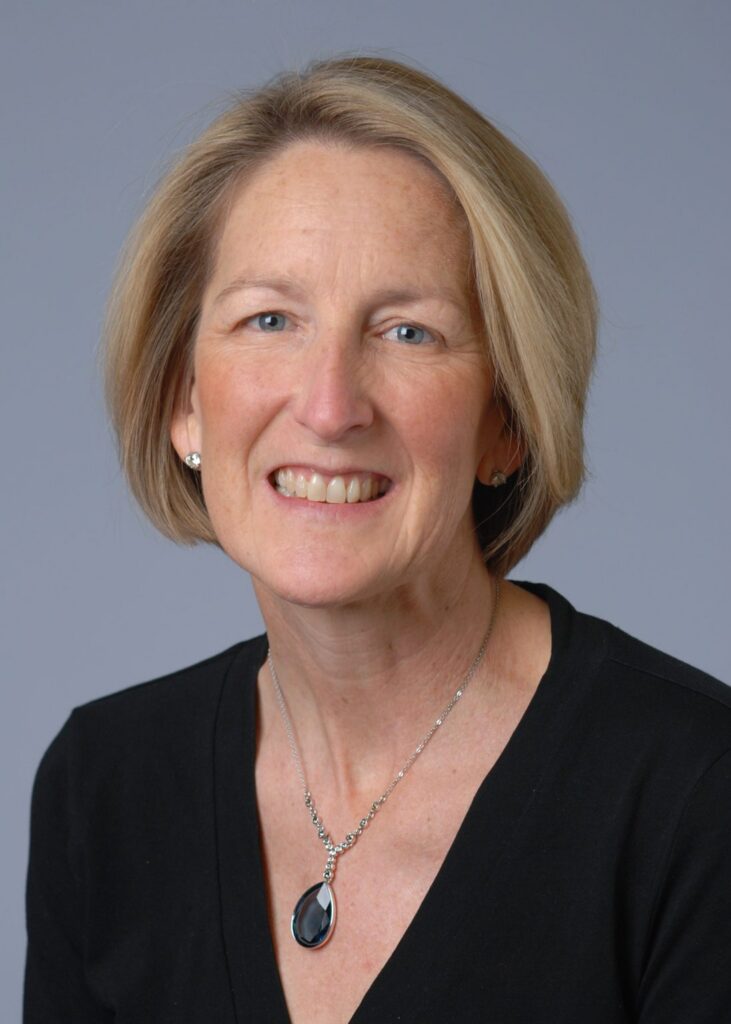
Flora Hammond, MD, has been named the Paul B. Magnuson Professor and chair of the Department of Physical Medicine and Rehabilitation at Northwestern University effective January 4, 2027. She will also serve as senior vice president at Shirley Ryan AbilityLab. The Northwestern University Prosthetics-Orthotics Center (NUPOC) is part of the Department of Physical Medicine & Rehabilitation.
Hammond succeeds Elliot J. Roth, MD, who has served as chair of the department for more than 30 years and will become the Emeritus Paul B. Magnuson Professor of Rehabilitation Medicine. Roth is credited with centralizing NUPOC in one space and developing the university’s Master of Prosthetics and Orthotics program. Roth will continue his research on novel methods to enhance patients’ recoveries and outcomes.
Hammond will oversee the department’s clinical, research, and educational missions, and residency program, with a focus on advancing innovation in rehabilitation science, strengthening interdisciplinary collaboration and enhancing patient outcomes.
Previously, she was chair of the Department of Physical Medicine and Rehabilitation at Indiana University School of Medicine and chief of medical affairs at the Rehabilitation Hospital of Indiana.
Hammond’s research focuses on improving life after injury through better understanding of injury effects, recovery trajectories, and long-term treatment strategies. Her research portfolio includes more than 330 peer-reviewed publications. She maintains a clinical practice in rehabilitation medicine and conducts funded research in brain and spinal cord injury. She is board-certified in physical medicine and rehabilitation and brain injury medicine.
“Flora’s career reflects the very best of academic rehabilitation medicine—rigorous science, compassionate patient care, and a deep commitment to improving patient outcomes,” said Pablo Celnik, MD, CEO, Shirley Ryan AbilityLab. “Her expertise will be invaluable in advancing our academic mission and preparing the next generation of leaders in physical medicine and rehabilitation.
“We are deeply grateful for Elliot’s years of unwavering dedication and visionary leadership. He has had a profound impact in the rehabilitation field and on our organization, and has shaped the department’s trajectory for many years to come— ensuring a smooth transition as Flora steps into the role,” Celnik said. “At the same time, we are thrilled our community will continue to benefit from Elliot’s expertise as he will remain active seeing patients, teaching, mentoring, and conducting research.”