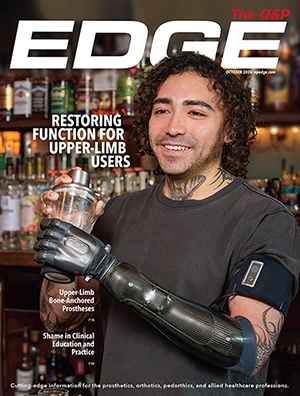

Upper-limb O&P care is rarely straightforward—there is no one solution that works for every patient even with the same clinical presentation, and there’s often not one solution to meet all of an individual patient’s needs. In this issue, we explore the increased availability of osseointegration (OI) for people with upper-limb amputations and how clinicians and patients can navigate the challenge when more than one prosthetic device is necessary.
While still only approved under the FDA’s compassionate use pathways, upper-limb OI is rapidly expanding beyond a last resort to a viable option when socket-based prosthesis use creates functional limitations. “Upper-Limb Bone-Anchored Prostheses: Real-World Use, Coordinated Care, and Timing Decisions” discusses how the healthcare team can prepare suitable patients for OI surgery and prosthesis use as well as the regulatory and reimbursement considerations that must be addressed along the way.
Because there are myriad tasks that we do with our upper limbs, it would be impossible for a prosthesis to replicate all the capabilities of a biological hand or arm. The goal therefore is to restore as much function as possible, and sometimes that requires more than one prosthetic device. “Irreplaceable: Counting the Ways to Restore Function for Upper-Limb Prosthesis Users” shares strategies to guide patients through the process of determining their prosthetic needs for work, activities of daily living, and recreation—and the reimbursement obstacles that many face.
Finally, “Shame in Clinical Education and Practice” explores the impact that the internal experience of shame can have on students’ and clinicians’ ability to perform and detrimental patterns of instruction and supervision that can contribute to it.
Happy reading.
Andrea Spridgen