

Ottobock released open-source datasets of images depicting people with limb loss in everyday life that was created, selected, and annotated by the limb-loss and limb-difference community to give artificial intelligence (AI) systems an accurate, community-defined picture of disability.
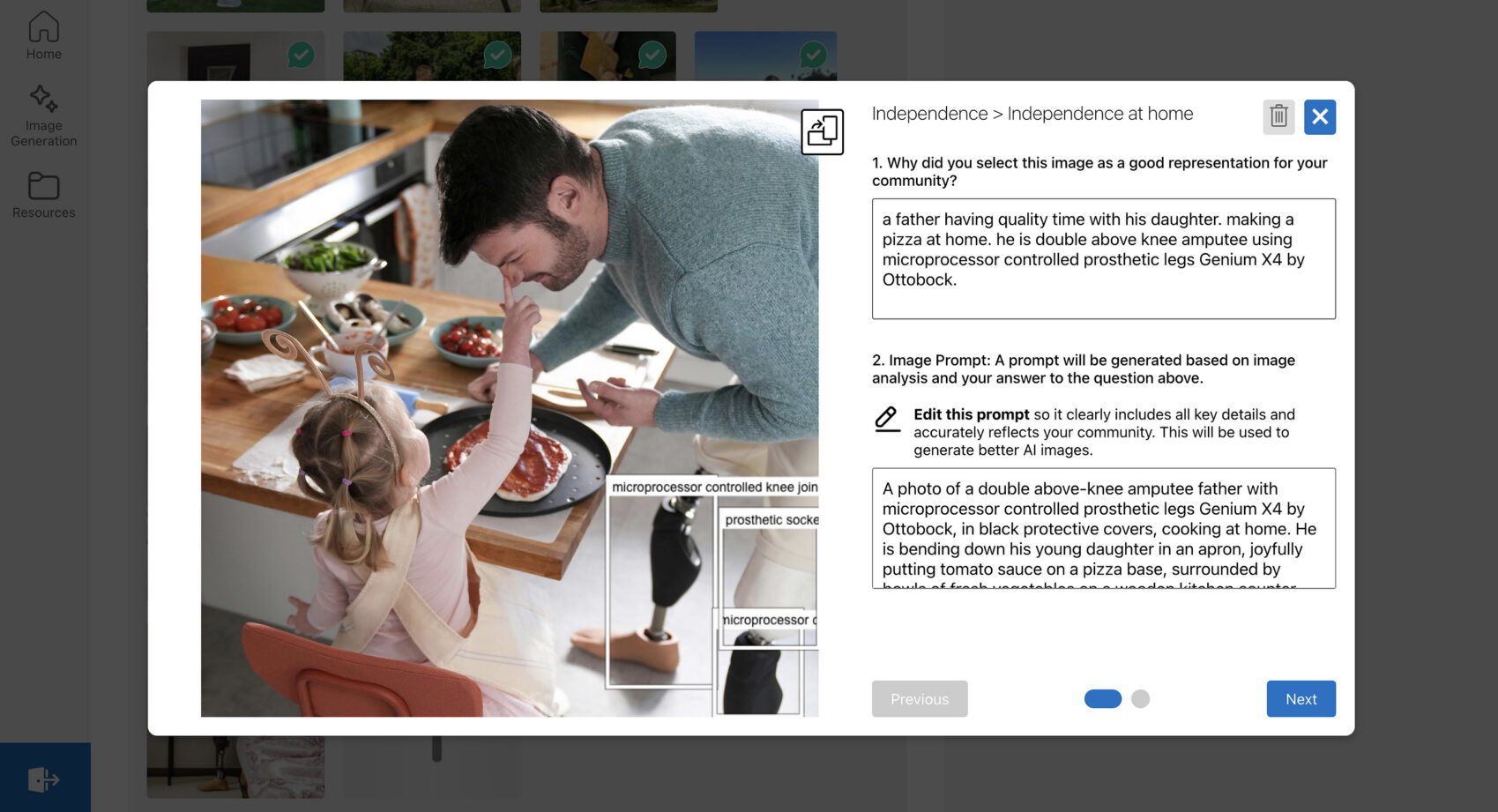
The #DearAI Community Library, powered by Microsoft, is freely accessible to anyone working with AI, including researchers and developers, brands and creative agencies, and individual creators. It is hosted on Hugging Face, a platform for the machine learning community to collaborate on models, datasets, and applications.
Ottobock said the library represents a step forward in addressing one of AI’s blind spots: the near-total absence of people with disabilities, and people with limb loss and limb difference in particular, from AI-generated imagery.
“AI can only imagine what it has already seen, and it has never truly seen the real lives of people with limb loss or limb differences. With the #DearAI Community Library, we are changing that,” said Martin Böhm, chief experience officer, Ottobock. “This initiative is about contribution: giving AI something real to learn from, built by the people whose lives it has never accurately reflected. The community shaped every decision, and that is what makes this library different.”
Before the new library, not a single person with a visible disability appeared across 444 AI-generated images spanning 37 occupations, Ottobock said. When disability did appear, nearly all depictions defaulted to a manual wheelchair. When people with limb loss appeared, the images were “actively misleading, defaulting to exaggerated bionic or cyborg aesthetics that bear no resemblance to real life.”
An international group of Ottobock prosthesis users worked within Microsoft’s Community Library Creator to define “preferred representation.” Drawing on Ottobock’s image libraries and user submissions, ambassadors then selected and annotated against community-defined standards for AI imagery. The result is two datasets of AI-interpretable images, one focused on upper-limb loss and difference (Limb Difference & Prosthetic Representation Dataset–Upper Limb (LDPR–UL), and one on lower-limb loss and difference (Limb Difference & Prosthetic Representation Dataset–Lower Limb (LDPR–LL).
“Representation in AI matters because it shapes how people see themselves and others,” said Neil Barnett, chief accessibility officer, Microsoft. “We’re committed to image generation models that create authentic, respectful, and positive representations of people with disabilities. Ottobock’s community library demonstrates what’s possible when communities are empowered to define good representation for themselves rather than having it defined on their behalf. This is the kind of community-led approach that responsible AI development requires.”
To see the #DearAI Community Library, visit Hugging Face.