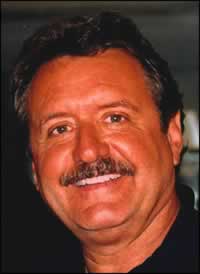
<img style="float: right;" src="https://opedge.com/Content/OldArticles/images/2004-01_07/tbarr.jpg" hspace="4" vspace="4" /> It's fortunate for the O&P profession and patients receiving their services that the National Association for the Advancement of Orthotics & Prosthetic (NAAOP) and the American Orthotic & Prosthetic Association (AOPA) have led the legislative fight to protect their interests. Perhaps the "mixed bag" solution, identified by NAAOP in the Medicare Reform bill recently passed by Congress and posted on the oandp-l listserve, could be resolved more appropriately via a combined and unilateral effort of profession and patient. I have often wondered why the American Academy of Orthotists & Prosthetists (AAOP) and the Amputee Coalition of America (ACA) have not been more involved in these legislative efforts--in particular, by disseminating news and updates about the ongoing negotiations with their membership. It seems to me that patient advocacy groups and the professional associations working together would have more impact on lawmakers when representing their membership groups than trade associations, such as AOPA and NAAOP, which may appear to be self-serving--representing manufacturers and other business interests. The interests and differences of DME and O&P must be recognized, separated, and presented as separate to lawmakers. Doing this would more effectively protect the profession and patients from unfair reimbursement and inadequate insurance coverage. It has been very difficult to make that distinction when there are DME members that belong to these same trade industry associations, since these associations also represent comprehensive O&P interests. The requirement of mandatory licensure and regulation of the O&P profession and every O&P provider in every state would make that distinction clearer, thus assisting efforts to promote legislation to benefit O&P professionals and patients. In the listserve post, NAAOP failed to include "licensed" in its discussion of O&P practice standards. The NAAOP post said, "Within the competitive bidding framework established under the original House and Senate bills, standards for quality and accreditation of providers would apply to all DME. However, the final bill extended this provision to all O&P as well. This provision appears to trump' the protracted Negotiated Rulemaking dispute in favor of the position that all O&P care must be provided by healthcare professionals certified/accredited in the practice of orthotics and prosthetics. The provision will need to be analyzed further to understand its full implications, i.e. its impact on the failed Negotiated Rulemaking process, but it appears to be very favorable to NAAOP's position on the issue of the definition of a qualified provider.'" Only ten of 50 states have meaningful licensure laws for O&P providers, but physical and occupational therapists are regulated in every state. Are patients of occupational and physical therapists more deserving of having their care regulated than those of O&P professionals? I am hopeful that NAAOP, the Academy, and AOPA may reconsider supporting regulation to properly identify O&P professionals as legitimate healthcare providers who deserve a state license to better separate themselves from the providers of DME. Is the O&P field not worthy of requiring a license to practice as do all other legitimate healthcare providers? This is my "two-cents worth" as I beat the pro-regulation drum! <b><i>Anthony T. "Tony" Barr is president of the Barr Foundation, Boca Raton, Florida. The foundation is dedicated to helping improve the lives of persons with amputations. For more information, visit </i></b> <a href="https://opedge.com/390"><b><i>www.oandp.com/barr</i></b></a>
<img style="float: right;" src="https://opedge.com/Content/OldArticles/images/2004-01_07/tbarr.jpg" hspace="4" vspace="4" /> It's fortunate for the O&P profession and patients receiving their services that the National Association for the Advancement of Orthotics & Prosthetic (NAAOP) and the American Orthotic & Prosthetic Association (AOPA) have led the legislative fight to protect their interests. Perhaps the "mixed bag" solution, identified by NAAOP in the Medicare Reform bill recently passed by Congress and posted on the oandp-l listserve, could be resolved more appropriately via a combined and unilateral effort of profession and patient. I have often wondered why the American Academy of Orthotists & Prosthetists (AAOP) and the Amputee Coalition of America (ACA) have not been more involved in these legislative efforts--in particular, by disseminating news and updates about the ongoing negotiations with their membership. It seems to me that patient advocacy groups and the professional associations working together would have more impact on lawmakers when representing their membership groups than trade associations, such as AOPA and NAAOP, which may appear to be self-serving--representing manufacturers and other business interests. The interests and differences of DME and O&P must be recognized, separated, and presented as separate to lawmakers. Doing this would more effectively protect the profession and patients from unfair reimbursement and inadequate insurance coverage. It has been very difficult to make that distinction when there are DME members that belong to these same trade industry associations, since these associations also represent comprehensive O&P interests. The requirement of mandatory licensure and regulation of the O&P profession and every O&P provider in every state would make that distinction clearer, thus assisting efforts to promote legislation to benefit O&P professionals and patients. In the listserve post, NAAOP failed to include "licensed" in its discussion of O&P practice standards. The NAAOP post said, "Within the competitive bidding framework established under the original House and Senate bills, standards for quality and accreditation of providers would apply to all DME. However, the final bill extended this provision to all O&P as well. This provision appears to trump' the protracted Negotiated Rulemaking dispute in favor of the position that all O&P care must be provided by healthcare professionals certified/accredited in the practice of orthotics and prosthetics. The provision will need to be analyzed further to understand its full implications, i.e. its impact on the failed Negotiated Rulemaking process, but it appears to be very favorable to NAAOP's position on the issue of the definition of a qualified provider.'" Only ten of 50 states have meaningful licensure laws for O&P providers, but physical and occupational therapists are regulated in every state. Are patients of occupational and physical therapists more deserving of having their care regulated than those of O&P professionals? I am hopeful that NAAOP, the Academy, and AOPA may reconsider supporting regulation to properly identify O&P professionals as legitimate healthcare providers who deserve a state license to better separate themselves from the providers of DME. Is the O&P field not worthy of requiring a license to practice as do all other legitimate healthcare providers? This is my "two-cents worth" as I beat the pro-regulation drum! <b><i>Anthony T. "Tony" Barr is president of the Barr Foundation, Boca Raton, Florida. The foundation is dedicated to helping improve the lives of persons with amputations. For more information, visit </i></b> <a href="https://opedge.com/390"><b><i>www.oandp.com/barr</i></b></a>