
An interdisciplinary team of charities, prosthetists, and academics led by King’s College London designed and implemented the first set of standardized regulations for donating prosthetic feet to the Global South. The standards could become a foundation for improved prosthetics provision in the United Kingdom and an ethical framework for a global circular economy of prosthetic devices.
“The charity sector does great work in helping individuals who are missing lower limbs live their lives to the fullest, but the ecosystem that supports them is not fit for purpose,” said Michael Berthaume, PhD, an associate professor in engineering at King’s College and lead author of the paper about the work.
“With first steps toward regulation, we can say no more to the ‘not good enough for us, but good enough for them’ approach that the current donation system encourages—with potentially serious consequences for the quality of life of patients.”
Provision of prosthetic devices in low- and middle-income countries, like those in the Global South, can be reliant on secondhand donations. While often still usable at the time of replacement, the devices are rarely reused in the United States and the United Kingdom because prostheses and their components are often classified as single patient multiuse devices. Therefore, no standards or regulatory requirements guaranteeing the quality or safety of used prosthetic components have been developed.
The practice of donating poor quality medical provisions to the Global South that the Global North wouldn’t use violates the World Health Organization’s principles of good donation, which led to the generation of standards for donated items.
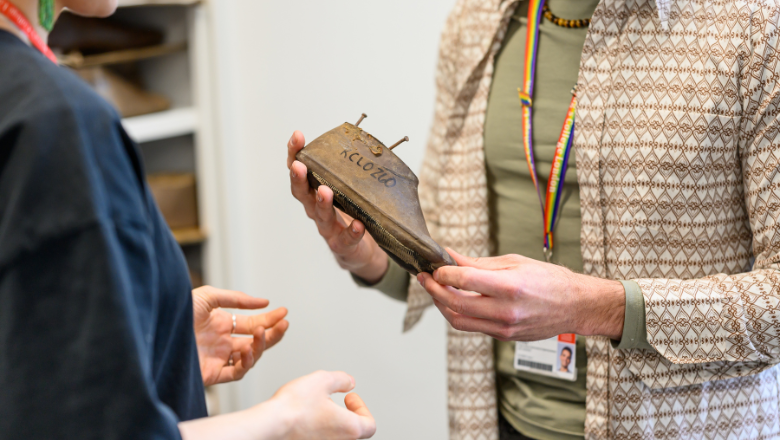
The research team surveyed hundreds of lower-limb prosthetic feet donated from the United Kingdom, France, and the United States to prosthetics charity STAND (formerly Legs4Africa) for use in Uganda. The team developed a quality checklist for visual inspection to ensure the devices could be used by future patients. This included strict guidelines related to the mechanical integrity and cosmetic appearance of parts of the foot.
Taking a sample of 366 prosthetic feet across different sizes, brands, and whether they were left or right, the team found that the 170 that had been processed after the quality checks were 94 percent usable as opposed to the 196 processed before which were only 83 percent usable.
The group hopes to develop and embed tests to evaluate the quality of secondhand prosthetic components, helping create a circular economy for them and cutting down on unnecessary production.
In addition to improving the quality of donated lower-limb prosthetics, the team also hopes the approach will lay the groundwork for better prosthetic care in the United Kingdom and discourage a wasteful practice.
“The NHS has set itself legally binding targets to reduce its carbon footprint by 80 percent by 2032 and to reach net zero by 2040. Such ambitious goals require all clinical services to consider how they can safely reduce waste,” said Laurence Kenney, PhD, a professor of rehabilitation technology at the University of Salford and co-author of the paper.
The study, “Proposed standards for prosthetic foot reuse and considerations for donation of used prosthetic feet to low-and middle-income countries,” was published in PLOS Global Public Health.