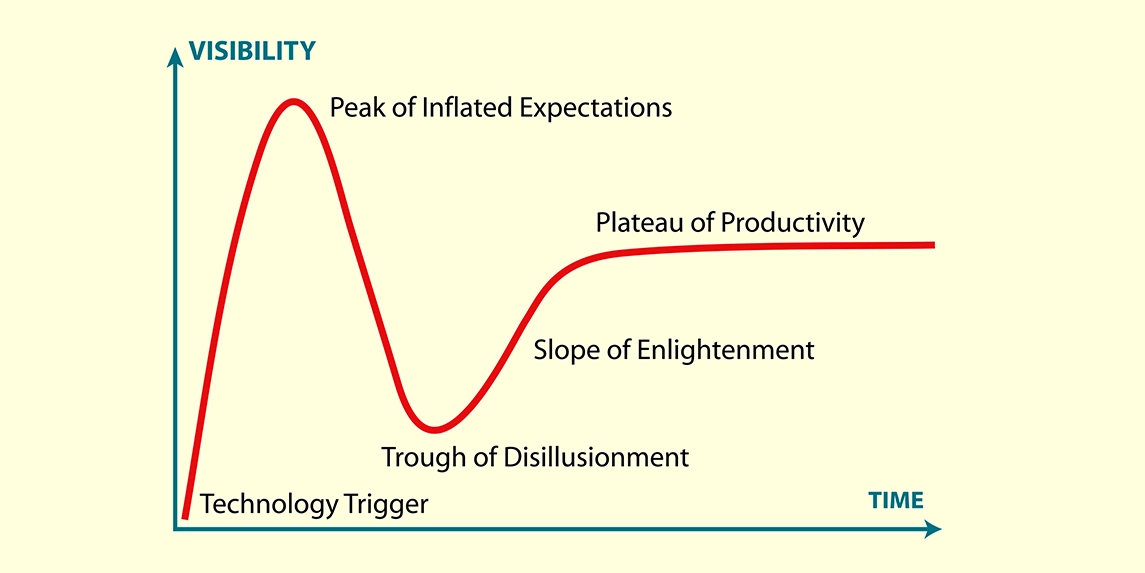
The Gartner Hype Cycle maps five phases as a technology matures: the innovation trigger; the peak of inflated expectations; the trough of disillusionment; the slope of enlightenment, and the plateau of productivity. Introducing new technology often begins with an exaggerated build up, as O&P saw with 3D-printed prosthetic hands, before the technology finds its real-world footing, where it seems O&P has now arrived.
The IEEE Spectrum story described those early media reports of children receiving their new prostheses as “painting a picture of an emerging high-tech utopia enabled by a technology straight out of Star Trek.” But, as Joe Johnson, CPO, CEO, Quorum Prosthetics, Colorado, told the magazine, it led to prosthetists taking a circumspect position about 3D printing for years.
In talking about the possibilities related to producing 3D-printed devices, Jeff Erenstone, CPO, founder, Operation Namaste, used Quorum’s devices as an example of one of the goals of 3D-printing in O&P when he said, “What they are making isn’t lowering costs any more than Ferrari is lowering costs. They are making the Ferrari of sockets.”
Erenstone is working toward another use for 3D-printing. His nonprofit is using the technology to produce silicone liners for people in less resourced countries (“cracking the code around prosthetic liners,” the article says), and touts the technology’s ability to share designs around the world and increase communication between practitioners, including during wars in Ukraine and Sudan.
Continuing to analyze the past and future of 3D-printed prostheses, Easton LaChapelle, founder of Unlimited Tomorrow, shared his challenges of delivering devices outside of the medical insurance framework: “We became exactly the problem we tried to solve.”
To read “The Complicated Reality of 3D Printed Prosthetics,” visit IEEE Spectrum.
To read “How 3D-printed prostheses are bringing mobility and hope to conflict zones,” visit the World Economic Forum.