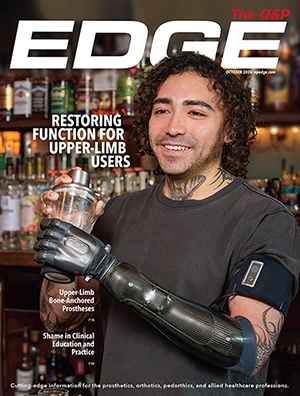

The theme of this month’s issue is a focus on the patient. Unlike most of our readers, as an editor, I do not have the opportunity to regularly experience the impact O&P care has on the lives of patients firsthand. But I was fortunate to get a glimpse into the difference O&P professionals can make in patients’ lives through a recent conversation I had with my ballet teacher.
Many years ago, after Christina quit dancing professionally, she experienced a severe infection in her foot and ankle that required multiple surgeries. Her ability to walk again, let alone dance, was threatened. She recovered in some ways, but she can no longer bend that ankle joint or point her foot, and she always wears dance sneakers when she teaches. I noticed the build-up on her left shoe, which sparked a discussion about the value she places on her longstanding relationship with the pedorthist who for the past 15 years has made all the custom orthotics and shoe modifications she requires. Because of his work, she can continue to teach dance and enjoy the hiking and camping that she loves doing with her husband.
Helping O&P patients do what they love involves more than delivering the best device. While psychological issues and social/economic considerations largely fall outside of O&P professionals’ scope of practice, they can certainly affect patients’ progress and outcomes. “Holistic Care: How Psychosocial Factors Impact O&P Patients” discusses how to address these issues within your professional capacity and offers strategies for referral when it’s appropriate.
Like psychosocial considerations, comorbidities are not clinicians’ primary focus. But an awareness of how those factors can impact device fit, comfort, or overall mobility, and being able to coordinate with patients’ other healthcare providers is important for optimal outcomes. We asked experts to share their insights in “Managing the Impacts of Comorbidities in Patients With Lower-Limb Loss.”
Finally, practitioners’ professional behavior can have an influence on their patients’ care, so promoting prosocial behaviors is good for patients and business as explained in “What Prosocial Behavior Brings to Patient Care.”
Happy reading.
Andrea Spridgen