

OANDP-L
  • Login
No Result
View All Result
The O&P EDGE
  • PECOS
  • Magazine
    • Subscription
    • Current Issue
    • Issue Archive
    • News Archive
    • Product & Service Directory
    • Advertising Information
  • O&P Jobs
    • Find a Job
    • Post a Job
  • EDGE Advantage
    • EA Homepage
    • EA Data
  • O&P Facilities
  • Resources
    • Product & Service Directory
    • Calendar
    • Contact
    • About Us
    • O&P Library
    • Lower Limb Directory
    • The Guide
    • Custom Publications
    • Advertising Information
    • EDGE Direct
    • Amplitude Media Group
  • PECOS
  • Magazine
    • Subscription
    • Current Issue
    • Issue Archive
    • News Archive
    • Product & Service Directory
    • Advertising Information
  • O&P Jobs
    • Find a Job
    • Post a Job
  • EDGE Advantage
    • EA Homepage
    • EA Data
  • O&P Facilities
  • Resources
    • Product & Service Directory
    • Calendar
    • Contact
    • About Us
    • O&P Library
    • Lower Limb Directory
    • The Guide
    • Custom Publications
    • Advertising Information
    • EDGE Direct
    • Amplitude Media Group
No Result
View All Result
The O&P EDGE Magazine
No Result
View All Result
Home News

Brain Training May Curb Phantom Limb Pain

by The O&P EDGE
November 1, 2016
in News
0
SHARES
78
VIEWS
Share on FacebookShare on Twitter

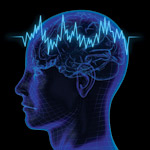
One theory of phantom limb pain is that the sensorimotor cortex of the brain that is responsible for sensing and moving the hands, arms, and legs becomes confused by the sudden loss of a limb. The brain senses a mismatch between its attempt to move the limb and the feedback it receives, and interprets that mismatch as pain. A study, published October 27 in Nature Communications, describes the use of brain-machine interface (BMI) training to dissociate a prosthetic hand and an amputated hand or a hand affected by severe nerve damage to reduce phantom limb pain-the associated pain in the nerve-damaged hands is thought to share a common mechanism with phantom limb pain due to amputation The BMI training technique essentially involves distracting the brain from mixed signals it may receive as a result of losing the limb, said co-author Ben Seymour, MBChB, MRCP, PhD, a neuroscientist with the Department of Engineering at the University of Cambridge, England. He said the BMI training method may provide an alternative to pain medications for people who experience phantom limb pain.

The research team included Seymour and researchers from Osaka University, Japan. They trained ten people with phantom limb pain symptoms to control a robotic arm using their brain activity. Nine participants had brachial plexus root avulsion and one had a transradial amputation.

The BMI used real-time magnetoencephalography signals to reconstruct the movements of the affected hand with a robotic hand. The BMI training induced significant plasticity in the sensorimotor cortex, manifested as improved discriminability of movement information and enhanced prosthetic control, according the researchers. The team used the BMI to decode the neural activity of the mental action needed for a patient to move his or her amputated or nerve damaged hand, and linked those signals to a robotic prosthetic limb.
The participants performed an offline task (pre-BMI) in which they were instructed to try to move their affected hands to be in the posture of grasping or opening according to given instructions; they could not see their sound side arms during the experiment. For comparison, the participants performed actual movements of their intact hands following the same instructions.

Patients experienced an increase in phantom limb pain if they tried to control the prosthetic arm by willing the movement of their affected arms. However, the researchers discovered that the phantom limb pain decreased if the participants were trained to move the robot arm using the “wrong” side of their brains. For example, patients with affected left arms experienced reduced pain if they moved the prosthetic arm through neural signals associated with their right arms. The results reveal a functional relevance between sensorimotor cortical plasticity and pain, and may offer a novel treatment with BMI neurofeedback, according to the study.

Related posts:

  1. Phantom Pain Is No Phantom
  2. Examining the Uses of Virtual Reality in Prosthetic Rehabilitation
  3. Losses Beyond the Limb
  4. Phantom Pain: Unlocking a Mystery
Previous Post

Brain Surface Stimulation Provides “Touch” Feedback

Next Post

Engineers Developing More Comfortable Prostheses

Next Post

Engineers Developing More Comfortable Prostheses

The O&P EDGE October 2026 issue

Read the Current Issue Here

SUBSCRIBE FOR FREE


O&P JOBS

Multiple Locations

Ottobock Patient Care is growing!

Eastern

🚨 Hanger Clinic is Hiring a Certified Prosthetist Orthotist in Philadelphia, PA!

Central

Now Hiring: Certified Prosthetist

Linkedin X-twitter Facebook

Get unlimited access!

Join EDGE ADVANTAGE and unlock The O&P EDGE's vast library of archived content.
SUBSCRIBE TODAY
Close
No Result
View All Result
  • PECOS
  • MAGAZINE
    • SUBSCRIBE
    • CURRENT ISSUE
    • ISSUE ARCHIVE
    • NEWS ARCHIVE
    • PRODUCTS & SERVICES DIRECTORY
    • ADVERTISING INFORMATION
  • O&P JOBS
    • FIND A JOB
    • POST A JOB
  • EDGE ADVANTAGE
    • EA Homepage
    • EA Data
  • FACILITIES
  • RESOURCES
    • PRODUCTS & SERVICES DIRECTORY
    • CALENDAR
    • CONTACT
    • ABOUT US
    • O&P LIBRARY
    • LOWER LIMB DIRECTORY
    • THE GUIDE
    • CUSTOM PUBLICATIONS
    • ADVERTISING INFORMATION
    • EDGE DIRECT
    • AMPLITUDE
  • OANDP-L
  • LOGIN

© 2026 The O&P EDGE

Not enough quota to unlock this post
Unlock left : 0
Are you sure want to cancel subscription?


© 2026 The O&P EDGE

  • About
  • Advertise
  • Contact
  • EDGE Advantage
  • OANDP-L
  • Subscribe

CONTACT US

866-613-0257

info@opedge.com

201 E. 4th St.
Loveland, CO 80537

EDGE DIRECT

The most important industry news and events delivered directly to your inbox every week.

  • About
  • Advertise
  • Contact
  • EDGE Advantage
  • OANDP-L
  • Subscribe

© 2026 The O&P EDGE

Welcome Back!

Login to your account below

Forgotten Password?

Retrieve your password

Please enter your username or email address to reset your password.

Log In
Close
No Result
View All Result
  • PECOS
  • MAGAZINE
    • SUBSCRIBE
    • CURRENT ISSUE
    • ISSUE ARCHIVE
    • NEWS ARCHIVE
    • PRODUCTS & SERVICES DIRECTORY
    • ADVERTISING INFORMATION
  • O&P JOBS
    • FIND A JOB
    • POST A JOB
  • EDGE ADVANTAGE
    • EA Homepage
    • EA Data
  • FACILITIES
  • RESOURCES
    • PRODUCTS & SERVICES DIRECTORY
    • CALENDAR
    • CONTACT
    • ABOUT US
    • O&P LIBRARY
    • LOWER LIMB DIRECTORY
    • THE GUIDE
    • CUSTOM PUBLICATIONS
    • ADVERTISING INFORMATION
    • EDGE DIRECT
    • AMPLITUDE
  • OANDP-L
  • LOGIN

© 2026 The O&P EDGE

Not enough quota to unlock this post
Unlock left : 0
Are you sure want to cancel subscription?