OANDP-L
  • Login
No Result
View All Result
The O&P EDGE
  • PECOS
  • Magazine
    • Subscription
    • Current Issue
    • Issue Archive
    • News Archive
    • Product & Service Directory
    • Advertising Information
    • EDGE Flipbooks
  • O&P Jobs
    • Find a Job
    • Post a Job
  • EDGE Advantage
    • EA Homepage
    • EA Data
  • O&P Facilities
  • Resources
    • Product & Service Directory
    • Calendar
    • Contact
    • About Us
    • O&P Library
    • Lower Limb Directory
    • The Guide
    • Custom Publications
    • Advertising Information
    • EDGE Direct
    • Amplitude Media Group
  • PECOS
  • Magazine
    • Subscription
    • Current Issue
    • Issue Archive
    • News Archive
    • Product & Service Directory
    • Advertising Information
    • EDGE Flipbooks
  • O&P Jobs
    • Find a Job
    • Post a Job
  • EDGE Advantage
    • EA Homepage
    • EA Data
  • O&P Facilities
  • Resources
    • Product & Service Directory
    • Calendar
    • Contact
    • About Us
    • O&P Library
    • Lower Limb Directory
    • The Guide
    • Custom Publications
    • Advertising Information
    • EDGE Direct
    • Amplitude Media Group
No Result
View All Result
The O&P EDGE Magazine
No Result
View All Result
Home Academy Society Spotlight

The Evolution of Self-Suspending Transradial Socket Designs

by Bob Radocy, BSc, MSc
August 1, 2026
in Academy Society Spotlight, Feature
0
SHARES
27
VIEWS
Share on FacebookShare on Twitter

My views in this article reflect over 50 years of personal experience wearing upper-limb prostheses and almost a decade of experience specifically using adjustable, self-suspending, transradial socket designs. I am a 77-year-old healthy man with a short left transradial residual limb resulting from an amputation at age 22. I am a regular, full-time, body-powered and activity-specific prosthesis wearer, and I have experience with a wide variety of prosthetic suspension technologies. This article presents a review, comparison, and rating of various self-suspending prosthetic designs, addressing factors of socket fit suspension security, effective range of motion (ROM), and socket comfort in static and dynamic circumstances.

History of Self-Suspending Sockets

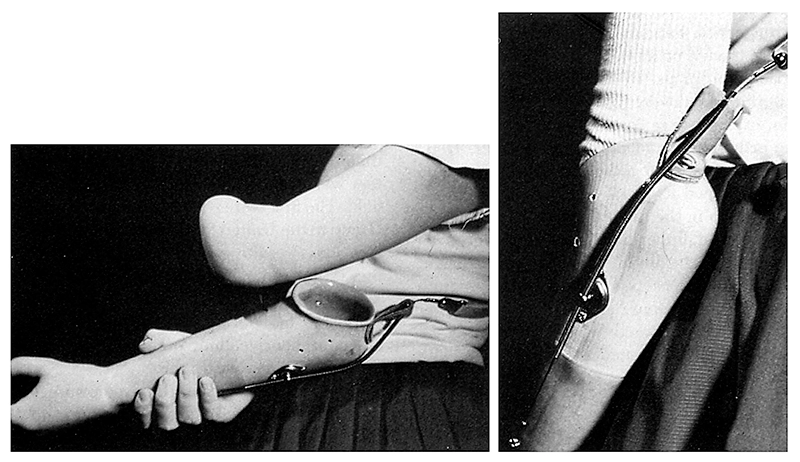
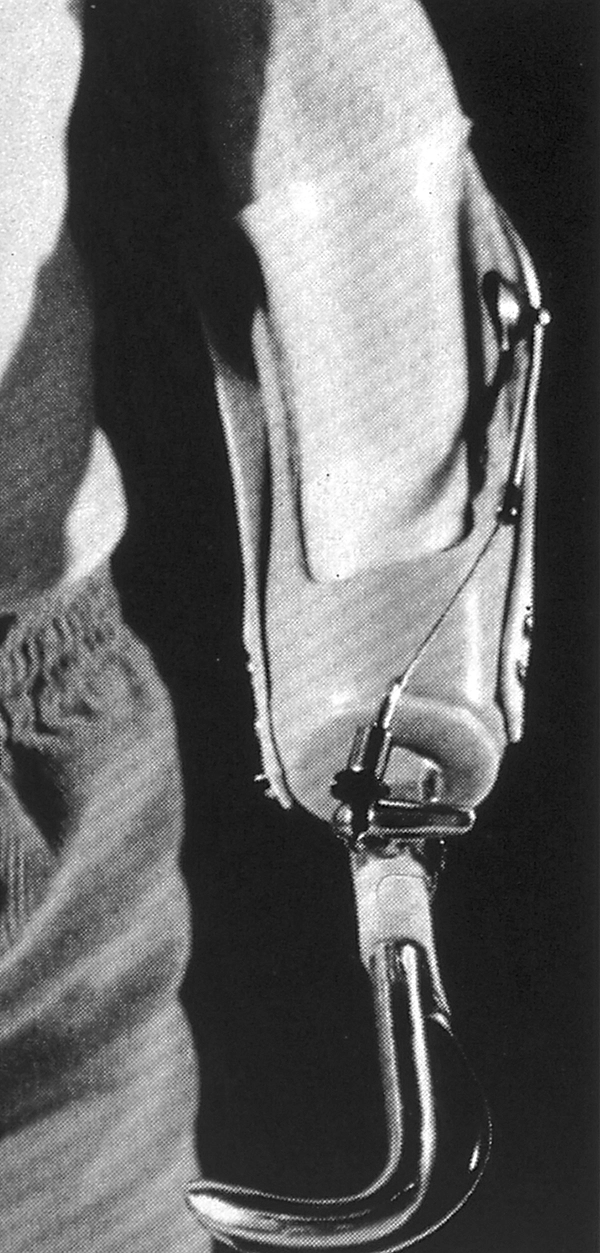
There are multiple goals in creating a self-suspending prosthesis: capturing the morphology of the medial and lateral epicondyles and the olecranon; improving suspension, socket security, and comfort; maximizing ROM; eliminating or reducing excess harnessing; and simplifying and improving the efficiency of the prosthesis. Self-suspending prosthetic sockets have primarily targeted very short, short, and mid-length forearm absence cases, where surface area anatomy for suspension is less available. The German-designed Muenster socket was probably the first successful achievement in self-suspending prostheses as early as the 1950s (Figure A), and it was just the beginning of the evolution of this type of suspension concept. The 1980s marked the development of new socket materials and liners when the Icelandic New York or ISNY concept, a two-component socket was introduced (Figure B). It used a rigid, laminated, outer shell with a softer thermoplastic-formed inner socket for improved comfort. Various full and partial sockets and liners were experimented with using more compliant, formable materials like Pelite, but rigid outer shell, laminated sockets predominated.

Muenster
Artificial Limbs, National Academy of Sciences—National Research Council.

Fig. B, Berger, et. al.4

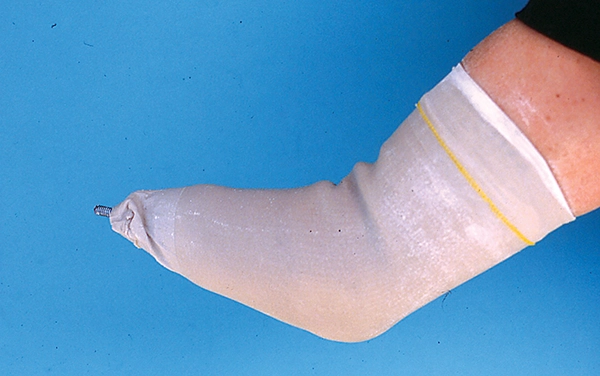
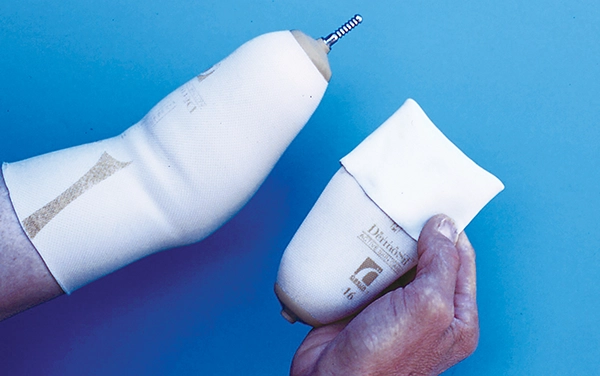
Karl Fillauer, CPO/L, FAAOP, introduced the Fillauer Silicone Suspension Socket, or 3S System, which was the first custom-fabricated, reinforced, silicone-impregnated liner with a locking component on the distal end of the flexible sleeve (Figure C). A threaded stud embedded into the end of the sleeve secured into a shuttle lock mechanism that was built into the distal end of the inner socket. This roll-on locking liner concept was an exceptional improvement for suspension and comfort. It quickly progressed, using other materials like polyurethane and thermoplastic liners, which could be manufactured and sold in various sizes. Interestingly, the first thermoplastic liners used the same inexpensive olefin polymer elastomer materials that were being used to mold artificial fishing worms. These systems continued to develop into liners like the Össur Upper-X (Figure D) that added longitudinal stretch control, which I believe is essential for security and stability.

Figure C: Fillauer 3S System

Photograph courtesy Bob Radocy.

Figure D: Össur Upper-X
Photograph courtesy Bob Radocy.

Notably, Randall Alley, BSc, CP, and John Miguelez, CP, FAAOP(D), while working on Hanger’s first upper-extremity specialists team in the early 2000s further investigated the anatomical aspects of the elbow and ways to optimize the design of self-suspending sockets. Miguelez published an article on the transradial anatomical contour describing this research.1 Alley thereafter presented his own opinions on the anatomical contoured and controlled interface.2 Both contributed to improved understanding of the anatomy of the elbow and how to most functionally use it for prosthetic suspension. Alley later contributed to the discussion further as he described residual limb containment with the High Fidelity Interface, as well as the compression/release stabilized designs he created that captured and controlled the soft tissues around the longer bones of the limb.3

For more than two decades, roll-on locking liners inside of rigid, laminated prosthetic shells dominated upper-limb prescriptions. Then, Joseph Mahon, CPO, realized the potential for creating adjustable compression socket technology. Taking a BOA reel system out of a ski boot, he fabricated what were to become the first ever cable-tension, adjustable, self-suspending prosthetic sockets. He patented the concept of using these reel-adjustable cable tension systems as kits for prosthetists to use. At that time, TRS and I as its president were simultaneously working with BOA to introduce the technology into the profession, collaborating with EXOS, and we introduced BOA component technology into the O&P market. Click Medical, a prosthetic accessory component manufacturer, ultimately took over the lead in making BOA high-performance cable closure systems for use in the profession.

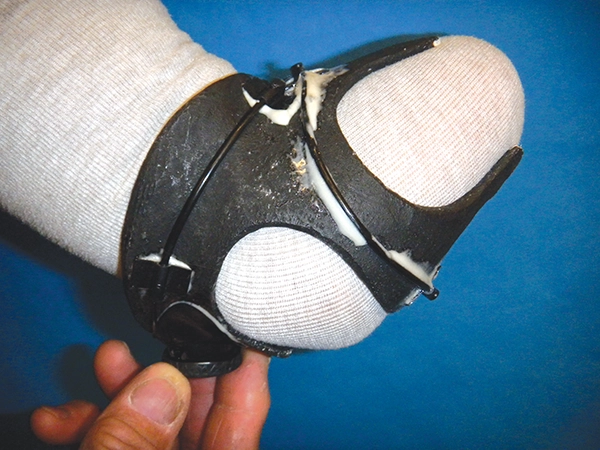
During this period, I was working with Chris Baschuk, MPO, CPO, FAAOP(D), and Handspring while trying to transfer a prototype adjustable socket concept called the Rapid Adjustable Modular Prosthetic (RAMP) Socket into a complete prosthesis (Figure E). That design incorporated medial-lateral flexible brims and a crossover cable tension configuration that enclosed the entire remnant limb. Baschuk, alternatively, created an above-the-olecranon compression plate design that captured the limb by trapping the olecranon (Figure F). Baschuk constructed a medial side mount reel design enclosed by a cover plate. This design had significant advantages over a nonadjustable socket.

Figure E: Ramp

Photograph courtesy Bob Radocy.

Figure F: Baschuk

Photograph courtesy Bob Radocy.

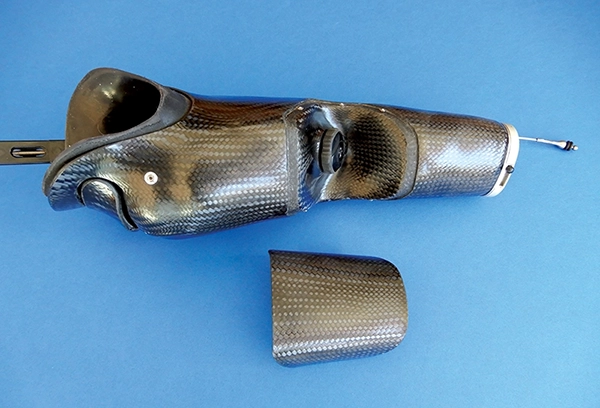
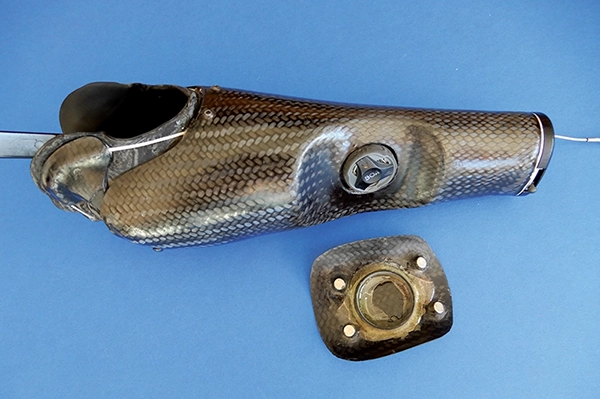
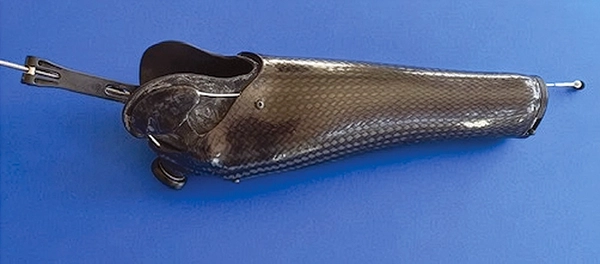
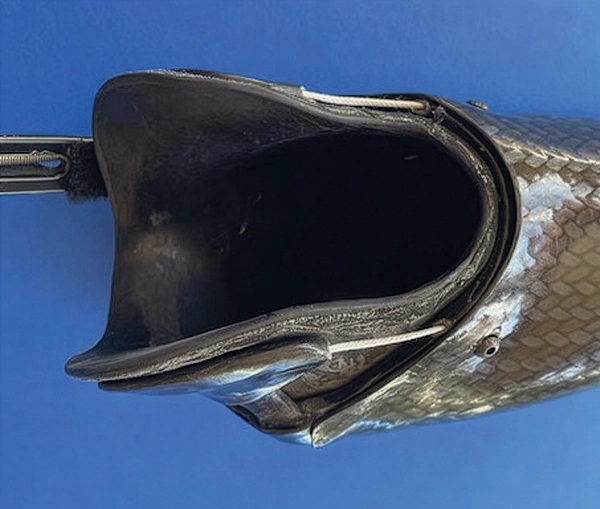
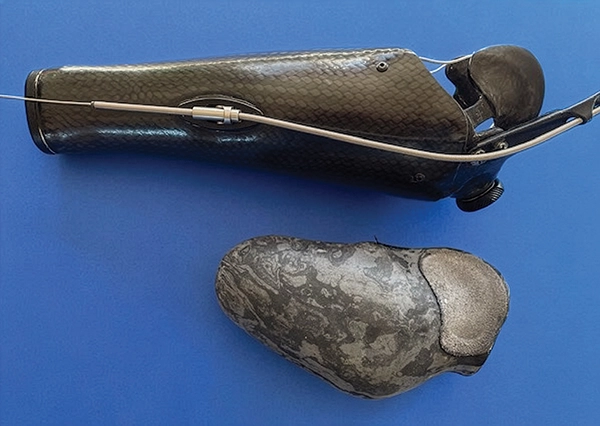
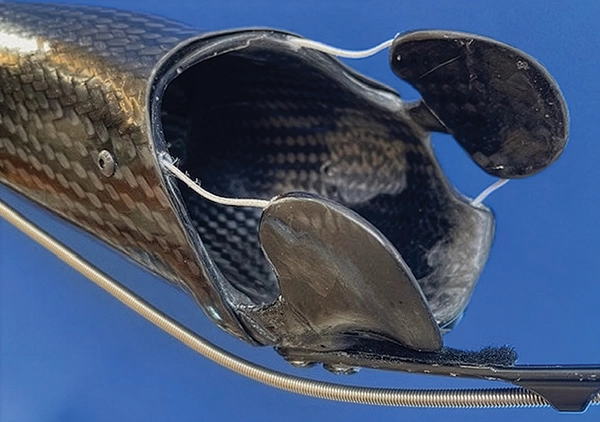
Just before we entered the 2020s, I began working with Dave Rotter, CPO. Rotter was experimenting with perfecting a flexible brim design socket, resulting in a design that incorporated a BOA control mounted on the medial side of the prosthesis where crossover, cable tension controlled the movement of both the medial and lateral flexible socket brims. The suspension, comfort, function, and ROM were significantly improved. Recently, at my request, Rotter built another flexible brim design that placed the BOA control reel behind and above the olecranon (Figures H-K). This provided for a clean forearm design, simplified the mechanics of the crossover cable routing, and provided improved application for people with longer forearms to use the design. These designs are worthy of further investigation by practitioners.

Figure G: Rotter
Photographs courtesy Bob Radocy.

Figure H: Rotter

Figure I: Rotter

Figure J: Rotter

Figure K: Rotter

Additive manufacturing is increasingly replacing traditional lamination fabrication in upper- and lower-limb prostheses. Working with Open Bionics, I tested a new sports version of their additive-generated prosthesis, the HERO Arm. Interesting features included both the outer prosthetic shell and a softer inner liner, both of which have a variety of perforations to allow for skin respiration. The adjustable closure used a BOA-style reel to tighten suspension, more like a shoe, with the parting lines on the dorsal aspect of the prosthesis. This design did not perform well for me with a short transradial condition because it did not offer enough supracondylar capture and support for stability throughout a wide ROM. Additionally, the additive inner socket liner material was of a fairly high durometer and proved counterproductive to ensuring maximum comfort during rigorous use.

Evaluating the Performance of Self-Suspending Socket Technologies and Designs

Hugh Panton, CPO, Hanger, fitted me with my first prosthesis in January 1972. Panton was a kind, knowledgeable, and skilled prosthetist, who was missing a lower limb. He understood the necessity for a well-fitting, self-suspending, or supracondylar design. I was lucky because at the time many prosthetists were unfamiliar with the skills necessary to fit an active man who had a short transradial absence with a truly, highly functional, comfortable arm. This is something I discovered from experience, several times over, as I navigated the ocean of upper-limb prosthetic devices. Panton’s design employed high medial-lateral trim lines and a tall rear brim. It was a rigid socket, no liner, fabricated by laminating Dacron and nylon materials together using polyester resins. These prostheses were light and strong but with limited longevity, needing replacement every several years due to the degradation of those materials and resins.

Panton added several unique features to my first limb. It was only mildly preflexed. He installed a thick, leather-covered foam pad inside the medial brim. This pad compressed when donning the arm, then captured the medial epicondyle comfortably, keeping me more securely in the prosthesis. Additionally, rather than constructing a traditional suspension system with a triceps-cuff and figure-eight harness, Panton designed a figure-nine harness and used an elongated leather crossbar strap covered in nylon fabric that captured and aligned the cable housing for best efficiency. He placed the crossbar strap so that the cable alignment went posterior to my left lateral epicondyle, thereby enabling elbow flexion excursion control. I thought at the time that this was just standard practice. I found out later that most prosthetists were not using this design, instead creating a more complex figure-eight harness and triceps-cuff harness suspension, which did not incorporate elbow flexion biomechanics. Using the elbow as a lever for cable excursion added 30 percent or more efficiency and function to the prosthesis because it drew on another important biomechanical element that was being ignored by more traditional designs. Unfortunately elbow flexion control is still being ignored in many upper-limb, body-powered, prosthetic solutions to the detriment of the user. Over the next 30-40 years, I had multiple prostheses made while continually trying to improve on the designs and my performance.

Observations and Ratings

The user evaluations in Table 1 are limited by the shared experiences and my testing of the designs. However, my testing and evaluation quite clearly indicate the superiority of adjustable-socket prostheses (Figures F-K). My years of actively and competitively using a wide variety of self-suspending sockets reflects an educated understanding of the applications of these various technologies. One of my primary assessments of any prosthesis is its ability to perform through two specific ROM tests: a latissimus behind-the-neck pull down and a simple in front of the body triceps press-down. Almost every prosthesis that I have worn fails in this ROM due to pure instability, loss of leverage, or pain and discomfort. The Rotter design (Figures H-K) is the only prosthesis that I’ve worn where I can perform these exercises successfully. In that design, he created even higher, more encompassing brim lines on the medial and lateral aspects of the socket. These extended high brims and containment appear to be the difference. Combined with the BOA closure, it is the most versatile, functional prosthesis I’ve ever worn.

I would recommend that any upper-limb prosthetist interested in improving the science of upper-limb prosthetic suspension should seriously investigate and apply the new adjustable, flexible, medial-lateral brim designs that Rotter has developed. This adjustable socket design has application for a variety of prosthetic technologies including body-powered, activity-specific, and myoexternal-powered designs in which socket suspension tuning can improve electrode contact. Rotter’s designs are a significant breakthrough and evolution in self-suspending sockets.

Conclusion

My professional suggestion is that we should refer to Rotter’s novel design as the Rotter Adjustable Self-Suspending Prosthesis (RASP). To expand the possibilities of the design, the rear aspect of the prosthesis can potentially be built to also incorporate flexibility, allowing more containment of the olecranon, without sacrificing comfort or suspension. Smaller reels would also provide more design options; more compact reels are preferred in this application. The loads for controlling and suspending an upper-limb prosthesis are significantly less than for lower-limb devices.

I further suggest that the Upper Limb Prosthetics Society of the American Academy of Orthotists and Prosthetists take on a multiyear project to specifically explore the RASP design. The project should include multiple practitioners and the creation of some new evaluation tools/guidelines that help refine the more subjective measures that are currently used to assess prosthetic fit and performance.  It is important to recognize that improved self-suspending prosthetic designs options are available.

Bob Radocy, BSc, MSc, is an amputee, designer, inventor, author, and manufacturer of upper-limb prosthetic components. He is a member of the Academy’s Upper Limb Prosthetics Society and the manager founder of InstinctiveInvention.

Academy Society Spotlight is a presentation of clinical content by the Scientific Societies of the Academy in partnership with The O&P EDGE.

The author would like to thank Lesley Radocy and Debra Latour, OTD, MEd, OTR/L, for their cooperation and help in the preparation of the article.

References

  1. Miguelez, J. M. 2003. The transradial anatomically contoured (TRAC) interface: Design principles and methodology. Journal of Prosthetics and Orthotics 15(4):148-57.
  2. Alley, R. 2022. Advancements of upper extremity prosthetic interface and frame design. From “MEC ’02, The Next Generation,” Proceedings of the 2002 MyoElectric Controls Powered Prosthetics Symposium, Fredericton, New Brunswick, Canada, August 21-23, 2002.
  3. Alley, R. D., et al. 2011. Prosthetic sockets stabilized by alternating areas of tissue compression and release. Journal of Rehabilitation Research and Development 48(6):679-96.
  4. Berger, N., S. Fishman, D. Krebs, and W. Webb. 1985. The application of ISNY principles to the below-elbow prosthesis. Orthotics and Prothetics 39(4):16-20.

Related posts:

  1. Beyond Cosmetic Concerns
    Functional Deficits Associated with Deformational Plagiocephaly
  2. CAD/CAM: Time to Join the Digital Age
  3. The Stance Control Orthosis: Has Its Time Finally Come?
  4. O&P’s Relationship with Technology: It’s Complicated
Previous Post

What 3D Printing Means for Cranial Remolding Care

Next Post

Live in Motion Foundation Names Scholarship Recipients

Next Post

Live in Motion Foundation Names Scholarship Recipients

 SUBSCRIBE FOR FREE


O&P JOBS

Mountain

Orthotic & Prosthetic Technician – Canine Orthotics & Rehabilitation

Mountain

Clinical Orthotist – Canine Orthotics & Rehabilitation

Central

Pedorthist

Linkedin X-twitter Facebook

Get unlimited access!

Join EDGE ADVANTAGE and unlock The O&P EDGE's vast library of archived content.
SUBSCRIBE TODAY
The O&P EDGE Magazine
 

Login to your account

  • Forgot Password?

Reset Password

  • Already have an account? Login

Enter the username or e-mail you used in your profile. A password reset link will be sent to you by email.

Close
No Result
View All Result
  • PECOS
  • MAGAZINE
    • SUBSCRIBE
    • CURRENT ISSUE
    • ISSUE ARCHIVE
    • NEWS ARCHIVE
    • PRODUCTS & SERVICES DIRECTORY
    • ADVERTISING INFORMATION
  • O&P JOBS
    • FIND A JOB
    • POST A JOB
  • EDGE ADVANTAGE
    • EA Homepage
    • EA Data
  • FACILITIES
  • RESOURCES
    • PRODUCTS & SERVICES DIRECTORY
    • CALENDAR
    • CONTACT
    • ABOUT US
    • O&P LIBRARY
    • LOWER LIMB DIRECTORY
    • THE GUIDE
    • CUSTOM PUBLICATIONS
    • ADVERTISING INFORMATION
    • EDGE DIRECT
    • AMPLITUDE
  • OANDP-L
  • LOGIN

© 2026 The O&P EDGE

TAKE THE SURVEY
Not enough quota to unlock this post
Unlock left : 0
Are you sure want to cancel subscription?
 

Account Activation

Before you can login, you must activate your account with the code sent to your email address. If you did not receive this email, please check your junk/spam folder.

Click here to resend the activation email. If you entered an incorrect email address, you will need to re-register with the correct email address.


© 2026 The O&P EDGE

  • About
  • Advertise
  • Contact
  • EDGE Advantage
  • OANDP-L
  • Subscribe

CONTACT US

866-613-0257

info@opedge.com

201 E. 4th St.
Loveland, CO 80537

EDGE DIRECT

The most important industry news and events delivered directly to your inbox every week.

  • About
  • Advertise
  • Contact
  • EDGE Advantage
  • OANDP-L
  • Subscribe

© 2026 The O&P EDGE

Welcome Back!

Login to your account below

Forgotten Password?

Retrieve your password

Please enter your username or email address to reset your password.

Log In
The O&P EDGE Magazine
 

Login to your account

  • Forgot Password?

Reset Password

  • Already have an account? Login

Enter the username or e-mail you used in your profile. A password reset link will be sent to you by email.

Close
No Result
View All Result
  • PECOS
  • MAGAZINE
    • SUBSCRIBE
    • CURRENT ISSUE
    • ISSUE ARCHIVE
    • NEWS ARCHIVE
    • PRODUCTS & SERVICES DIRECTORY
    • ADVERTISING INFORMATION
  • O&P JOBS
    • FIND A JOB
    • POST A JOB
  • EDGE ADVANTAGE
    • EA Homepage
    • EA Data
  • FACILITIES
  • RESOURCES
    • PRODUCTS & SERVICES DIRECTORY
    • CALENDAR
    • CONTACT
    • ABOUT US
    • O&P LIBRARY
    • LOWER LIMB DIRECTORY
    • THE GUIDE
    • CUSTOM PUBLICATIONS
    • ADVERTISING INFORMATION
    • EDGE DIRECT
    • AMPLITUDE
  • OANDP-L
  • LOGIN

© 2026 The O&P EDGE

Not enough quota to unlock this post
Unlock left : 0
Are you sure want to cancel subscription?
 

Account Activation

Before you can login, you must activate your account with the code sent to your email address. If you did not receive this email, please check your junk/spam folder.

Click here to resend the activation email. If you entered an incorrect email address, you will need to re-register with the correct email address.