OANDP-L
  • Login
No Result
View All Result
The O&P EDGE
  • PECOS
  • Magazine
    • Subscription
    • Current Issue
    • Issue Archive
    • News Archive
    • Product & Service Directory
    • Advertising Information
    • EDGE Flipbooks
  • O&P Jobs
    • Find a Job
    • Post a Job
  • EDGE Advantage
    • EA Homepage
    • EA Data
  • O&P Facilities
  • Resources
    • Product & Service Directory
    • Calendar
    • Contact
    • About Us
    • O&P Library
    • Lower Limb Directory
    • The Guide
    • Custom Publications
    • Advertising Information
    • EDGE Direct
    • Amplitude Media Group
  • PECOS
  • Magazine
    • Subscription
    • Current Issue
    • Issue Archive
    • News Archive
    • Product & Service Directory
    • Advertising Information
    • EDGE Flipbooks
  • O&P Jobs
    • Find a Job
    • Post a Job
  • EDGE Advantage
    • EA Homepage
    • EA Data
  • O&P Facilities
  • Resources
    • Product & Service Directory
    • Calendar
    • Contact
    • About Us
    • O&P Library
    • Lower Limb Directory
    • The Guide
    • Custom Publications
    • Advertising Information
    • EDGE Direct
    • Amplitude Media Group
No Result
View All Result
The O&P EDGE Magazine
No Result
View All Result
Home Feature

What 3D Printing Means for Cranial Remolding Care

by Bretta L. Fylstra, PhD, and Kathleen M. Carroll, MS, MSPO, CPO
August 1, 2026
in Feature
0
SHARES
463
VIEWS
Share on FacebookShare on Twitter
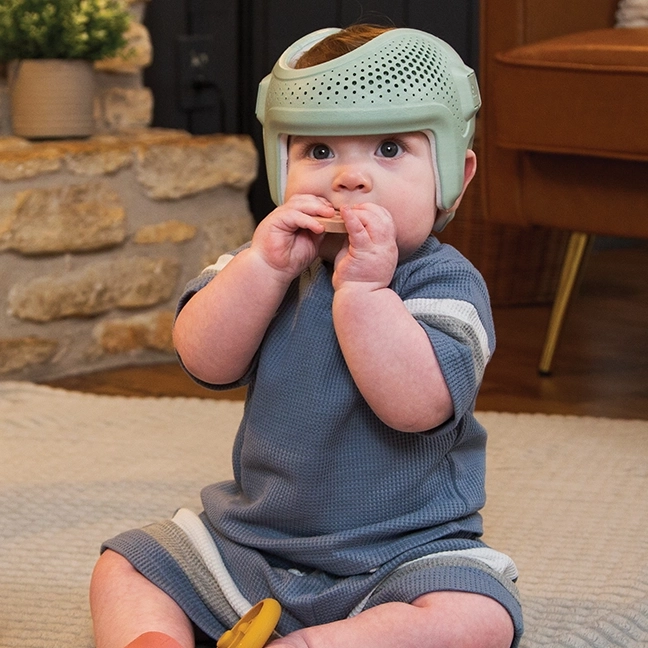
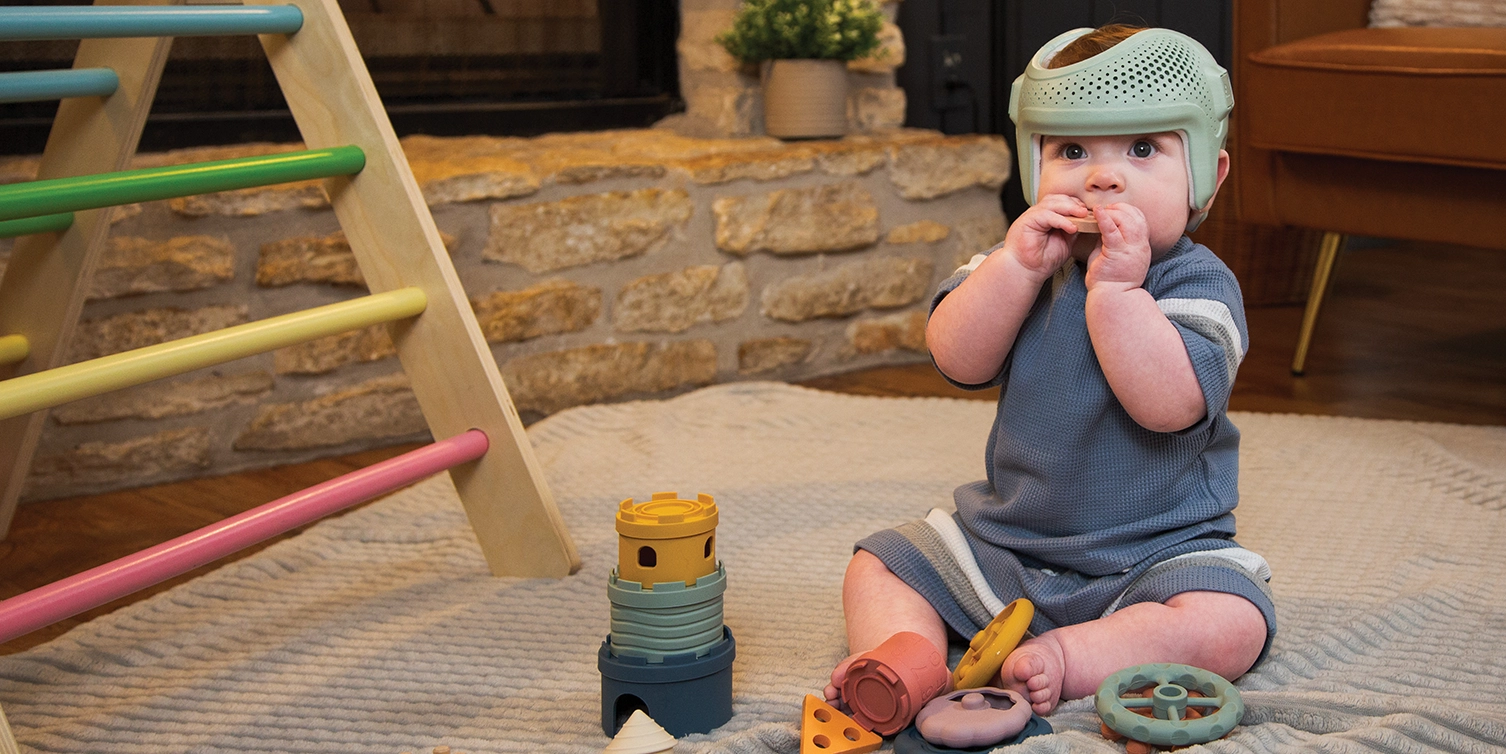
Photograph courtesy of Surestep.

One in five infants develop plagiocephaly or brachycephaly during the first year of life.1 These asymmetric or disproportionate head shapes are often associated with prolonged periods of infants’ time spent on their backs, limited tummy time, torticollis, prematurity, or multiple birth pregnancies.2-6 In some cases, cranial asymmetry or disproportion is a result of the premature fusion of the sutures of the skull. This is known as craniosynostosis and often requires surgical intervention. Depending on the severity of the initial asymmetry or disproportion, clinicians may initially recommend repositioning therapy or physical therapy as a conservative treatment option.7 For moderate-to-severe deformations, a cranial remolding orthosis (CRO), or helmet, may be prescribed.

Early research suggests an association between plagiocephaly and motor and language development, though most infants with deformational (nonsynostotic) head shape asymmetry develop typically. Treatment with a CRO works by gently guiding skull growth toward a more symmetric shape during the critical window when an infant’s skull remains pliable and is growing quickly. This can help optimize head shape and may address concerns some families have about long-term appearance and proper fit of helmets and other safety equipment.

CRO treatment represents a significant commitment: Infants typically wear the device 23 hours per day for three to eight months, with follow-up appointments every three to four weeks. Clinicians and patients have two choices when it comes to CROs: 3D-printed and thermoplastic CROs. The choice of which CRO type to use can meaningfully affect both treatment outcomes and patient and family experience.

How Each Helmet Is Made

CROs are custom-fabricated medical devices built from a precise capture of the infant’s head shape. While plaster molds are sometimes utilized, it is more common to begin fabricating a CRO with a 3D scan to create a digital map of the infant’s head. Next, the digital scan is modified to represent a more symmetric and/or proportionate head shape based on predicted skull growth. From there, fabrication diverges depending on the CRO design.

Thermoplastic (traditional) CROs: The digital scan is used to create a physical positive replica of the infant’s head shape. A sheet of foam padding is heated and vacuum-formed over this positive mold. Next the thermoplastic exterior is formed by again heating and vacuum forming over the foam. Once cooled, the CRO is trimmed and finished. During the fitting and delivery appointment, the clinician fine-tunes the helmet’s trimlines (e.g., how far the helmet extends across the forehead, around the ears, and along the back of the head) to optimize it for fit and comfort. The thickness of the foam padding can be reduced and adjusted throughout treatment if pressure areas develop or to allow for more directed growth.

3D-printed CROs: The modified digital scan is imported into design software where the helmet shape is optimized. Parameters such as trimlines, airflow patterns, and padding placement are designed digitally. The design is then sent to a 3D printer where the helmet is fabricated layer-by-layer, which can be printed in less than a day. A thin foam liner is added and because the helmet was manufactured with precision to match the infant’s head shape, there is often minimal clinical adjustment required at delivery. The design process allows for precision of fit that can be difficult to consistently achieve through manual fabrication processes like those for thermoplastic CROs. However, unlike thermoplastic CROs, adjustments to the external frame cannot be done by reheating and adjusting the material, and there is less foam to excavate due to growth. As a result, larger adjustments may warrant a second helmet fabrication.

The Clinical Tradeoffs

From a clinician’s perspective, the two approaches present different advantages and tradeoffs.

Thermoplastic (traditional) CROs: Thermoformed CROs excel in adjustability. Padding can be thinned and removed throughout treatment to accommodate patients who present with greater starting asymmetry or unexpected growth. Clinicians can make meaningful modifications at follow-up visits without needing to fabricate a second helmet. This flexibility is particularly valuable for complex presentations where ongoing adjustments may be necessary.

3D-printed CROs: 3D-printed CROs are manufactured with high precision to the infant’s initial head shape, which may reduce the need for follow-up adjustments. Additionally, the improved fit, lighter weight, and aerated design may reduce the frequency and severity of adverse effects due to heat or pressure. However, the precision of this fit makes these designs more vulnerable to infants outgrowing the helmets during periods of disuse. 3D-printed helmets also typically incorporate a latch mechanism allowing for easier donning and doffing, which results in improved adherence to recommended wear time schedules, compared to thermoplastic CROs.

Current Evidence and Research

Photograph courtesy of Surestep.

There is a robust historical evidence base spanning decades for the clinical use of thermoformed CROs.8 Multiple published studies confirm their effectiveness in improving head shape symmetry and disproportion across diverse patient populations.

The emerging evidence for 3D-printed CROs is increasingly substantial.9-10 At the 2025 Academy Annual Meeting and Scientific Symposium, the Hanger Institute presented outcomes data from a retrospective analysis of 1,140 infants treated with both 3D-printed and thermoformed CROs. The study matched 228 infants who received 3D-printed helmets with 912 infants treated with thermoformed helmets based on age at treatment start, initial cranial vault asymmetry index (CVAI, a standardized measurement of head shape symmetry), cephalic index (another measure of head shape symmetry), sex, and time since treatment initiation.

Infants treated with 3D-printed helmets showed a 42.9 percent improvement in CVAI at follow-up, compared to 32.9 percent improvement in the thermoformed group. This approximately 10 percentage point difference translates to meaningful clinical outcomes. The 3D-printed group achieved greater correction on average, moving more infants into milder asymmetry categories.

What might explain this difference? At this stage, we have a few hypotheses that may explain these differences. One possibility is that the precision fit of 3D-printed helmets means fewer side effects, greater adherence to wear time recommendations, and consequentially better outcomes. Similarly, easier donning and doffing with the latch mechanism may also impact wear time adherence and better overall outcomes. 3D-printed helmets are also generally lighter weight and have an aerated design that may also reduce heat-related skin irritation, sweating, and discomfort. A prospective clinical trial is needed to understand the possible mechanisms driving improved results with the 3D-printed helmets. Until those results are published, clinicians can view the observed outcome differences as promising evidence of effectiveness while further studies are conducted to identify the features responsible for the most meaningful differences in patient outcomes.

The Family Perspective

Beyond clinical metrics, parents report practical differences between helmet types. The donning and doffing ease of some 3D-printed designs is often appreciated, especially for parents managing a fussy infant during daily routines. The aerated design of 3D-printed helmets may reduce sweat accumulation and associated heat-related skin irritation, a common source of family burden and the decision to stop helmet therapy early. The improved fit and reduced occurrence of adverse events have also led to fewer follow-up visits, minimizing parent/caregiver burden.

That said, the thermoformed helmet’s adjustability can be reassuring to some families. Knowing that the clinician can modify padding and fit throughout treatment without delays offers peace of mind, particularly for infants with complex presentations.

A Framework for Shared Decision-Making

Peter Steele/stock.adobe.com

When families face a choice between helmet options, the decision should be collaborative rather than clinician-directed. The goal is collaborative ownership in the clinical plan of care. Shared decision-making aligns treatment options with each patient and family’s unique circumstances, values, and capacities. Consider the following conversation starters:

Clarify treatment goals: “What are your primary goals for helmet therapy? What does the best outcome look like?”

Assess family capacity: “Who will be responsible for putting on and taking off the helmet daily, and following the wear schedule? What does support look like in your household?”

Introduce both options: Present 3D-printed and thermoformed helmets alongside their key differences. Link specific advantages and tradeoffs to the family’s stated goals and preferences. Provide sample helmets or images when possible. Demonstrate donning, doffing, daily care, and proper fit. For example, “You mentioned that the baby’s grandmother will be primarily taking care of the child during the work week and she has arthritis. If you look at the 3D-printed helmet, the latch opens and closes like this [demonstrate latch] while a thermoformed helmet uses Velcro and opens and closes like this [demonstrate Velcro closure]. Do you think one of these mechanisms will work better for her?”

Address concerns thoroughly: Some example questions from parents/caregivers may be: “What are normal side effects versus those needing clinical attention? Do we really need to wear the helmet for 23 hours per day? What happens if we don’t meet the recommended wear schedule? What will follow-up appointments look like, and why are they important? How do I clean the helmet?”

Which Helmet Should You Choose?

The honest answer is that both types of CROs improve head shape. The evidence shows that 3D-printed helmets may offer superior outcomes on average, however individual variation should be considered. Thermoformed helmets remain an excellent option, particularly when adjustability throughout treatment is valued.

Clinicians new to 3D-printed helmets should connect with peers already using them. The first one or two can feel unfamiliar, requiring adjustment to different workflow and fitting processes. However, many clinicians report preferring 3D-printed helmets long-term, with the caveat that some patient presentations, particularly those with a greater starting asymmetry, may benefit from thermoformed helmets’ adjustability.

Families should start the conversation about helmet types with the infant’s orthotist early and come prepared with questions. What are the benefits of each design? What does the follow-up schedule look like? Will the wear schedule or hygiene routine differ? What daily use tips can you expect? Remember that no single helmet type is ideal for every infant. Each family has unique needs and constraints, and each infant grows differently. Even within the same family, siblings may even require different helmets. The best helmet is the one your family can use safely, consistently, and comfortably. There is no “one size fits all” when it comes to CROs.

Looking Forward

The profession is still learning when specific patient presentations are best suited to one type of helmet or the other. Future research will help clarify which factors predict success with each design, which side effects are more or less common, and what long-term developmental outcomes look like across both approaches. Until then, the evidence supports using both options, with an emerging lean toward 3D-printed helmets based on outcomes data, while remaining cognizant of individual patient needs and family circumstances.

CRO treatment is one area where 3D-printing is offering a promising path forward. Clinicians may find 3D-printed CROs require fewer adjustments and families may find fewer adverse events. Regardless of CRO type, pursuing CRO treatment represents a significant commitment from families. Choosing thoughtfully, collaboratively, and with evidence gives infants the best chance for both excellent outcomes and a positive treatment experience.

Bretta L. Fylstra, PhD, and Kathleen M. Carroll, MS, MSPO, CPO, are members of the Hanger Institute for Clinical Research and Education. Fylstra is a research scientist with a degree in biomedical engineering. Carroll is a senior manager of clinical outcomes. They can be contacted at bfylstra@hanger.com and kmcarroll@hanger.com, respectively.

References

  1. Bialocerkowski, A. E., S. L. Vladusic, and C. Wei Ng. 2008. Prevalence, risk factors, and natural history of positional plagiocephaly: a systematic review. Developmental Medicine and Child Neurology 50:577-86.
  2. Argenta, L. C., L. R. David, J. A. Wilson, and W. O. Bell. 1996. An increase in infant cranial deformity with supine sleeping position. Journal of Craniofacial Surgery 7:5-11.
  3. De Bock, F., V. Braun, and H. Renz-Polster. 2017. Deformational plagiocephaly in normal infants: A systematic review of causes and hypotheses. Archives of Disease in Childhood 102:535-42.
  4. Graham, T., N. Gilbert, and K. Witthoff, et al. 2019. Significant factors influencing the effectiveness of cranial remolding orthoses in infants with deformational plagiocephaly. Journal of Craniofacial Surgery 30: 1710-3.
  5. Hillyar, C. R. T., N. Bishop, and A. Nibber, et al. 2024. Assessing the evidence for nonobstetric risk factors for deformational plagiocephaly: systematic review and meta-analysis. Interactive Journal of Medical Research 13:e55695.
  6. Roby, B. B., M. Finkelstein, R. J. Tibesar, and J. D. Sidman. 2012. Prevalence of positional plagiocephaly in teens born after the “Back to Sleep” campaign. Otolaryngology Head Neck Surgery 146:82-8.
  7. Corte, A. D. and M. A. Rohde. 2025. Use of orthotic helmets in children with positional plagiocephaly and brachycephaly: A systematic review. Child’s Nervous System 41:163.
  8. Trebilcock, A. L., J. L. Findley, and J. S. Cherry, et al. 2025. A 10-year review of the efficacy of cranial remolding orthosis treatment and factors that influence outcomes for infants with isolated deformational plagiocephaly. Children 12(8):1099.
  9. Atallah, H., R. Naeem, and R. Albeetar, et al. 2025. 3D-printed cranial helmet therapy for the treatment of deformational plagiocephaly. Frontiers in Pediatrics 13:1638581.
  10. Graham, T. and J. Wang. 2025. Efficacy of 3D-printed cranial remolding orthoses for infants in Australia. Journal of Prosthetics and Orthotics 37(4):240-7.


Related posts:

  1. Academy Society Spotlight: Choosing a Gel Liner
  2. Rough and Tumble: Meeting the Prosthetic Durability Challenges of Your Youngest Patients
  3. Duchenne Muscular Dystrophy
    The Search for New Treatments Races against the Clock
  4. Future Innovation in Pediatric Care
Previous Post

The Risk Behind the Path of Least Resistance

Next Post

The Evolution of Self-Suspending Transradial Socket Designs

Next Post

The Evolution of Self-Suspending Transradial Socket Designs

 SUBSCRIBE FOR FREE


O&P JOBS

Eastern

Certified Prosthetist/Orthotist

Central

Orthotic Technician / O&P Technician

Eastern

Certified Orthotist 

Linkedin X-twitter Facebook

Get unlimited access!

Join EDGE ADVANTAGE and unlock The O&P EDGE's vast library of archived content.
SUBSCRIBE TODAY
The O&P EDGE Magazine
 

Login to your account

  • Forgot Password?

Reset Password

  • Already have an account? Login

Enter the username or e-mail you used in your profile. A password reset link will be sent to you by email.

Close
No Result
View All Result
  • PECOS
  • MAGAZINE
    • SUBSCRIBE
    • CURRENT ISSUE
    • ISSUE ARCHIVE
    • NEWS ARCHIVE
    • PRODUCTS & SERVICES DIRECTORY
    • ADVERTISING INFORMATION
  • O&P JOBS
    • FIND A JOB
    • POST A JOB
  • EDGE ADVANTAGE
    • EA Homepage
    • EA Data
  • FACILITIES
  • RESOURCES
    • PRODUCTS & SERVICES DIRECTORY
    • CALENDAR
    • CONTACT
    • ABOUT US
    • O&P LIBRARY
    • LOWER LIMB DIRECTORY
    • THE GUIDE
    • CUSTOM PUBLICATIONS
    • ADVERTISING INFORMATION
    • EDGE DIRECT
    • AMPLITUDE
  • OANDP-L
  • LOGIN

© 2026 The O&P EDGE

TAKE THE SURVEY
Not enough quota to unlock this post
Unlock left : 0
Are you sure want to cancel subscription?
 

Account Activation

Before you can login, you must activate your account with the code sent to your email address. If you did not receive this email, please check your junk/spam folder.

Click here to resend the activation email. If you entered an incorrect email address, you will need to re-register with the correct email address.


© 2026 The O&P EDGE

  • About
  • Advertise
  • Contact
  • EDGE Advantage
  • OANDP-L
  • Subscribe

CONTACT US

866-613-0257

info@opedge.com

201 E. 4th St.
Loveland, CO 80537

EDGE DIRECT

The most important industry news and events delivered directly to your inbox every week.

  • About
  • Advertise
  • Contact
  • EDGE Advantage
  • OANDP-L
  • Subscribe

© 2026 The O&P EDGE

Welcome Back!

Login to your account below

Forgotten Password?

Retrieve your password

Please enter your username or email address to reset your password.

Log In
The O&P EDGE Magazine
 

Login to your account

  • Forgot Password?

Reset Password

  • Already have an account? Login

Enter the username or e-mail you used in your profile. A password reset link will be sent to you by email.

Close
No Result
View All Result
  • PECOS
  • MAGAZINE
    • SUBSCRIBE
    • CURRENT ISSUE
    • ISSUE ARCHIVE
    • NEWS ARCHIVE
    • PRODUCTS & SERVICES DIRECTORY
    • ADVERTISING INFORMATION
  • O&P JOBS
    • FIND A JOB
    • POST A JOB
  • EDGE ADVANTAGE
    • EA Homepage
    • EA Data
  • FACILITIES
  • RESOURCES
    • PRODUCTS & SERVICES DIRECTORY
    • CALENDAR
    • CONTACT
    • ABOUT US
    • O&P LIBRARY
    • LOWER LIMB DIRECTORY
    • THE GUIDE
    • CUSTOM PUBLICATIONS
    • ADVERTISING INFORMATION
    • EDGE DIRECT
    • AMPLITUDE
  • OANDP-L
  • LOGIN

© 2026 The O&P EDGE

Not enough quota to unlock this post
Unlock left : 0
Are you sure want to cancel subscription?
 

Account Activation

Before you can login, you must activate your account with the code sent to your email address. If you did not receive this email, please check your junk/spam folder.

Click here to resend the activation email. If you entered an incorrect email address, you will need to re-register with the correct email address.