

A University of Melbourne start-up company is developing a bionic upper-limb prosthesis that is designed to be lighter, easier to fit, and more reliable to control than many conventional systems. Alireza Mohammadi, PhD, senior research engineer, and his team interviewed people with amputations, clinicians, and suppliers to identify the limitations associated with current prosthetic devices and subsequently founded a start-up, Meablex, to address the technological limitations.
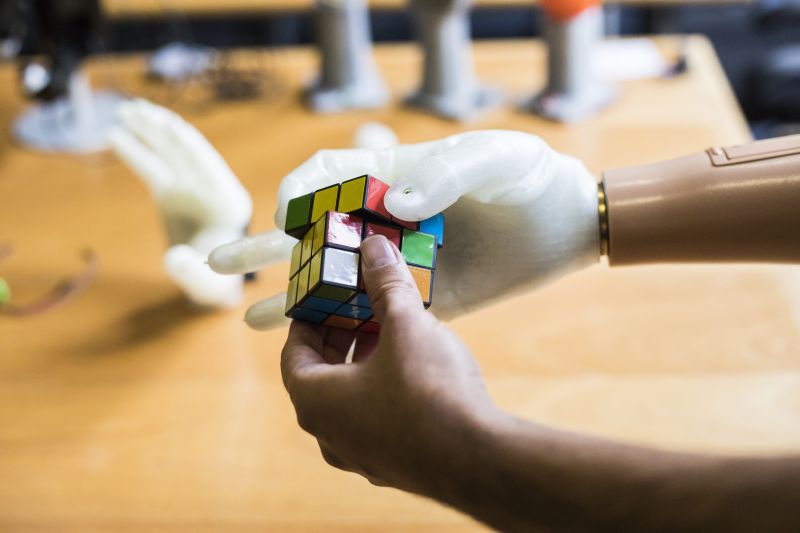
“Bionic hands are typically made out of rigid and heavy materials like metal and therefore can be hazardous if there’s a malfunction,” Mohammadi said. “Our next-generation prosthetics are much safer as we use lightweight soft robotic materials and advanced 3D-printing technologies.”
Using electromyography (EMG) sensors that detect electrical activity generated when the user contracts muscles in their residual forearm is a common method for upper-limb prosthetic control. However, the signals can be affected by sweat, electrode placement, and changes in socket fit, which may disrupt signal quality and make the device harder to control.
“Our system uses magnetic sensors designed to be less affected by sweat than skin-surface electrical sensors,” said Mohammadi. “Our technology combines a lightweight 3D-printed prosthetic hand with a new sensorized socket that detects subtle muscle movement, rather than relying only on traditional electrical muscle signals.”
Meablex is also designing adaptable sockets, enabling the user to manually adjust their prosthetic arm in real time.
Clinical trials are slated to begin this year, with a commercial launch planned for early 2027, following clinical validation and regulatory approval.
Meablex was recently awarded $470,000 through Australia’s Economic Accelerator Ignite program to support the next stage of development, clinical validation, and commercialization.
Editor’s note: This story was adapted from materials provided by the University of Melbourne.