

By “combining 3D scanning, finite element analysis, elastic-plastic homogenization, and field-driven design, the method adjusts lattice strut diameter according to local mechanical loads,” according to the 3D Printing Industry article. Field-driven design is an engineering method to control and vary complex geometries like lattices, wall thicknesses, and material densities across a 3D model, and is common in modern biomedical engineering.
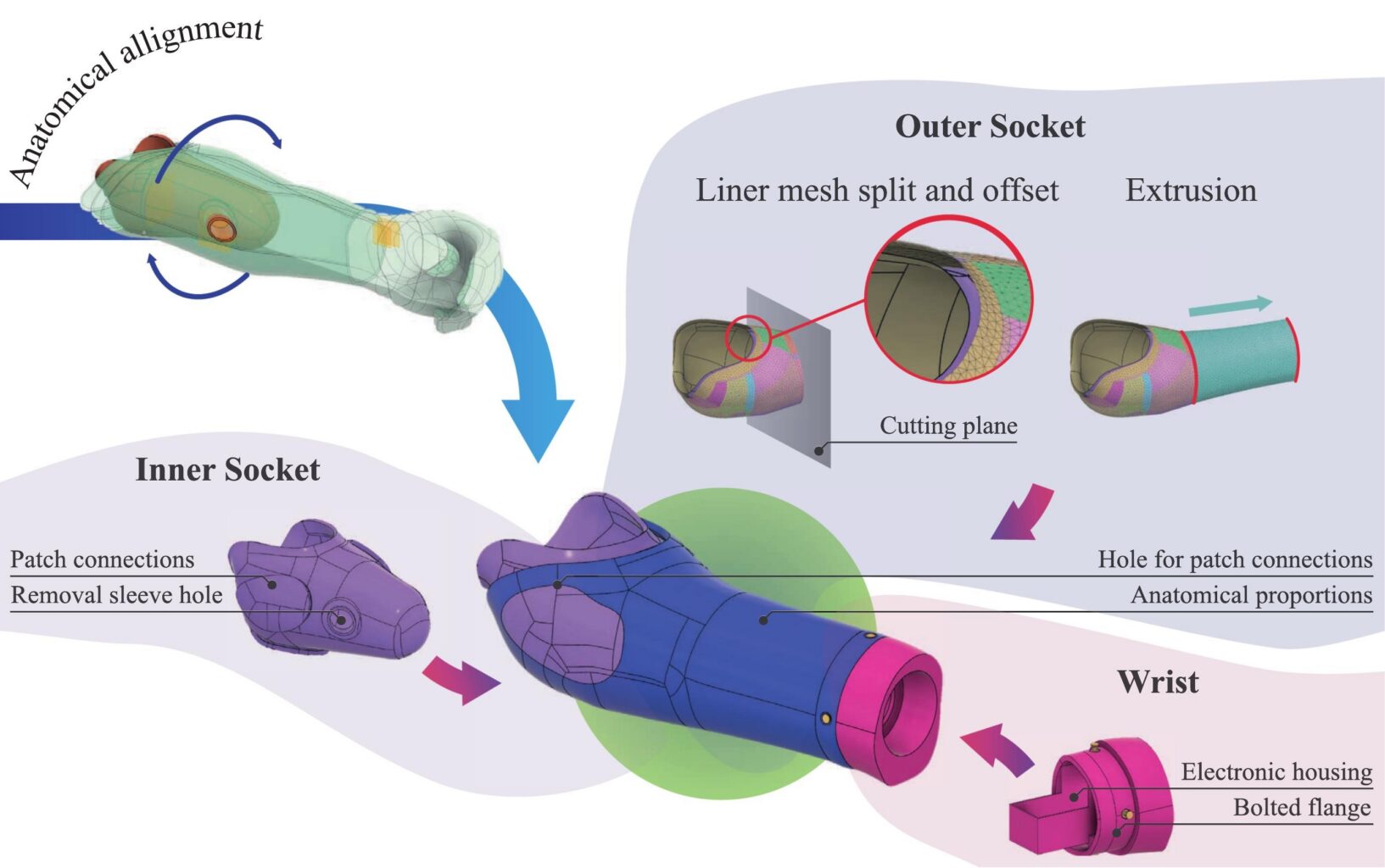
The researchers, from the Scuola Superiore Sant’Anna, the University of Trento, the University of Pisa, and Sapienza University of Rome, used the combination of techniques to fabricate a prosthesis that weighed 373 g, 25.4 percent below the equivalent 500 g bulk model. A full-scale PA12 prototype was manufactured using Multi Jet Fusion.
Support authors and subscribe to content
This is premium stuff. Subscribe to read the entire article.