

By “combining 3D scanning, finite element analysis, elastic-plastic homogenization, and field-driven design, the method adjusts lattice strut diameter according to local mechanical loads,” according to the 3D Printing Industry article. Biomedical engineers use field-driven design to control complex geometries like lattices, wall thicknesses, and material densities across a 3D model.
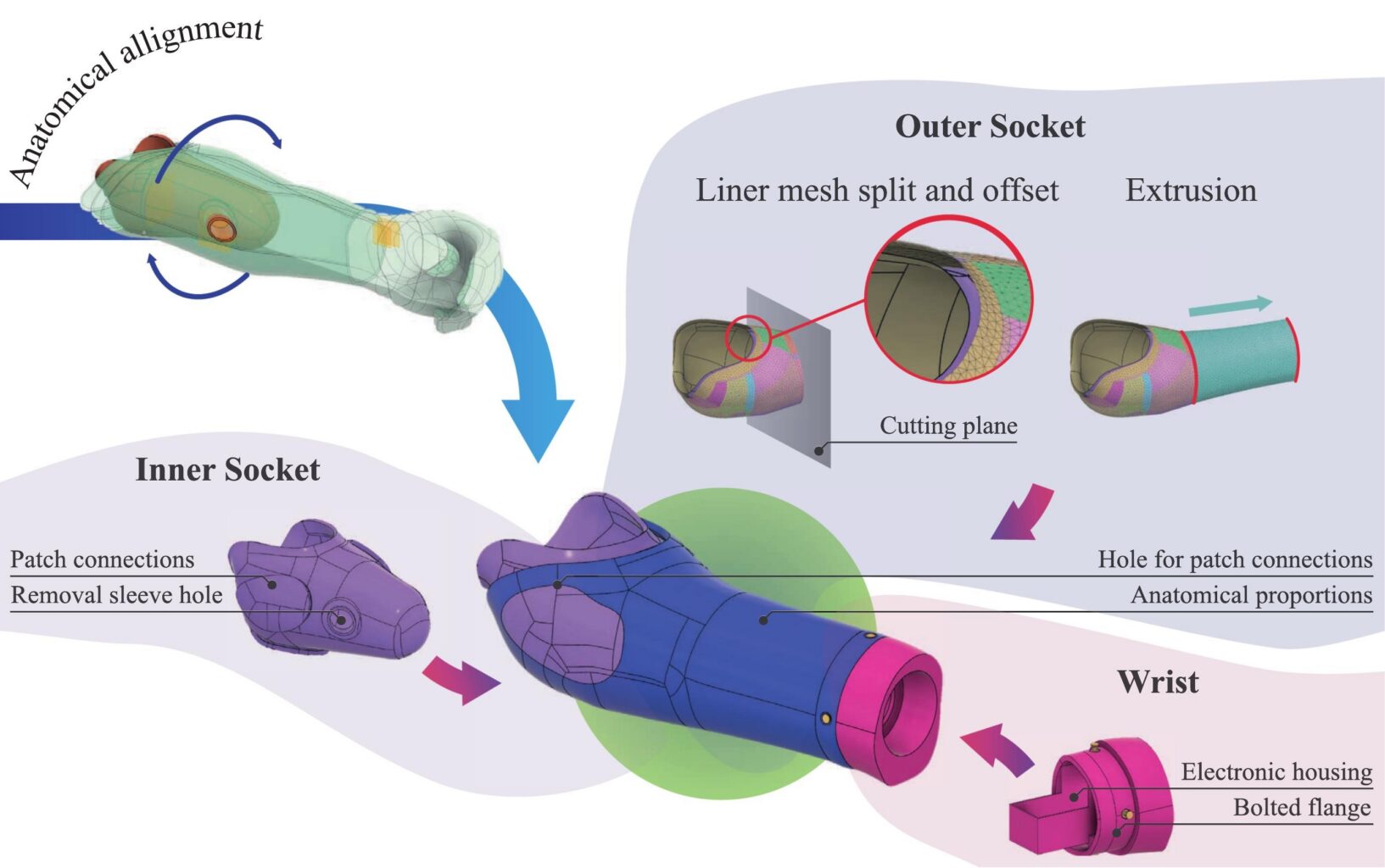
The researchers, from the Scuola Superiore Sant’Anna, the University of Trento, the University of Pisa, and Sapienza University of Rome, used the combination of techniques to fabricate a prosthesis that weighed 373 grams, 25.4 percent below the equivalent 500-gram bulk model.
Support authors and subscribe to content
This is premium stuff. Subscribe to read the entire article.
Login if you have purchased