
OANDP-L
  • Login
No Result
View All Result
The O&P EDGE
  • PECOS
  • Magazine
    • Subscription
    • Current Issue
    • Issue Archive
    • News Archive
    • Product & Service Directory
    • Advertising Information
    • EDGE Flipbooks
  • O&P Jobs
    • Find a Job
    • Post a Job
  • EDGE Advantage
    • EA Homepage
    • EA Data
  • O&P Facilities
  • Resources
    • Product & Service Directory
    • Calendar
    • Contact
    • About Us
    • O&P Library
    • The Guide
    • Custom Publications
    • Advertising Information
    • EDGE Direct
    • Amplitude Media Group
  • PECOS
  • Magazine
    • Subscription
    • Current Issue
    • Issue Archive
    • News Archive
    • Product & Service Directory
    • Advertising Information
    • EDGE Flipbooks
  • O&P Jobs
    • Find a Job
    • Post a Job
  • EDGE Advantage
    • EA Homepage
    • EA Data
  • O&P Facilities
  • Resources
    • Product & Service Directory
    • Calendar
    • Contact
    • About Us
    • O&P Library
    • The Guide
    • Custom Publications
    • Advertising Information
    • EDGE Direct
    • Amplitude Media Group
No Result
View All Result
The O&P EDGE Magazine
No Result
View All Result
Home Feature

Demystifying Silicone Fabrication

by Maria St. Louis-Sanchez
July 1, 2026
in Feature
0
SHARES
10
VIEWS
Share on FacebookShare on Twitter

The first impression Karl Lindborg, CPO/LP, prosthetic and orthotic clinical practice consultant, Intersect Orthotic and Prosthetic Solutions, had of silicone fabrication in O&P devices was a bit mixed. He simultaneously saw potential and drawbacks.
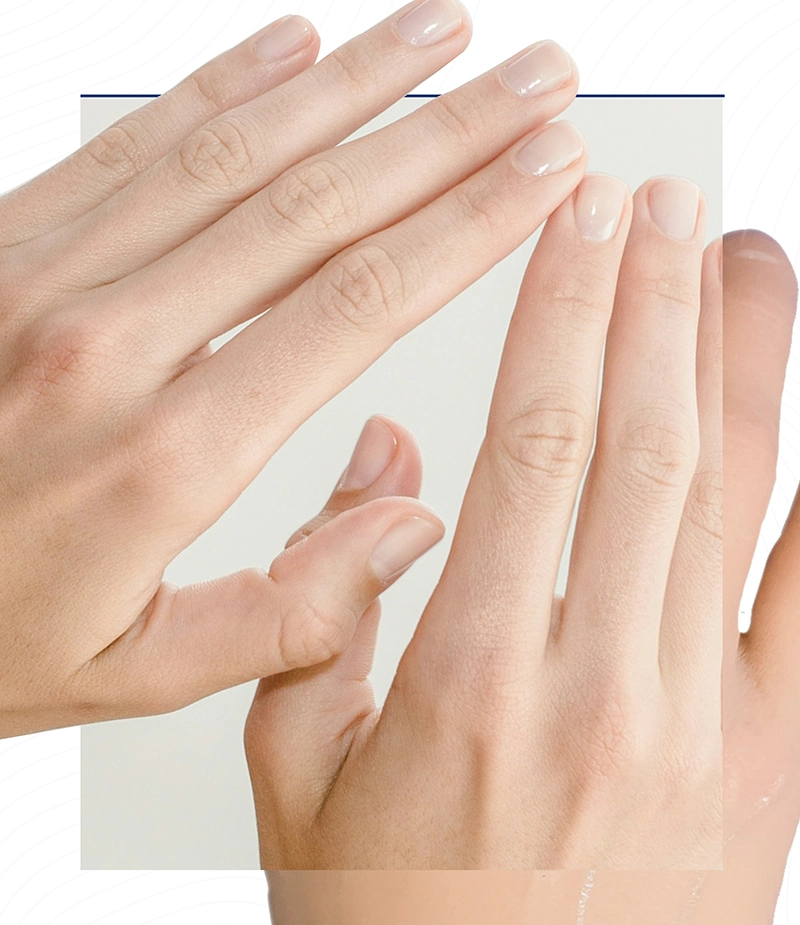
He was introduced to it while working in Scotland in 2008 and trying to develop a new interface for a partial hand prosthesis. While there, he was invited to take a silicone fabrication class at the University of Strathclyde. Lindborg, who started in the business as a technician, was immediately impressed.

“When I saw this, I’m going, ‘Wow, this is a really cool technique,’” he says. “My first impression was that this is absolutely going to change the way we do fabrication.”

At the same time though, he saw why silicone fabrication wasn’t catching on as fast in the United States as it did in Europe. Where he was trained in Scotland, the lab had a separate, temperature-regulated and dust-controlled room for silicone fabrication. And while the silicone product itself was affordable, the industrial mixing mill his teachers used to process the silicone cost between $40,000 and $60,000. He wondered who would be willing to make the investment in time and money.

“In the US, we’re all about time efficiency and getting things done quickly,” he says. “This was very artistic and kind of labor intensive. I thought it was cool but wondered if it was sustainable and if clinics could afford to do it.”

Now, 18 years later, Lindborg stands by his initial reaction that working with silicone can be expensive and time-consuming. However, he and other experts say there are ways to overcome those hurdles and, for some, the use of silicone in their devices can be life-changing.

“It takes a few projects to build confidence. The companies who spend some time honing their skills over a few projects are having great success. Those companies are telling me that their patients don’t want to return to what they had before,” says Aaron Jacobsen, CPO, technical director of socket innovation, ST&G.

Silicone: The Missing Link of O&P Materials

While silicone has been widely embraced in Europe, American fabricators have been slower to use it to its fullest potential. That’s too bad because it should have a prominent place in the world of O&P materials, says Stefan Knauss, MAMS, CPO, president and co-owner, Aesthetic Prosthetics, California, who has watched the evolution of silicone for the past 36 years. Silicone can be soft, compliant, hygienic, and durable, he says.

“For the average practitioner to be able to use materials with those properties in their creations is a powerful thing,” he says.

Mariya Cameron, CEO, 14th Element Fabrication, Texas, was so impressed by the properties of silicone that she started her own central fabrication shop dedicated to its use. She says silicone comes from the base element of silicon, which is second most abundant resource on the earth’s crust and can be found in the form of quartz crystal, gravel, and sand. That material is mined and then synthesized in a lab with other ingredients to create a variety of types of silicone.

“It’s considered the link between organic and inorganic chemistry. You’ve basically got a flexible rock,” she says. “It’s super heat resistant, UV resistant, it’s hygienic, but at the same time its super, super strong, and it moves with you.”

She says it’s the closest material found to mimic the properties of human skin, which makes it ideal for the parts of the devices that interface with the body.

There are many cases where she’s seen its benefits, but one, in particular, comes to mind. At Arm Dynamics, her former employer, there was one patient who was a burn victim with transradial bilateral amputations. “This guy had open weeping wounds on his arms,” she says, adding that he had to change his sheets every morning because he was bleeding in the night. He suffered through the pain of wearing his devices so he could be functional but could usually only tolerate four to five hours of use. Then his prosthetist used a silicone socket in his devices. Silicone is often used to treat scars and, in this case, not only did it help improve the comfort level, it also helped heal his wounds. Now the patient feels better and uses his devices the entire day, Cameron says.

“We see this kind of use a lot,” she says.

There are many other ways that silicone can be applied to O&P devices, but just like any intervention, there are devices where silicone would not be beneficial and others where it can make all the difference. Some of the best-use silicone cases cited by experts include:

  • Upper-limb prostheses: Many of the expert silicone fabricators in the United States got their start as upper-limb specialists who were looking for solutions to make their devices more comfortable for their patients. Silicone is a durable, soft, and flexible socket interface that works well with upper-limb prostheses that require skin fit suction.

“The patients that have experienced both a traditional thermoplastic interface for their socket and now silicone, all rave that this is much more comfortable and it just moves with their body,” says Chris Meier, CPO, upper-limb specialist, Achilles Prosthetics and Orthotics, California. 

  • Patients with bony prominences or abnormal residual limbs: Using silicone with other materials means that devices can be both stiff and flexible where needed. In cases where there might be a bulbous area or a bony prominence, O&P technicians can make frames with soft panels to stretch comfortably around those areas. Knauss has seen silicone work well for patients with a Symes amputation, where the prosthesis has to fit around the heel pad of the remaining foot. Cameron says it’s possible to create sockets and liners using silicone with a range of hardnesses, which is measured by shore durometer. These multidurometer sockets can be rigid in some areas for structure and softer in other areas for cushion. Meier has also seen silicone work well on orthotics for these patients. One patient with a partial, deformed foot had a metatarsal that was pushing into the footplate of her AFO causing persistent wounds. His team made her a silicone supramalleolar orthosis.

“It relieved and conformed to the bottom of her foot nicely, and she was able to tolerate wearing the brace for a full day at school,” Meier says. 

  • Patients who need more volume flexibility: One of the great things about silicone is how it can be incorporated with other materials or devices, Jacobsen says. One use is incorporating an air bladder into sockets that allows users to pump it up or release air depending on their limb volume. In Jacobsen’s experience, this is particularly useful for lower-limb sockets where volume loss occurs throughout the day. Before the bladders, patients tended to handle that volume difference by adding socks, which can be cumbersome depending on what they are doing. “Now they can just pump a little air in,” he says. “The bladder expands to compress around the limb to reduce motion and achieve a tighter fit.”

Patients with upper-limb amputations have the same volume issues, Cameron says. One of the specialized products at 14th Element is its pump-up AIR-fit product for upper-limb prostheses that gives users adjustable suspension.     

  • Partial feet and hands: Silicone works great for hands or feet that may be missing digits. Silicone has suction properties that can adhere securely to the remaining limb while still being comfortable.

“If there’s a residual finger left, it’s a great way to retain ability in the hand,” Knauss says. His team at Aesthetic Prosthetics can also use their artistic skills to make an exact match to the patient’s skin color and texture at the patient’s request.

Knauss says that they also offer what they call utility prostheses, which are single-color devices with no surface detail that stretch over the hand like a glove. The fingers are made of a firm silicone rubber, which is strong and gives finger resistance when the user grabs something.  

  • Edges of devices: Because silicone is so comfortable to the skin, it makes a great socket edge—especially on skin-fit suction sockets. Patients report less perspiration inside the socket with skin-fit high-temperature vulcanizing (HTV) silicone, also known as high-consistency rubber (HCR) when they switch from plastic, Jacobsen says.

“You’ve got to bridge that gap between your skin the device’s rigid surface,” he says.

Often, that softer socket edge is achieved with plastic. Platinum-cured HTV silicone is medical grade and has a much lower compressive stiffness than plastics, so the result is a more biocompatible and comfortable fit around the edge. Patients often report greater range of motion in the prosthesis compared to plastic. Jacobsen has seen this silicone edge design used widely in Germany.

Overcoming the Hurdles

When it’s written out, working with HTV silicone seems easy. Technicians mix two products, roll out the silicone, shape it as desired, then throw it into an oven to cure.

“If you can bake a cupcake you can work with silicone,” Knauss says. The problem, the experts say, is that there’s a lot that can go wrong.

Meier’s points out the paradox of the material. “It’s somewhat forgiving of a material, but also it’s not very forgiving,” he says. “It’s not too hard to learn, but it’s hard to perfect.”

Things can go wrong in any part of the process, he says. If dust gets into the mixture or if there’s too much moisture in the cast, that can lead to problems. “And you won’t know if anything’s off until you’re all the way at the end point,” Meier says.

One classic mistake is if a technician wears nitrile gloves while handling the silicone. “If somebody wants to handle silicone with those, they can pretty much throw away what they were working on in the trash,” Knauss says.

Meier says silicone gets easier to work with over time, and he has started to anticipate potential problems before they arise.

However, overcoming the learning curve is only one of the hurdles involved with silicone fabrication including cost and time. The majority of the cost comes in the form of an electric mill to process the HTV silicone typically used in O&P devices. Those mills can cost tens of thousands of dollars and take up valuable room in the lab. That’s a big investment for any clinic to make, Jacobsen says. At ST&G, customers can buy what is called rolled silicone, which is prerolled silicone that is shipped to clinics and frozen until technicians are ready to use it. Technicians then use the silicone where they need it on devices. Jacobsen compares it to using fondant on a cake, where the sheets are placed on the cake and then the seams are fused.

By using rolled silicone, customers can have the benefits of silicone fabrication without investing in an expensive mill or dealing with the headache of getting the processing perfect. ST&G sells the rolled silicone in a variety of hardnesses, called shore durometers. Jacobsen trains clinics around the country about the best practices in using rolled silicone in an ST&G training seminar.

The experts’ opinions about using rolled silicone versus silicone that is milled in-house with an electric mill is varied. Some say it’s just as good as freshly milled in-house silicone, while others argue that it’s not quite as good but still a viable option.

“It’s like the Pillsbury frozen pie crust versus grandma’s fresh, rolled-out crust,” Lindborg says. “The frozen crust doesn’t taste as good as grandma’s, but it’ll do.”

For those who do want their own mill, there are also alternatives to the expensive electric machine. Knauss uses a hand-crank device that he developed himself, but similar devices can be purchased for less than $7,000. Knauss says most clinics don’t need the large electric mills that cost tens of thousands of dollars. “For your average shop, that’s prohibitive and just unnecessary and, quite frankly, I always thought they were a little dangerous.”

Lindborg uses both rolled silicone and a $1,400 hand-cranked mill to make what he calls quick and dirty diagnostic devices. He says a pasta mill is an option as well. He has taught a course through the American Board for Certification in Orthotics, Prosthetics & Pedorthics on this technique to help making working with silicone less intimidating.

“You can do this in four hours and don’t have to wait for central fabrication to make it for you,” he says. “It’s not exactly the way you would do it in a finished device, but it will be good enough to do your diagnostic fitting and you’re not holding up the fabrication in the diagnostic phase.”

For those clinics that want silicone devices for their patients, but don’t want to fabricate them, a central fabricator is also an option. Cameron says she works with clinicians across the country who understand the value of silicone in their patients’ devices but have neither the time nor expertise to use it.

“No clinician has time for this, they just don’t,” she says. “The job of the prosthetist is endless and often thankless. I am here to support them.” The real cost of working with silicone isn’t the expensive mill, she says.

“The real expense is the time and expertise it’s going to take to fabricate,” she says.

While 14th Element is often needed to do more complicated diagnostic devices, savvy clinicians can do some of the diagnostic work in house, Cameron says. This can help reduce cost and reduce turnaround times.

The Future of Silicone

In time, working with silicone may become even easier, Lindborg predicts. He’s seen some fabricators who are throwing themselves into 3D printing and are working to overcome the difficulty of printing with a softer material.

“I think it will get to a point where it’s a viable option,” he says.

Meier also sees 3D printing as the future, though he’s not sure whether those products will be made of silicone or some other softer material that can be used with the machines.

No matter what the future brings, he hopes more clinics embrace what’s coming. He encourages O&P clinicians and business owners to give new products and technologies a try and see what they can create.

“You’ve just got to embrace and explore new things,” he says. “If it works, it will move the field forward. If it doesn’t, it will still move the field forward because we tried.”

Maria St. Louis-Sanchez can be contacted at msantray@yahoo.com.


Related posts:

  1. CAD/CAM: Time to Join the Digital Age
  2. Can Green and Lean Help Your O&P Facility?
  3. Have EHRs Been Good for Healthcare?
  4. Remark Code CO-261
Previous Post

From Traditional to Digital: Redefining Fabrication Sciences

Next Post

Editor’s Message–July 2026

Next Post

Editor's Message--July 2026

 SUBSCRIBE FOR FREE


O&P JOBS

Remote

O&P Business Development Manager

Eastern

CPO/Board Eligible Prosthetist/Orthotist/ O&P Resident or O&P Technician

Eastern

Orthotic & Prosthetic Technician

Linkedin X-twitter Facebook

Get unlimited access!

Join EDGE ADVANTAGE and unlock The O&P EDGE's vast library of archived content.
SUBSCRIBE TODAY
The O&P EDGE Magazine
 
Required 'Candidate' login to applying this job. Click here to logout And try again
 

Login to your account

  • Forgot Password?

Reset Password

  • Already have an account? Login

Enter the username or e-mail you used in your profile. A password reset link will be sent to you by email.

Close
No Result
View All Result
  • PECOS
  • MAGAZINE
    • SUBSCRIBE
    • CURRENT ISSUE
    • ISSUE ARCHIVE
    • NEWS ARCHIVE
    • PRODUCTS & SERVICES DIRECTORY
    • ADVERTISING INFORMATION
  • O&P JOBS
    • FIND A JOB
    • POST A JOB
  • EDGE ADVANTAGE
    • EA Homepage
    • EA Data
  • FACILITIES
  • RESOURCES
    • PRODUCTS & SERVICES DIRECTORY
    • CALENDAR
    • CONTACT
    • ABOUT US
    • O&P LIBRARY
    • THE GUIDE
    • CUSTOM PUBLICATIONS
    • ADVERTISING INFORMATION
    • EDGE DIRECT
    • AMPLITUDE
  • OANDP-L
  • LOGIN

© 2026 The O&P EDGE

Not enough quota to unlock this post
Unlock left : 0
Are you sure want to cancel subscription?
 

Account Activation

Before you can login, you must activate your account with the code sent to your email address. If you did not receive this email, please check your junk/spam folder. Click here to resend the activation email. If you entered an incorrect email address, you will need to re-register with the correct email address.


© 2026 The O&P EDGE

  • About
  • Advertise
  • Contact
  • EDGE Advantage
  • OANDP-L
  • Subscribe

CONTACT US

866-613-0257

info@opedge.com

201 E. 4th St.
Loveland, CO 80537

EDGE DIRECT

The most important industry news and events delivered directly to your inbox every week.

  • About
  • Advertise
  • Contact
  • EDGE Advantage
  • OANDP-L
  • Subscribe

© 2026 The O&P EDGE

Welcome Back!

Login to your account below

Forgotten Password?

Retrieve your password

Please enter your username or email address to reset your password.

Log In
The O&P EDGE Magazine
 
Required 'Candidate' login to applying this job. Click here to logout And try again
 

Login to your account

  • Forgot Password?

Reset Password

  • Already have an account? Login

Enter the username or e-mail you used in your profile. A password reset link will be sent to you by email.

Close
No Result
View All Result
  • PECOS
  • MAGAZINE
    • SUBSCRIBE
    • CURRENT ISSUE
    • ISSUE ARCHIVE
    • NEWS ARCHIVE
    • PRODUCTS & SERVICES DIRECTORY
    • ADVERTISING INFORMATION
  • O&P JOBS
    • FIND A JOB
    • POST A JOB
  • EDGE ADVANTAGE
    • EA Homepage
    • EA Data
  • FACILITIES
  • RESOURCES
    • PRODUCTS & SERVICES DIRECTORY
    • CALENDAR
    • CONTACT
    • ABOUT US
    • O&P LIBRARY
    • THE GUIDE
    • CUSTOM PUBLICATIONS
    • ADVERTISING INFORMATION
    • EDGE DIRECT
    • AMPLITUDE
  • OANDP-L
  • LOGIN

© 2026 The O&P EDGE

Not enough quota to unlock this post
Unlock left : 0
Are you sure want to cancel subscription?
 

Account Activation

Before you can login, you must activate your account with the code sent to your email address. If you did not receive this email, please check your junk/spam folder. Click here to resend the activation email. If you entered an incorrect email address, you will need to re-register with the correct email address.