
Researchers at the United Kingdom’s Lancaster University and Ukraine’s Dnipro University of Technology and Kharkiv Medical National Medical University are partnering to make prosthetic limbs more comfortable for military personnel who have been injured in the war in Ukraine.
The team is working to develop new designs for prosthetic sockets that will help improve mobility, comfort, and independence and that can adapt to changes in shape, size, heat, and humidity.
“There is an urgent need for better prosthetic socket fitting, sockets that can adapt to the often non-uniform limb shape, and accommodate for daily changes in limb volume that will revolutionize prosthetic care not only for amputees in Ukraine but also globally,” said Hannah Jarvis, PhD, biomechanics lecturer, Lancaster University, who is co-leading the research with university colleagues Adam Taylor, PhD, Lancaster Medical School, and Allan Rennie, School of Engineering.
A further challenge is the need to ensure the prosthetic devices are easy to produce at a reasonable cost so fittings and refittings can be personalized for each patient.
“We have to balance what’s most cost effective, given the huge numbers of military personnel and civilians, including children, affected, with the best possible outcomes for amputees,” said Rennie. “We’re looking to use an additive manufacturing approach to allow for the socket design to be customized and reconfigured to meet individual needs.”
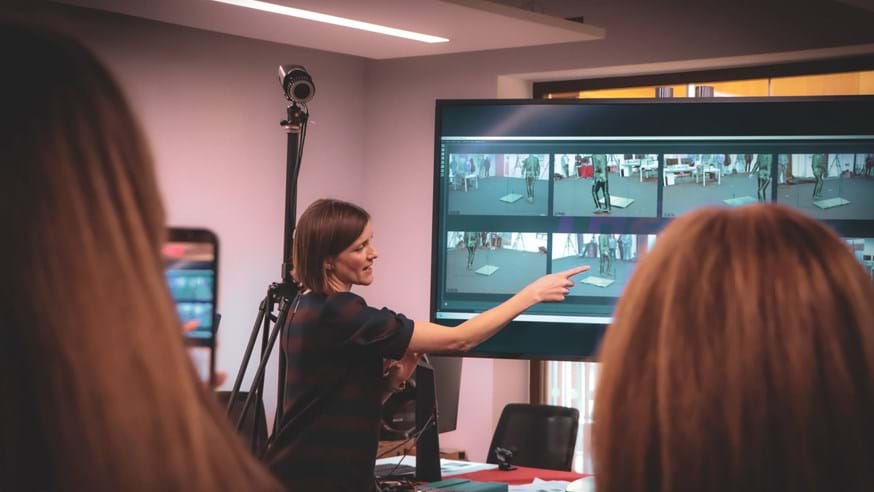
In support of the project, Qualisys Motion Capture and Technology Systems donated 3D cameras and software for motion capture to Dnipro University of Technology that will be used in Ukraine to gather data, recording movements and analyzing the pressure points on prosthetic limbs. The Ukrainian researchers are also spending time at Lancaster University learning about scientific analysis and the use of 3D scanning, digital design, and additive manufacturing. The aim is to produce a functional prototype to be used for testing by February 2027.
Lancaster University and Dnipro University of Technology have been partnered through the Twin for Hope initiative, launched in 2022 by Universities UK International and Cormack Consultancy Group to support United Kingdom and Ukrainian universities following the Russian invasion of Ukraine.
“The latest prosthetic limb project is a great opportunity to strengthen the international research cooperation between Dnipro and Lancaster universities and come up with better solutions for quality of life of lower-limb amputees in Ukraine,” said Serhii Onyshchenko, PhD, Dnipro University of Technology.
“This collaboration for us is more than just research or projects. In the context of war, it has become a symbol of support, trust, and true partnership,” said Oleksandr Kryvoshapka, PhD, Kharkiv National Medical University. “Together with Lancaster, we are not only exchanging knowledge, we are shaping a new standard of medical education and rehabilitation that already helps our patients and gives hope for recovery. We truly value this collaboration, as it brings together professionalism, humanity, and a shared mission to improve people’s lives.”
Editor’s note: This story was adapted from materials provided by Lancaster University.