
Claudia Ghidini, PhD, a researcher at Imperial College London, was awarded the 2026 Sir Michael Uren Prize for developing adjustable prosthetic technology designed to adapt as children grow, with promise for young patients in humanitarian and low-resource settings. The prize, which includes £20,000 in funding (about $28,000 USD), recognizes postgraduate researchers at Imperial College London whose work combines academic excellence with a strong pathway towards translation and societal impact.
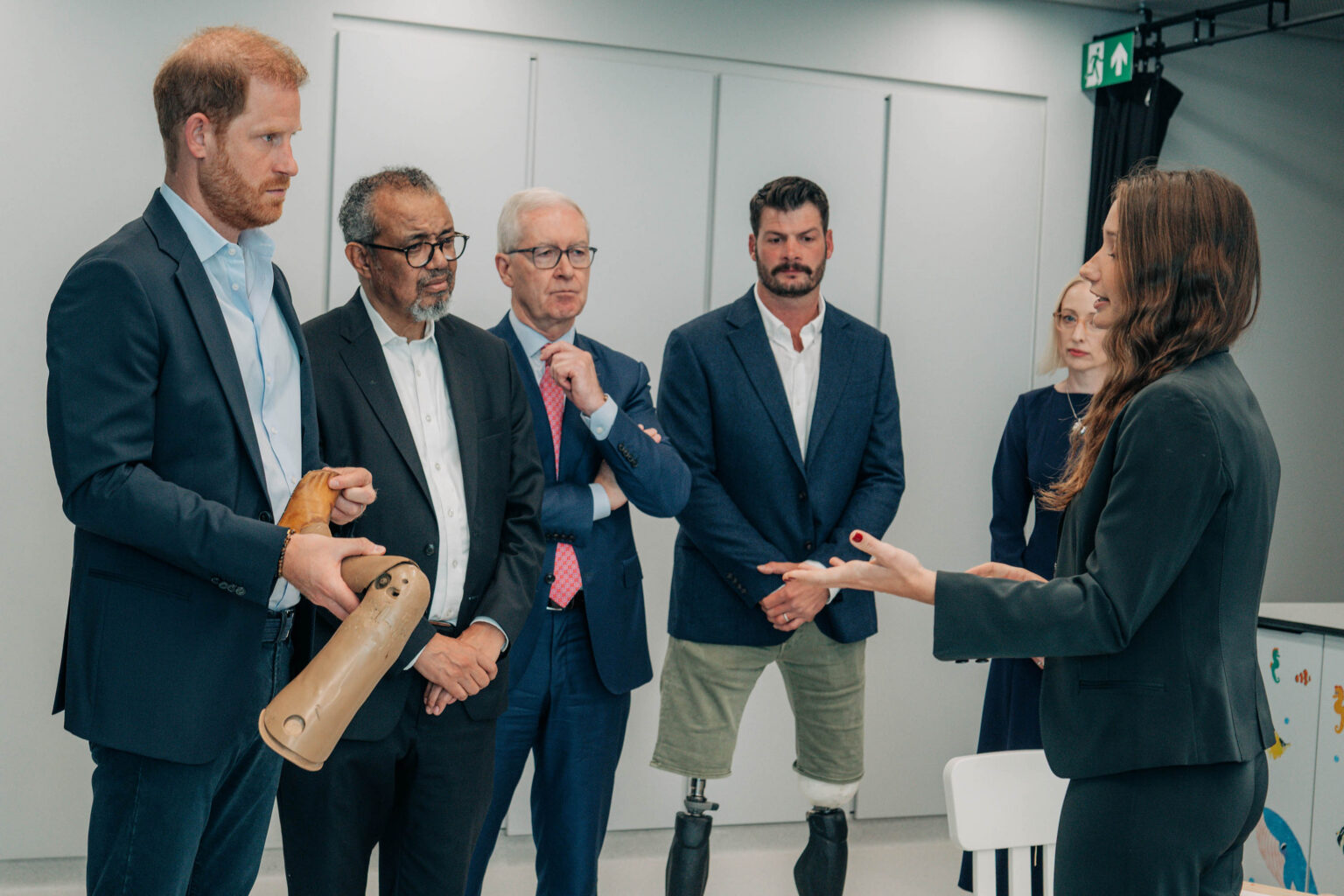
Ghidini’s research addresses a longstanding challenge in pediatric prosthetic care: While prosthetic technology has advanced significantly in recent decades, many devices used by children are adapted versions originally designed for adults. This approach fails to account for the rapid skeletal growth, biomechanics, and day-to-day needs of young users. In settings where access to specialist care is limited, poorly fitting devices can go unaddressed for extended periods, creating long-term barriers to education, independence, and participation in daily life.
Recent humanitarian crises have intensified focus on pediatric prosthetic care in conflict and disaster-affected regions. Drawing on fieldwork conducted across Cambodia, Ukraine, Türkiye, and Jordan, Ghidini’s research responds to the growing need for adaptable prosthetic technologies.
Operating within Imperial’s Centre for Paediatric Blast Injury Studies, Ghidini’s work combines engineering design, clinical insight, and direct engagement with young users and their families. Her doctoral research provided a detailed understanding of how growth affects prosthetic fit and function in children, using clinical data, motion analysis and user-centered research approaches.
A key aspect of the work involved capturing the perspectives of clinicians, the children, and families, to identify distinct and overlapping priorities. Children demonstrated a clear understanding of what worked well in their prostheses and what needed improvement, expressing preference for prostheses that are comfortable, easy to adjust, and provide the functionality needed to participate fully in play, the research found.
At the center of Ghidini’s work is a modular, growth-adaptive prosthetic socket. Unlike conventional rigid designs, the proof-of-concept device can be manually lengthened and widened, allowing a single socket to accommodate a child’s growth over a significantly longer period.
The design incorporates adjustable features intended to improve fit and comfort over time while reducing the need for repeated specialist intervention. The device has been designed with use beyond specialist clinical environments in mind, enabling adjustments outside a traditional clinical setting. In low-resource and humanitarian settings, where access to prosthetic clinics may be extremely limited, a device that can be maintained and adjusted locally has the potential to make a significant difference to children whose needs might otherwise go unmet for months or years.
The design could also support more efficient care pathways in healthcare systems by reducing the frequency of specialist refitting appointments.
Funding from the prize will support the next stage of development, including refining the design for manufacture, and producing prototypes for validation and field testing. The project is being advanced in collaboration with an Imperial spin-out social venture, GO Assistive Technology, specializing in accessible prosthetic solutions for low-resource and humanitarian settings, providing a clear pathway towards real-world deployment.
Editor’s note: This story was adapted from materials provided by Imperial College London.